
How to hire a mason: what to ask for in writing
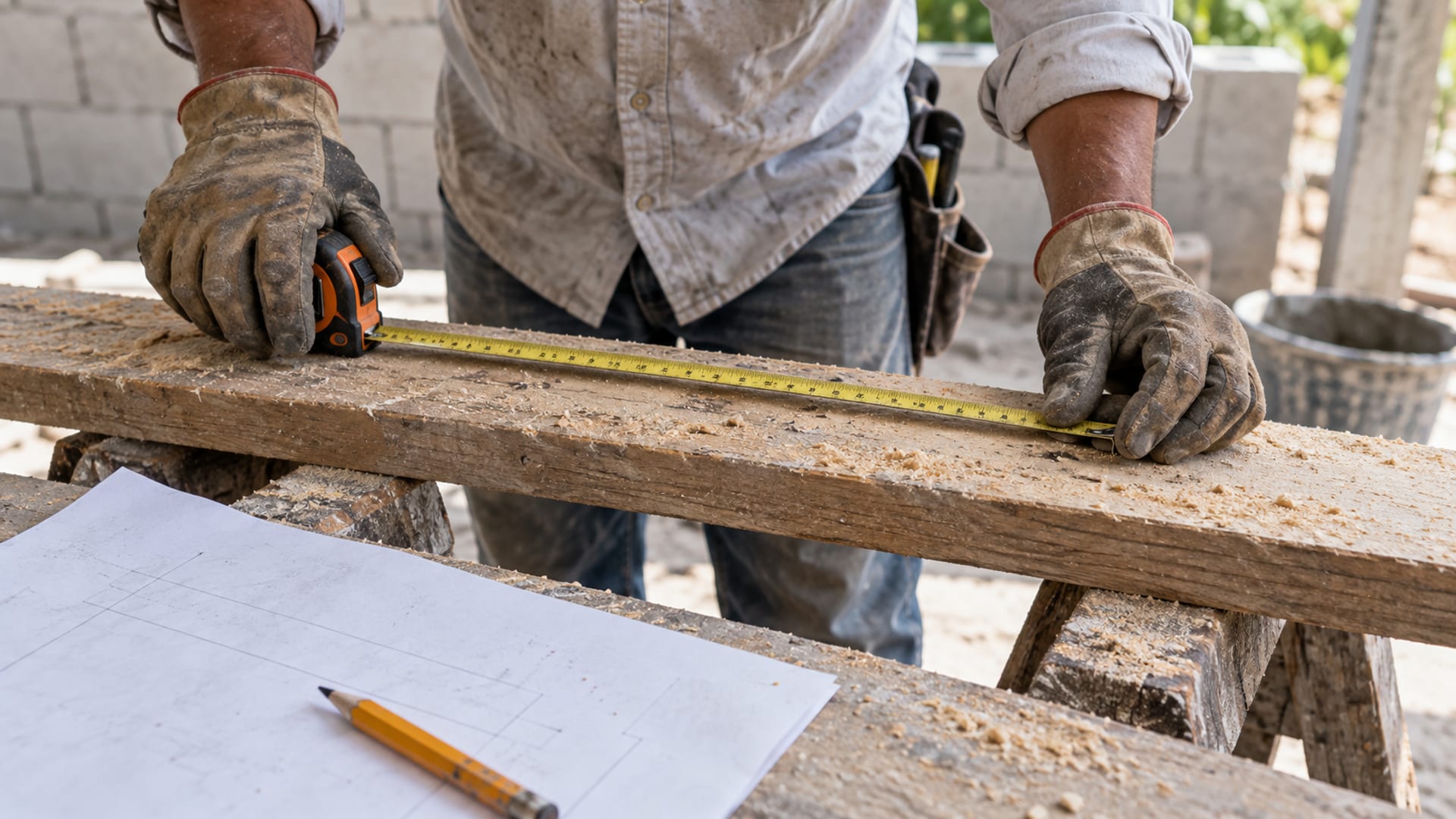
You have already decided to build, expand, remodel, or repair, and you have one or more names written down. What is missing is knowing how to hire a mason without handing over money blindly: what to ask, what to put in writing, and how to compare two or three people who talk about different things. It is normal to feel unsure, because a friendly conversation does not tell you who will lead the job, who will show up to work, or what happens if something goes wrong. It is also hard to know what advance payment is reasonable, or how to check the experience of someone who has not yet set foot on your lot. If you coordinate everything from another country, the doubt weighs more, because you cannot visit the site every afternoon. Here you will find the questions in the order it makes sense to ask them, the documents worth requesting before you pay, and a simple way to put the proposals side by side.
Key takeaways
What work am I hiring for, and what is left out?
Before talking about price, write on a sheet what you want to build, repair, or remodel, where, and with what result. Add the property address, photos or plans if you have them, and the materials you have already decided to buy. That sheet is the same for every provider you contact, and that is what makes a real comparison possible.
Then ask each proposal to separate what is included from what is excluded. The term "obra gris" (rough construction), for example, does not mean exactly the same thing to everyone, so the content has to be written down. The same goes for "acabados" (finishes): plaster, paint, flooring, or wall covering may or may not be inside the price.
The Ley de Protección al Consumidor y Usuario, the consumer protection law, states in article 30 that service providers must respect the terms, deadlines, conditions, warranties, and other circumstances under which the service was offered, published, or agreed. That obligation points to what was agreed. If what was agreed is written down, no one has to guess.
Is a mason, a maestro de obras, a contractor, and a construction company the same thing?
In everyday speech, no. An albañil (mason) is usually the person who carries out masonry work, such as building walls, laying block, or applying plaster. A maestro de obras (site foreman) is usually someone with practical experience who coordinates a crew. A contratista (contractor) agrees to carry out a job, or part of it, and organizes workers, materials, or subcontractors. A constructora (construction company) is a business that offers and organizes construction services. These meanings are practical; they are not an official license classification, and the exact meaning varies from person to person.
That is why it helps to ask what role the person talking to you will play. Calling yourself a "maestro de obras" or calling a business a "constructora" does not by itself say what authorization, safety record, or professional training that person has. It also does not make them an architect or engineer. What you need to know is who will be responsible for the work.
A table like this one helps you sort the answers:
Who runs the job, and who does the work?
This is the question people most often skip. Ask who will be in charge every day, who will work in your home, and whether they will be employees, helpers, or subcontractors. A crew is the group that carries out part of the job; you have the right to know who is part of it and who leads it.
If the person who quoted the job will not be the one who shows up on site, ask for the name of the person in charge and how they will keep in touch with you. This matters a lot when you coordinate from outside Guatemala, because you will need a fixed contact to receive reports and dated photos.
Also ask whether there will be subcontractors. It is common for part of the work, such as electrical installation or the concrete pour, to be done by someone else. That is not a problem in itself, but the agreement should say who is responsible for each part.
How do I check their experience with similar jobs?
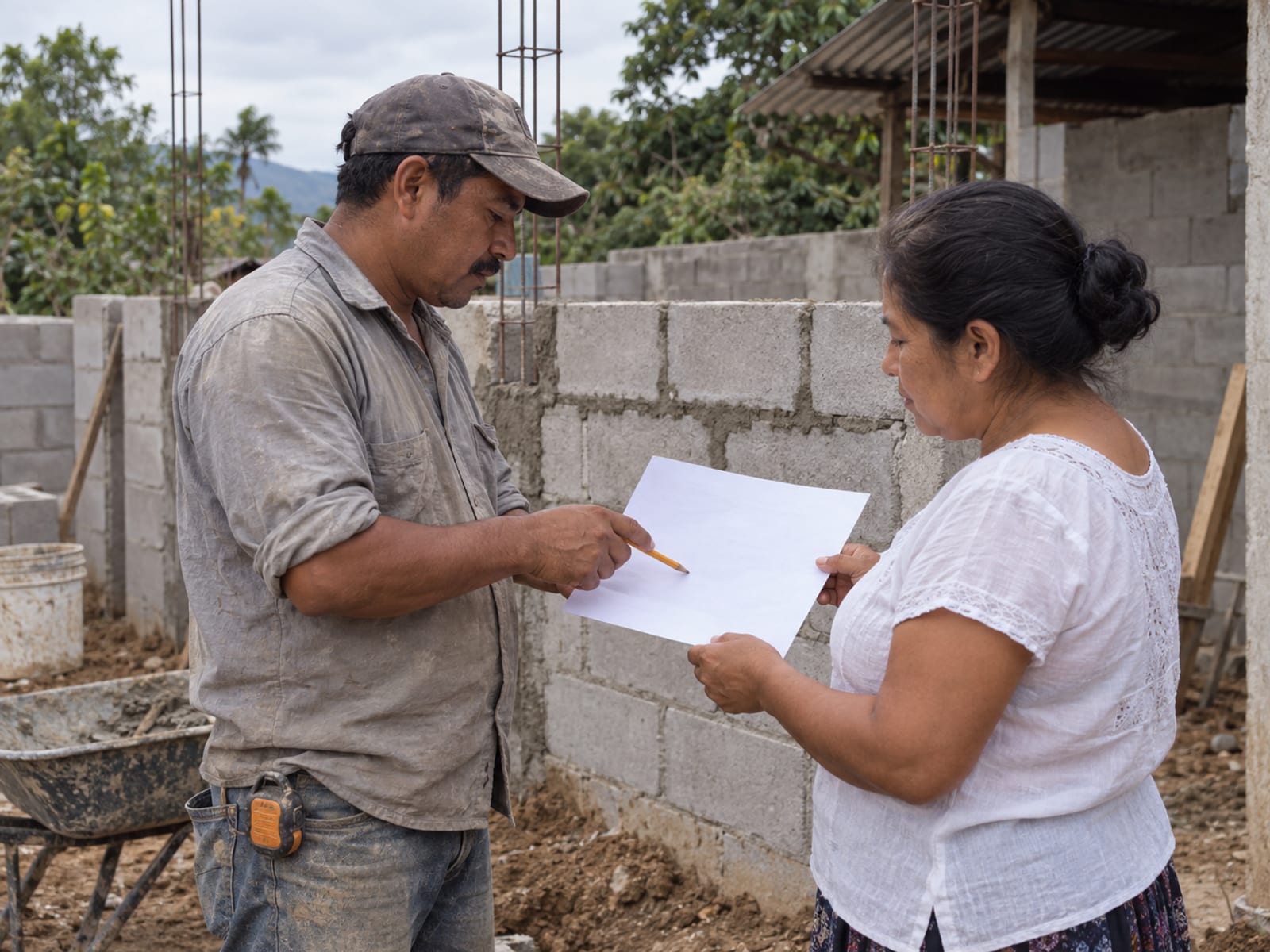
Ask for examples of work of the same type and size as yours. A reference helps you understand past experience, although it does not guarantee the result of another job. These questions usually clear things up a lot:
- What part did you carry out? That tells you whether they led the work or took part in one stage.
- Who led the crew? The person who did the work may not be the one who arrives at your home.
- What problems came up, and how were they solved? A specific answer says more than a general one.
- Can I visit a finished job or speak with a previous client? Ask only if that person agrees to share their contact details.
- When was the job done? A recent job is easier to visit and check than a very old one.
- What was left out of the scope? That way you will understand what you actually compared.
If you visit a job site, do so with the owner's permission, and do not publish photos, personal details, or the address without their permission. A listing in a directory, including ours, does not replace these conversations; Albañiles Guate does not verify, recommend, or rate the businesses that appear.
Who takes care of helpers, tools, and safety?
The Labor Code, in article 197, says every employer must take precautions to protect the life, safety, and health of workers. Among them it mentions preventing accidents, keeping machinery and equipment in safe condition, providing protective clothing and equipment when needed, warning about hazards, and keeping a first-aid kit. In addition, the IGSS (the social security institute) states that the employer must register with the social security system and enroll its workers, except for the exceptions set out in its regulations.
You do not have to resolve every legal detail, but you can ask in writing:
- Who will hire and direct the helpers.
- Who will pay their wages or fees.
- Who will provide tools and protective equipment.
- Who will give the safety instructions.
- Who will report an accident or incident.
- Who will remove tools and materials when the job is finished.
- Whether there will be subcontractors.
These questions are a practical way to clarify responsibilities. They do not replace what the Ministry of Labor or the IGSS determines, or legal advice on a specific employment relationship. For risky services, article 39 of the same consumer law asks the provider to adopt safety measures and to inform in advance anyone who may be affected.
Do I need a municipal permit, an architect, or an engineer?
It depends on the project, and the municipality responsible for the property gives the answer. Each municipality has its own rules and procedures. As an example, in Guatemala City the Ventanilla Única de la Municipalidad (the municipality's single-window office) receives the file and checks the requirements for the type of application. Another municipality may work differently, so the check is made where your land is.
When the project requires plans, calculations, or a professional signature, ask which architect, civil engineer, or structural engineer will take part and what their exact role will be: design, review, signing, management, or supervision. For certain files, the municipal documentation for Guatemala City requires plans with signatures, seals, and stamps from professionals. That guide does not say that a mason or a maestro de obras can sign plans or take on design responsibility.
You can ask the professional for their full name, their registration number, and a current certificate, and verify the details directly. The Colegio de Arquitectos de Guatemala (the architects' association) publishes a member directory and a membership status check that shows whether a member is active or inactive. The Colegio de Ingenieros de Guatemala (the engineers' association) also publishes information about its members. Showing as active is not a recommendation of the quality of someone's work, but it is a fact you can check.
What must be in writing before I pay?
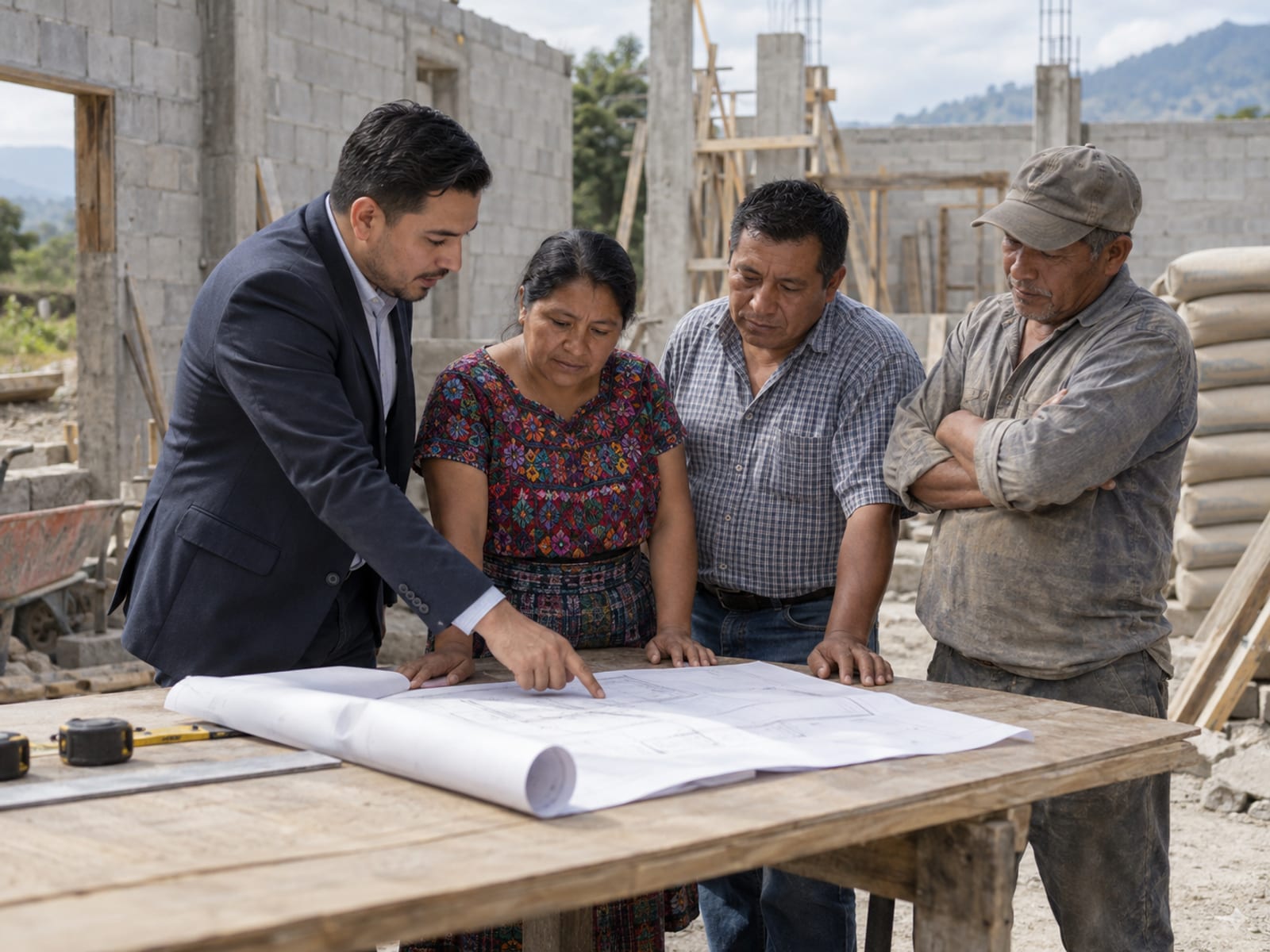
A WhatsApp message or a note on paper can be a starting point, but the important terms belong in a clear document. You can ask the person to include the identification of both parties, the description of the work, exclusions, price, materials, dates, payments, changes, cleaning, waste removal, and the warranty. That list is a practical suggestion, not a format the law requires you to use.
Two points are expressly mentioned in the consumer law. The first is article 30, already cited, which requires honoring the conditions offered or agreed. The second is article 33, which says the person providing the service must state in writing the period for which they guarantee the service or the repair performed. If a warranty is offered, ask that the document state the period, what it covers, what is excluded, and who will come back to correct a defect.
As for the advance payment, the amount is set by agreement between the parties, and there is no single figure that fits every job. The prudent approach is to write how much is paid, when, and in exchange for what progress, so that each payment matches a result you can see. A milestone is exactly that: a verifiable result that marks a stage, such as "foundation finished."
How do I compare two or three proposals with the same scope?
Give each provider the same description of the work and ask the same questions. Ask each answer to separate the points in this table into different columns:
Compare first whether the proposals cover the same scope. Then compare price, timing, clarity of exclusions, related experience, the person in charge, and the documentation available. Do not look only at the total: if one provider prices a different job, the price difference does not mean what it seems. This table is a practical suggestion, and the law does not require a specific number of quotes.
What invoice or receipt should I receive?
The SAT (the national tax agency) describes the online electronic invoicing regime, known as FEL, as the model for issuing, certifying, and storing electronic invoices and other authorized documents. The DTE (electronic tax document) is the file given to the recipient after it is certified, and it can be delivered digitally or on paper when the person asks for it. The general electronic invoicing process explains these steps, and the SAT's frequently asked questions on tax compliance explains which identification data is recorded depending on the amount.
After each payment, you can ask for:
- The corresponding invoice or DTE.
- A description of the service or of the stage paid.
- The date and amount.
- The payment method.
- The outstanding balance, if any.
- The transfer, deposit, or receipt.
- A written confirmation of the stage received.
An invoice does not replace the description of the scope or prove on its own that the work is finished. Even so, the documents are useful if you later need to file a complaint: the Regulation of the Consumer Law mentions the invoice or another document that proves the service was provided.
How do I hire a mason if I am outside Guatemala?
You can, with more order and more in writing. Ask for a scope in writing before you send any money, and split the work into stages described clearly. Tie each payment to a result that can be checked, and ask for photos or video calls showing the date and location of the site.
Appoint someone you trust to visit the site, or agree how you will receive dated reports. Keep the quote, messages, documents, invoices, and receipts in one folder. Confirm directly with the municipality which procedure applies to the property, and ask for the name of the professional who will prepare or sign the plans, if they are needed, so you can verify their registration.
There is no payment split that works for every job. The specific arrangement must be written into your agreement; it is not a universal official rule.
Frequently asked questions about how to hire a mason
What should I ask a mason before hiring them?
Ask what similar jobs they have done, who will lead the work, who will be on the crew, what the price includes, what is excluded, how changes will be authorized, how payments will be made, and what warranty period they will give in writing.
How do I compare two quotes?
Give each provider the same description of the work and ask the same questions. Compare scope, exclusions, materials, labor, dates, payments, changes, cleanup, and warranty separately. A lower total does not allow a fair comparison if it includes less work.
Should I ask for anything in writing?
Yes. Ask for a description of the work, what is excluded, the price, materials, dates, payments, changes, and the warranty. The consumer law requires providers to honor the conditions offered or agreed and to state the warranty period in writing.
Who is responsible for helpers and safety equipment?
Ask the provider who hires and directs the helpers, who pays them, who supplies tools and protective equipment, and who gives the safety instructions. The Labor Code sets out employer obligations, and how it applies to a specific relationship should be confirmed with the Ministry of Labor.
Do I need an architect or engineer?
It depends on the project and the municipality. Ask who will prepare, review, or sign the plans or calculations when they are needed, and check the registration number and status of that professional with the relevant association.
What should I receive after each payment?
Ask for the invoice or DTE, a description of the stage paid, the date, the amount, the payment method, and the outstanding balance. Keep the transfer, deposit, or receipt as well.
Before paying an advance: your checklist
Hiring well comes down to two ideas: compare proposals with the same scope, and put what was agreed in writing. Before you pay an advance, check that you have the description of the work, what is excluded, the materials, the person in charge of the job, helpers or subcontractors, tools and protective equipment, dates, payments, the process for changes, and the warranty period. Also confirm the municipal check and, if plans are needed, the responsible professional.
With that list, you can talk to each provider without pressure and decide calmly. A clear agreement also protects the person working in your home, because both sides review the same thing when something changes.
At Albañiles Guate we help people in Guatemala find and contact masons, builders, and construction trades by service and by location, starting with the mason directory. Our directory does not recommend, rate, approve, or insure the businesses that appear, so every agreement is confirmed directly with whoever you hire. If you want to find someone for your job or have a question, write to us from the contact page and we will tell you the next steps.
Related guides

How to Request a Masonry Quote in Guatemala
A masonry quote in Guatemala should spell out materials, labor, rubble removal, dates, payment stages, and warranty. Review every line before you decide.
Masons in Villa Nueva: how to request and compare quotes
Masons in Villa Nueva: compare day rate, price per square meter and complete job, then request a written quote covering materials, helpers and payments.
Masons in Mixco: what they charge and what to ask for in writing
Masons in Mixco: the unit, quantity, materials, helpers, debris removal, dates, payment terms and exclusions that a written quote should list before you hire.