Remodeling a house in Antigua Guatemala: what permit you need
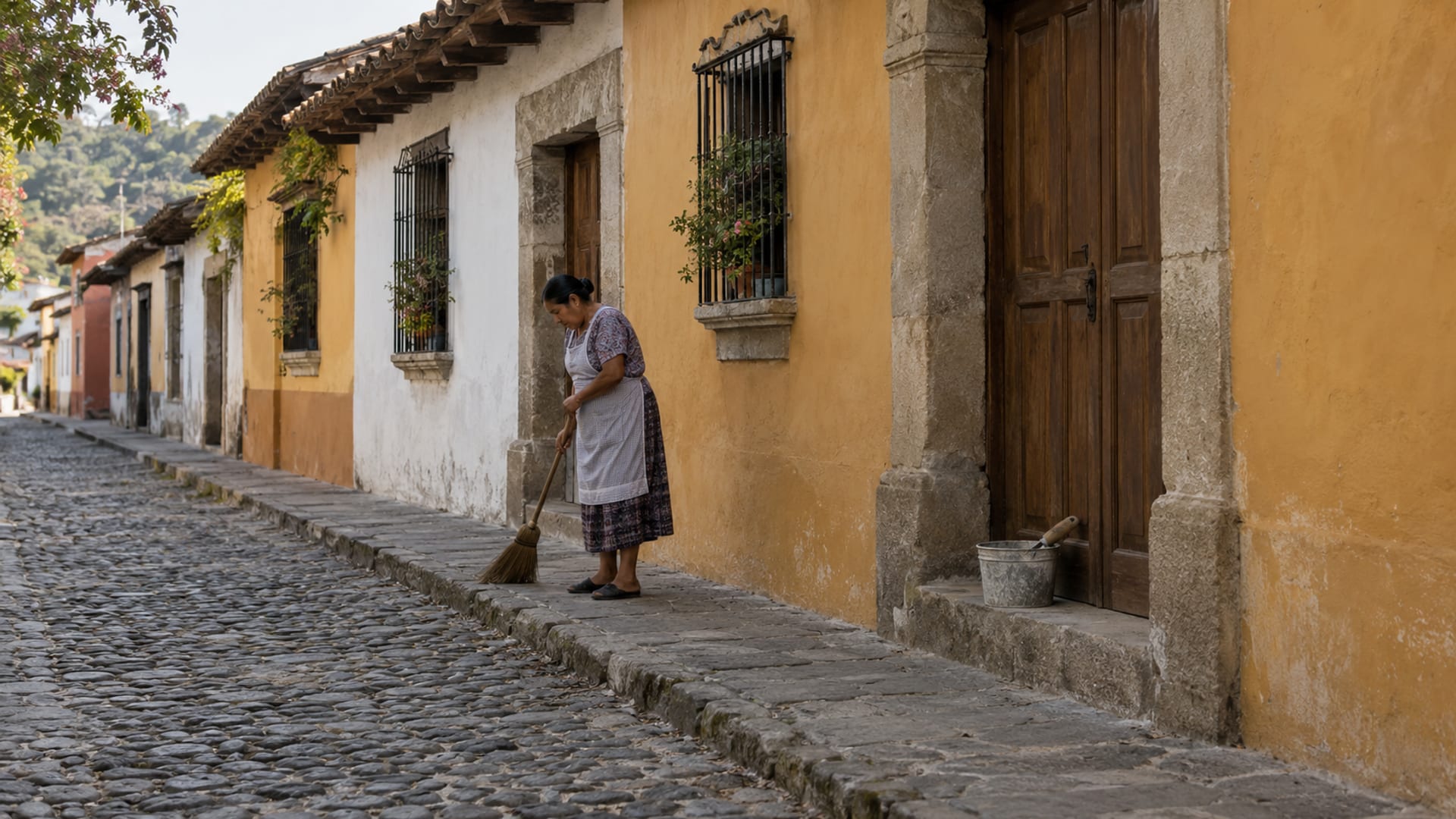
You want to paint the façade, change the roof or the windows, and someone told you that in Antigua "you cannot touch anything without a permit." You may have inherited the house, bought it recently, or be managing a relative's house from another country. In any of those cases, what you do not want is to hire a mason, start the work, and receive a suspension notice. Remodeling a house in Antigua Guatemala has its own rules, and the office that decides is not the one you would expect. The good news is that the order of the steps is clear. Below you will see whom to contact first, what to gather, and why it is worth waiting for an answer before the work starts.
Key takeaways
Do I need a permit to remodel a house in Antigua Guatemala?
If the house is inside the conservation or influence area, assume that you need authorization, and check before you start. Article 23 of the Protective Law of the City of La Antigua Guatemala says that any new construction or alteration of existing buildings inside that area must have the Council's prior license and comply with the Regulatory Plan. The law also requires prior approval for work planned on buildings of protected domestic architecture.
The law uses the words "license" and "authorization," although in everyday conversation everyone says "permit." The law applies to the city, the colonial urban perimeter, the surrounding areas, and the conservation and influence zones that it defines itself. "Historic center" is the common way to refer to it, but it does not always match the legal perimeter, so do not decide on your own whether your house is inside or outside it.
Who authorizes the work, the CNPAG or the municipality?
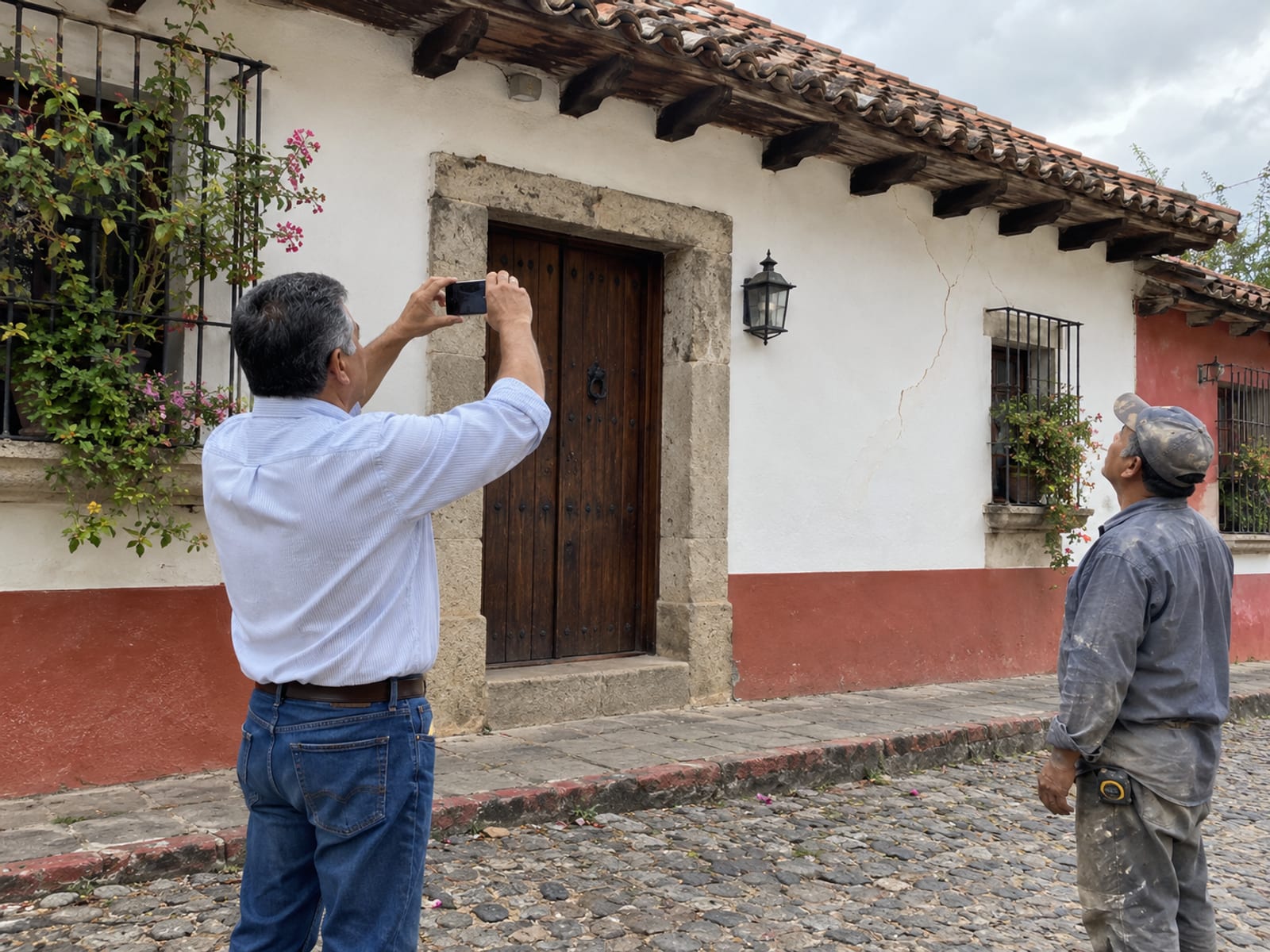
The CNPAG is the decentralized state entity to which Article 2 of the law assigns the care, protection, restoration and conservation of property located in Antigua Guatemala and its surrounding areas. Its Construction Control Department processes licenses and reviews the files, then presents them to the Board of Directors, which authorizes the project when appropriate. The Council then issues the license.
The Municipality of Antigua Guatemala keeps its municipal powers. Article 10 of the law requires mayors to forward any construction requests they receive to the Council immediately, and Article 38 makes the Council's Regulatory Plan subject to final approval by the municipality. For that reason, ask both offices which municipal file corresponds to your work, in addition to the Council's license.
Can I paint the façade or change the roof, doors and windows without authorization?
Do not assume you are exempt. The answer depends on the exact description of the work, and the CNPAG is the one that gives it. What the law says does help explain why you should ask. Article 27 mentions, among the elements that may be subject to restoration or modification, zinc sheet roofs and other non-traditional coverings, cornices and eaves, coatings and paints, the proportions of openings, jambs, lintels, sills, metal doors and windows, and ironwork designs.
In practice, a paint job, a roof or a door is not a minor detail in this city. Bring the CNPAG photos of the current condition and a written description of what you want to change, and ask how the work is classified. The CNPAG publishes an approved color chart (Cartilla de Colores); ask how to consult it before you choose a paint.
The same goes for the interior. The rule on the "alteration of existing buildings" covers the general category, and the office will tell you whether your interior remodel needs a procedure. If you plan to expand, keep in mind that Article 23 prohibits building two or more floors, in order to preserve the traditional character of the monumental complex.
What documents should I gather?
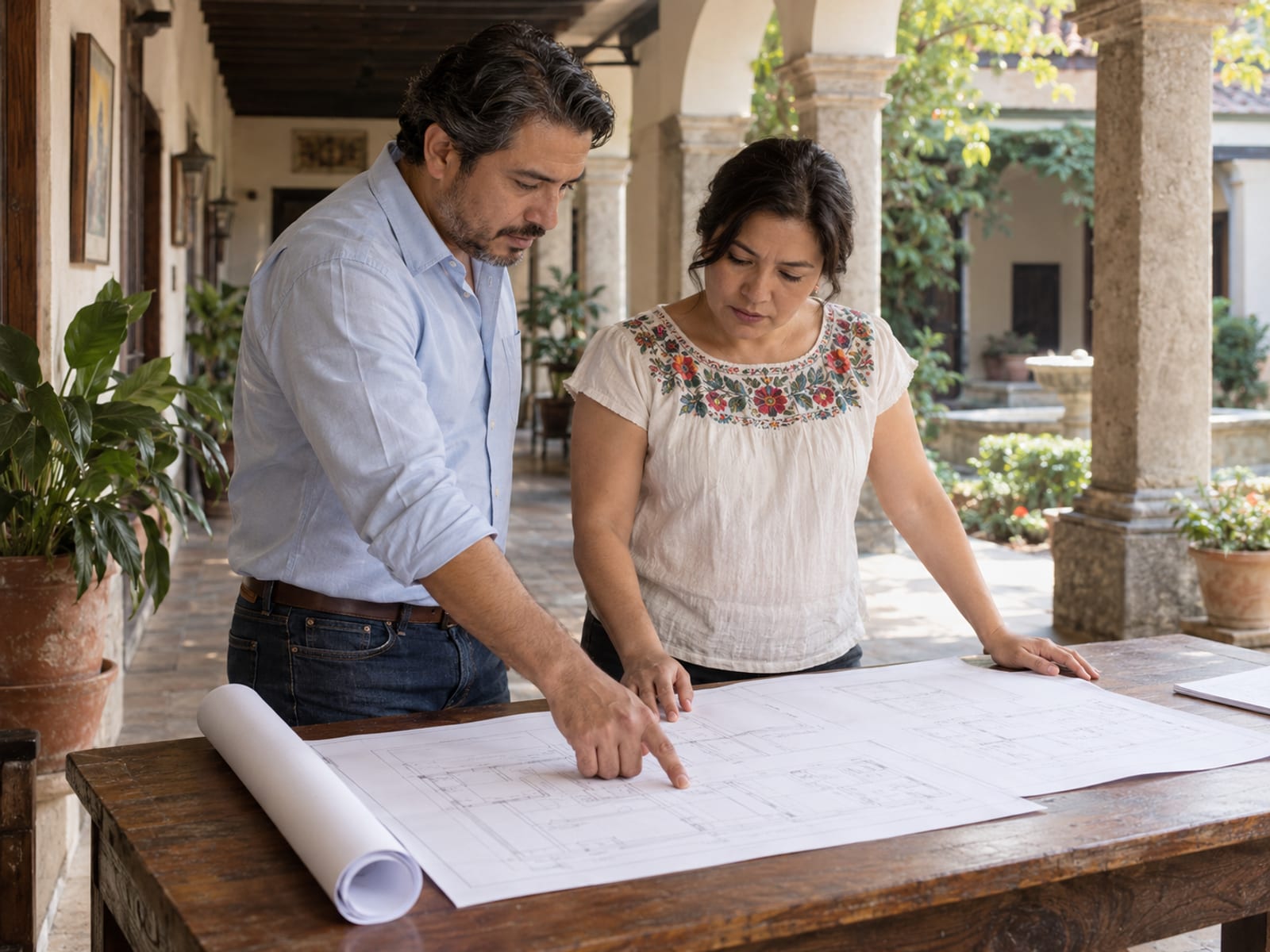
The law expressly sets out the plans and projects for public and private buildings. They must be submitted in duplicate to the Council and signed by licensed, active architects or civil engineers. Article 25 allows the Council to exempt minor construction, or other cases it considers appropriate, from that requirement, always with a written recommendation from the City Conservator.
The CNPAG confirms the rest of the final file checklist. For the first consultation, have these documents on hand. They make the conversation easier, although they do not replace the official list:
- Work description: written and as precise as possible.
- Current photos: façade, roof, doors, windows, and the rooms you want to change.
- Property details: address, property number (nomenclatura), and ownership documents.
- Existing plans: of the current state and, if you have them, of the proposal.
- Professional details: name and license number.
When you hire an architect or engineer, ask for their license number and confirm it with the corresponding professional association. The CNPAG also states that it offers free support to draw up plans for people of limited means who cannot pay a professional, with prior authorization from the Council.
How much does the license cost, and how long does it take?
Fees, charges and timelines are set by each office. The law empowers the CNPAG, under Article 32, to charge for the services it establishes. Confirm them in writing with the Construction Control Department before you submit the file, and also ask whether the municipality has any charges.
The published contacts are these. The CNPAG is on 2.ª avenida norte (2nd Avenue North) and 2.ª calle oriente (2nd Street East) in La Antigua Guatemala, open Monday through Friday from 7:30 to 16:00 hours. Its phone is (502) 7873-4646, extension 112 for Construction Control, and the department's email is control@cnpag.com. The Municipality is in the Palacio del Noble Ayuntamiento, on 4.ª calle oriente (4th Street East) and 4.ª avenida norte (4th Avenue North), with the phone number 1552 and the email info@muniantigua.gob.gt.
What happens if I start the work without authorization?
The law provides for several consequences. Under Article 24, the Council or the Conservator can order a work suspended at any stage when it violates the law, the regulations, the Regulatory Plan or the ordinances, and the Council can agree to demolition at the offender's expense. Article 27 allows setting a deadline for a transformed property to return to its original state, or to a state the Council considers decorous.
Article 36 treats as an offense starting restoration, consolidation, conservation, remodeling, modification or new construction without authorization. The fine is Q25.00 to Q50.00, imposed by a competent judge. Article 33 also provides for criminal liability for anyone who destroys, damages or transforms protected property. The CNPAG states that it carries out inspections, posts suspension notices, and can close properties with inappropriate work.
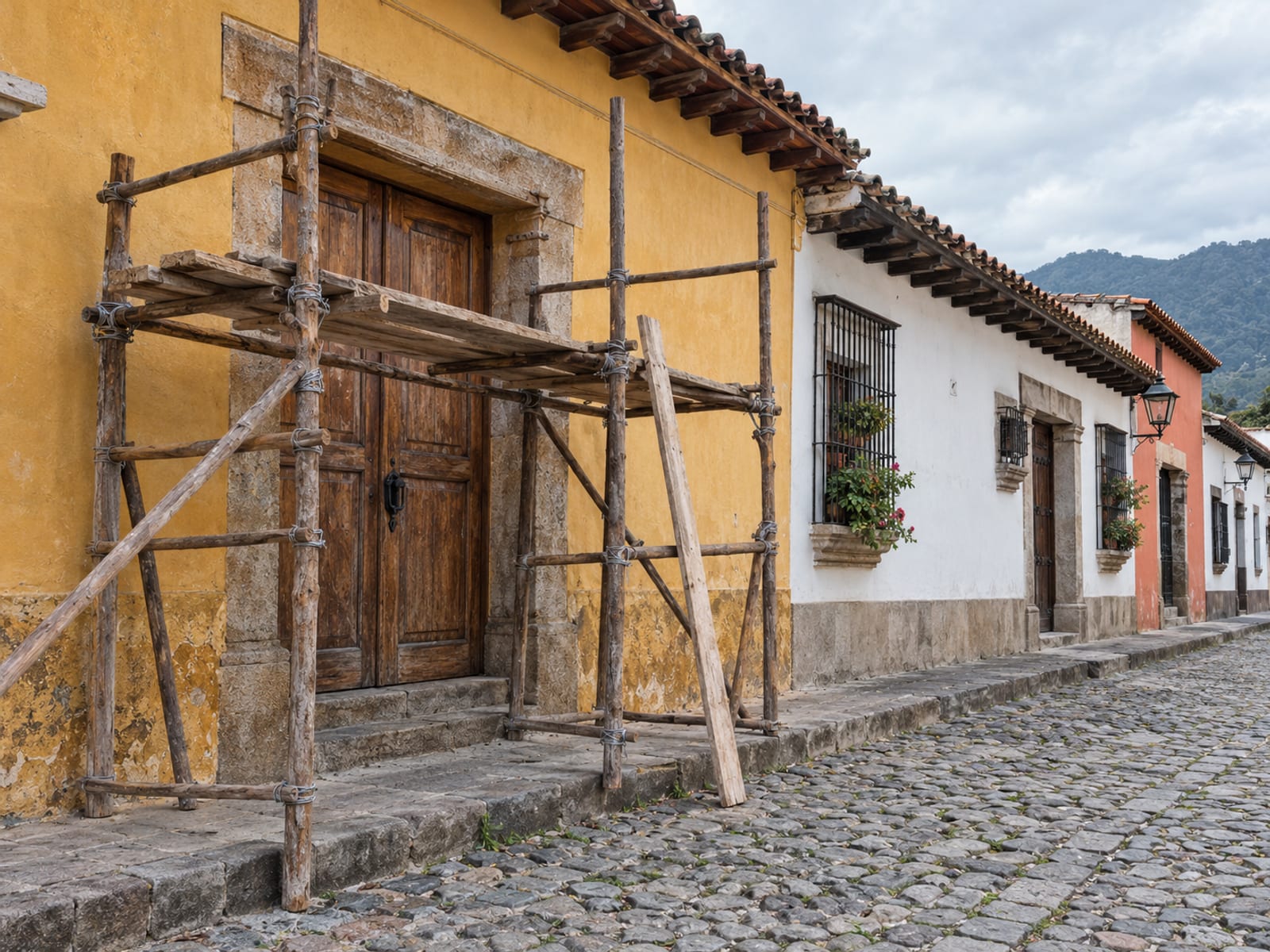
These are the consequences the rules describe. They do not let anyone predict the outcome of a particular case. The safest course is to wait for the Council's answer before paying deposits or buying materials. If the Council decides something you do not agree with, Article 39 leaves open the administrative litigation remedy (recurso contencioso administrativo), and for that you should consult a lawyer.
What about signs and sign boards?
If the house has a business or a sign, a different rule applies. Article 26 of the law requires prior authorization for exterior notices, announcements or posters in the areas the Council sets. The Sign Regulation, which appears in the official PDF of the law, requires signs to be authorized beforehand, prohibits commercial advertising, and states that a sign cannot exceed 0.50 m². The CNPAG also controls signs through its sign license in the historic center and the surrounding areas.
Frequently asked questions about remodeling a house in Antigua Guatemala
Who can sign the plans?
A licensed, active architect or civil engineer. The Council can exempt minor cases if there is a written recommendation from the City Conservator. Ask for the license number and confirm it with the corresponding professional association.
Do I need a permit to paint the façade?
Do not assume you are exempt. The law mentions coatings and paints among the elements that may require restoration or modification. Check with the CNPAG, with photos and a written description, before you paint.
Where do I start the procedure?
At the Construction Control Department of the CNPAG, which receives files all year round. Then confirm the related municipal procedure with the Municipality of Antigua Guatemala.
What should I prepare before I consult?
A precise description of the work, current photos, the property address, and any plans you already have. Confirm the final file checklist with the CNPAG.
How many copies of the plans does the law require?
Article 24 requires them in duplicate, that is, two copies.
How do I find a mason in Antigua?
In the Antigua Guatemala directory you will find construction businesses and professionals in the city. The directory only lists them. Confirm their professional license, the project authorization, and any insurance or license directly.
Whom to speak with first, and when to start
The order is short. Confirm the area, describe the complete work, consult the CNPAG and the Municipality, prepare the plans with a licensed, active professional, and wait for the license before you start. With a well-prepared consultation, you know which office decides and which documents to gather.
That wait protects your investment. An authorized job avoids suspension, the removal of what was built, and the cost of redoing the work. It also leaves the house in order for whoever inherits or buys it later.
At Albañiles Guate we help people in Guatemala find and contact masons, builders and related construction trades by service and by location. Once the authorization is clear, you can write to us from the contact page to start looking for professionals in your city.
Related guides
How much does it cost to remodel a house in Guatemala
What does it cost to remodel a house in Guatemala? Demolition, rubble, utilities, finishes, furniture and labor, plus what to request in writing before paying.
Which building work does not need a construction license in Guatemala
Which building work needs no construction license in Guatemala, how to regularize an extension built without a permit, and which documents to gather first.
Masons in Mixco: what they charge and what to ask for in writing
Masons in Mixco: the unit, quantity, materials, helpers, debris removal, dates, payment terms and exclusions that a written quote should list before you hire.