Which building work does not need a construction license in Guatemala
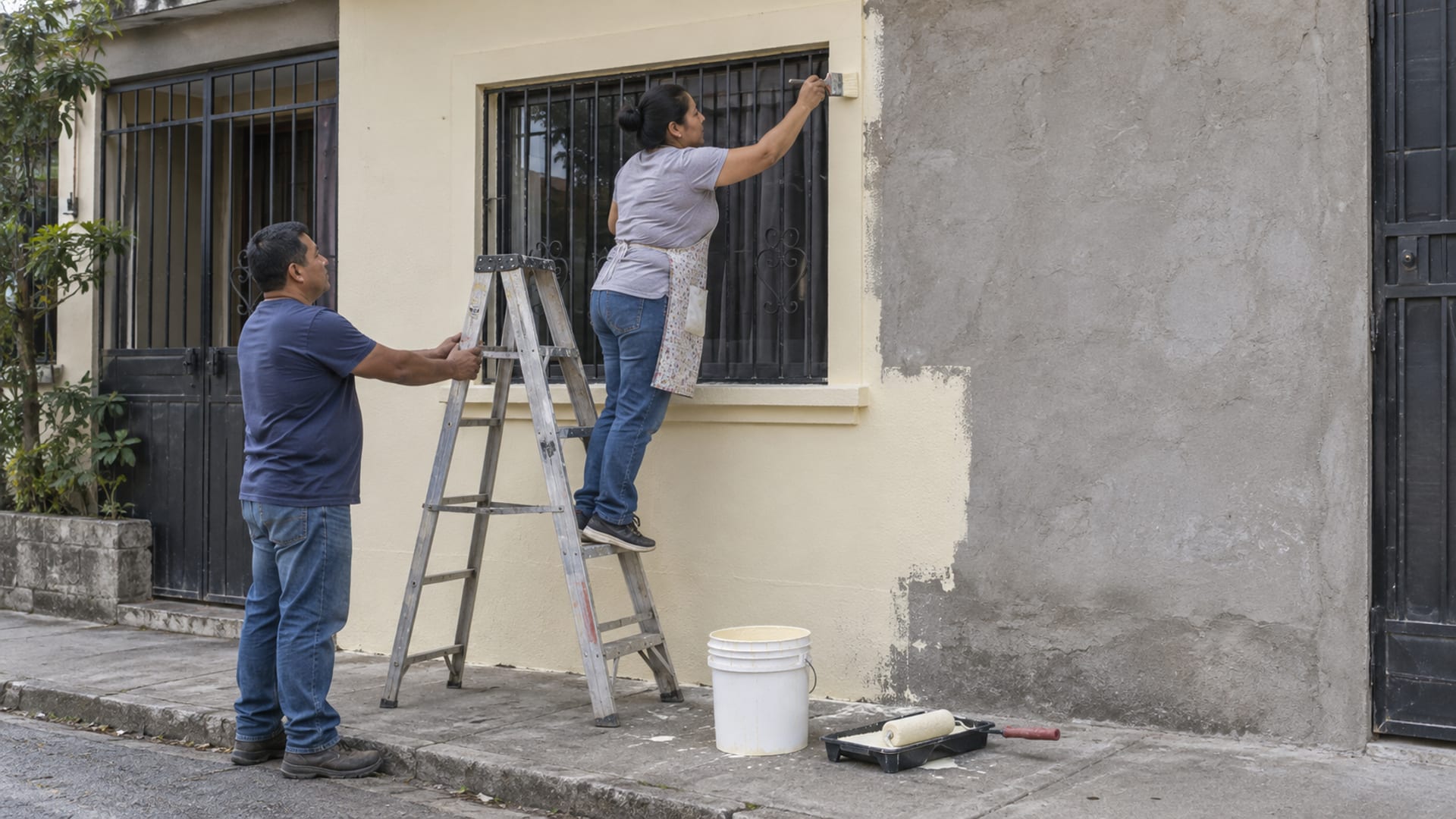
You want to paint the facade, replace a few roof sheets, or close off a wall, and someone tells you "that does not need a permit." Another person says it does, and that the municipality will fine you. If you also bought a house with an extension nobody documented, or you need to put your papers in order before selling, inheriting or applying for a loan, the doubt weighs even more. The answer to which building work does not need a construction license in Guatemala is not in a national list. It depends on the municipality where the property is located and on the type of work. What you can do today is identify who decides, describe your project with the details that office will ask for, and not start while you still have doubts. Below you will see what the regulations of Guatemala City and Mixco say, and what to do if the work is already built.
Key takeaways
One answer for your project, not for the whole country
Before you compare lists of "permitted" work, know that the rules are set by the municipality where the work is located. The Municipal Code assigns to municipalities the authorization of construction, modification and demolition licenses for public or private works within their jurisdiction. That is why paint or a repair can be treated one way in Guatemala City and another way in Mixco or in any other municipality.
To find the correct authority, follow these steps:
- Exact address: write down the address of the property and the municipality it belongs to.
- Official website: look for the website of that municipality, not a private paperwork service.
- Useful sections: "Construction licenses," "Works licenses," "Territorial planning," "Construction regulation" or "POT."
- Licensing office: if the website does not classify your work, contact the office and describe it before you start.
Some words are used as synonyms but are not quite the same. "Permiso municipal" (municipal permit) is the everyday expression; "licencia de obra" or "licencia de construcción" (works license or construction license) are the formal names, and they change from one municipality to another. In Guatemala City, the Territorial Planning Plan (POT) mostly uses "licencia de obra." Confirm the name of the procedure with your municipality.
Which work does not need a license in Guatemala City?
In the Municipality of Guatemala, the Territorial Planning Plan Regulation defines a works license as the municipal authorization to carry out a work. It covers demolitions, earthworks, trenching, foundations, constructions, extensions, remodeling, cisterns and other interventions that alter the functional, environmental, structural or safety characteristics of the property or its surroundings. It excludes the transformations that may be considered minor modifications.
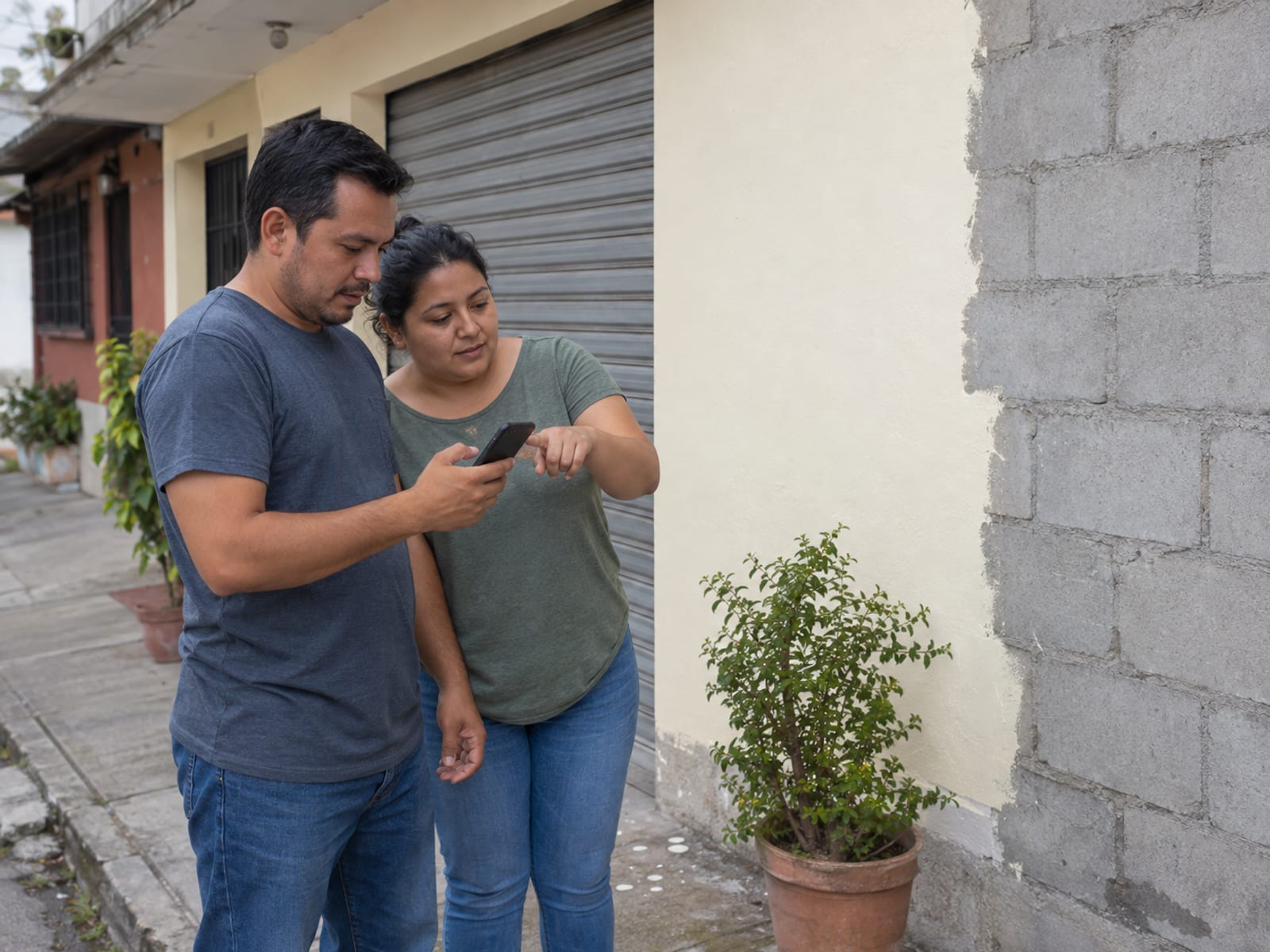
Article 81 lists those minor modifications, and the POT licensing FAQ explains that, if they do not enlarge the usable or rentable area, they do not need a works license.
This list belongs only to the Municipality of Guatemala and has two limits that matter. The first: minor modifications to cultural heritage assets in categories A, B, C or D, or located in the historic center, historic ensembles or buffer areas, do require a license. The second: an extension is not a minor modification. According to the POT, an extension of up to 30 m² requires a minor works license, and one larger than 30 m² corresponds to a major works license.
What about Mixco and other municipalities?
In Mixco the text is broader. An official municipal audit document from 2017 reproduces article 3 of the Mixco Construction and Urban Development Regulation: for any construction, excavation, leveling, extension, modification, repair, demolition, drilling of wells, cisterns, assemblies and other work that modifies the environment of the property or of public roads, a construction license must be obtained in advance. The same text states that the Municipal Affairs Court may suspend the work until the license is issued.
Note the difference in vocabulary: in Mixco the word "repair" appears among the works that the regulation requires to be licensed in advance. For that reason, do not carry a list from one municipality over to another. For interior finishes, floor changes, paint or repairs in a municipality other than the capital, confirm the classification with the local office before you begin.
It is also worth knowing that a municipal license can come with other authorizations, depending on the case:
- Environmental instrument: the Ministry of Environment and Natural Resources explains on its environmental instruments page that an environmental license authorizes the execution of a project or activity; whether it applies depends on the project, not on every household repair.
- Prior opinion in the Lake Atitlán basin: the government procedures portal states that there the municipality requests a prior opinion from AMSCLAE for new buildings and remodeling before issuing licenses.
- Heritage: the Municipality of Antigua Guatemala publishes its territorial planning plan with protection and heritage areas; confirm there and with the heritage authority.
What should I tell the municipal office before I start?
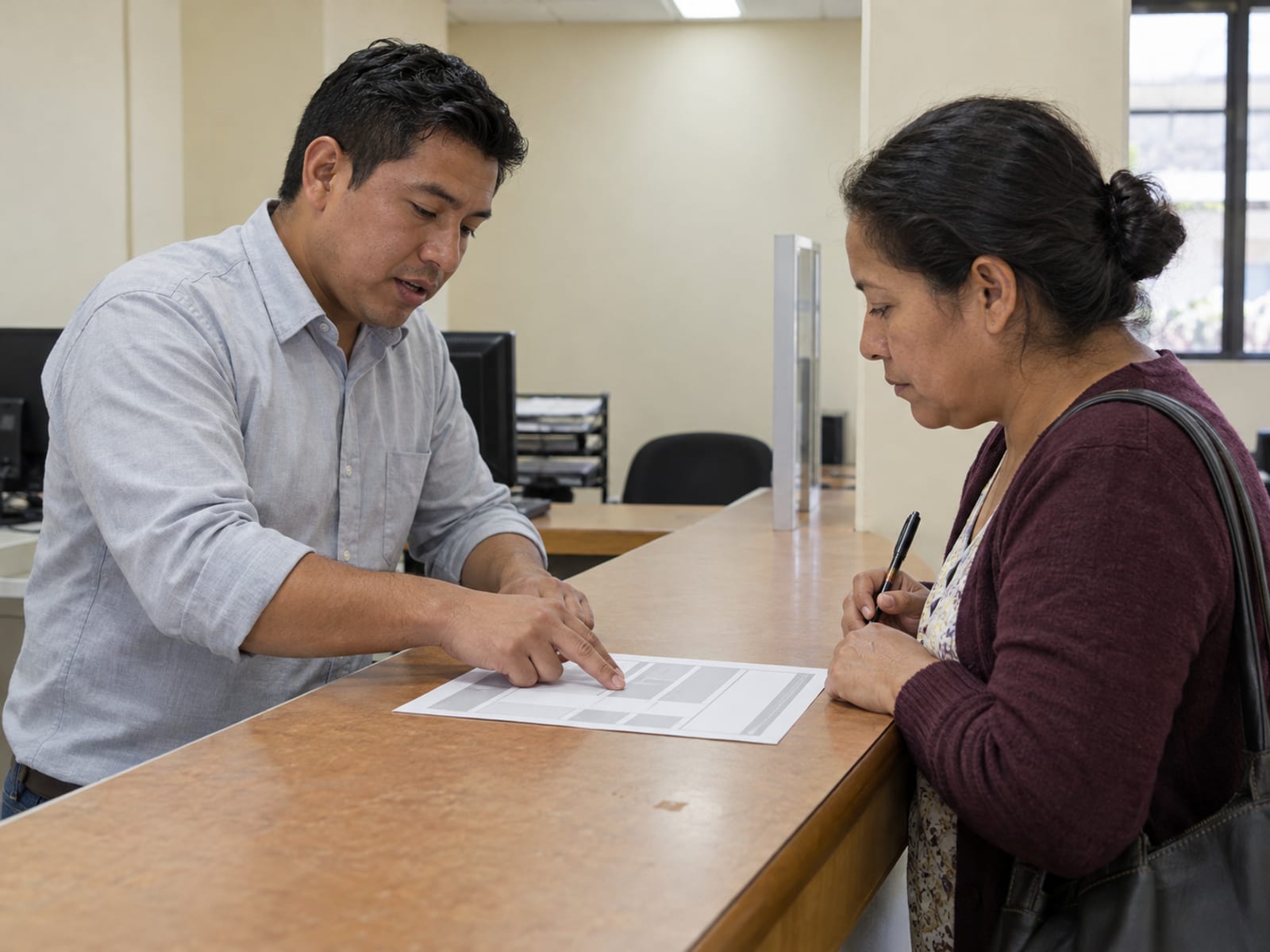
A clear inquiry saves trips. Prepare the following and ask for the answers in writing:
- The work: what will be done, described in a few sentences.
- The location: the exact address of the property.
- The area: the square meters that will be altered or enlarged.
- Structural impact: whether it touches walls, slabs, foundations or columns.
- Special conditions: whether the property is heritage, in a historic center or in a protected area.
As a practical step, gather the deed or the proof of possession, your identification document, the existing plans and photos of the current state. These documents are not official requirements for every inquiry. They help you answer quickly what the office asks.
In Guatemala City, the Ventanilla Única (the city's single-window permit counter) explains the procedure: the applicant obtains the forms and requirements according to the type of request, fills in the form, attaches the requirements and submits the file; then the technical review follows. If the file meets the requirements, the data are entered into the system and a receipt password is issued. The published contacts are the Ventanilla Única at 21 calle 6-77, zone 1, Palacio Municipal, and the Directorate of Urban Planning on the third floor, phones 2285-8068 and 2285-8066. In Mixco, the official website lists "Construction Licenses" under "Inquiries and payments," and the functions manual assigns to its Construction Licenses Section the handling of files and inquiries.
What if I already built without a license?
If the work is already done, the path is to ask the municipality how to regularize it, not to wait for a notice to arrive. In Guatemala City, the instructions for construction license procedures cover, with their forms and requirements, the "legalization of existing or old construction," and provide for commitment arrangements to legalize a building built without a license. The municipality reviews the file, the type of work and the applicable rules; the procedure does not mean every work is approved.
In Mixco, the Construction Licenses Section processes files, advises neighbors, and refers to the Municipal Affairs Court the cases that fall under its regulation. Ask there, in writing, for the current requirements, the involvement of a professional, and the costs to regularize an existing work. For other municipalities, make the same inquiry at its licensing office.
On penalties, the Municipal Code provides that offenses are punished when they are set out in municipal ordinances, regulations and provisions, and it lists possible administrative sanctions; it does not set a single fine for the whole country. In Guatemala City, the POT FAQs state that sanctions can include suspension of work, partial or total demolition, closure in cases of land use, and fines, applied separately or together depending on severity, and that fines are scaled according to the area of the lot or of the construction. The exact amount, the regularization rate and the calculation basis must be confirmed with the Ventanilla Única or the Directorate of Territorial Control before you submit your file.
Does a municipal license replace the structural review?
No, these are two separate questions. The municipality decides whether a license is needed; structural standards set the technical requirements for the works that fall within their scope. The National Coordinating Office for Disaster Reduction (CONRED) describes the NRD-1 standard as the one that sets minimum technical criteria for designing new works, remodeling or repairing existing works, and evaluating works. Its Agreement 02-2019 applies these standards to the construction, extension, rehabilitation, reinforcement, modification or change of use of buildings within its scope, and assigns to the local municipality the duty to ensure compliance. The AGIES library gathers the 2024 edition of the seismic engineering standards, including the one on evaluation and rehabilitation of existing works.
In practice, calling a job a "repair" or a "minor modification" does not replace a professional's review when a slab, a foundation or a structural wall is touched, or when an existing building is being evaluated. If that is your case, consult a competent architect or engineer.
What do I do if the mason says no license is needed?
Ask him to put it in writing. The Consumer and User Protection Law (Ley de Protección al Consumidor y Usuario) requires the provider to give basic information about its services, to comply with the legal provisions that apply to it, and to issue the corresponding invoice. A message or a quote can state:
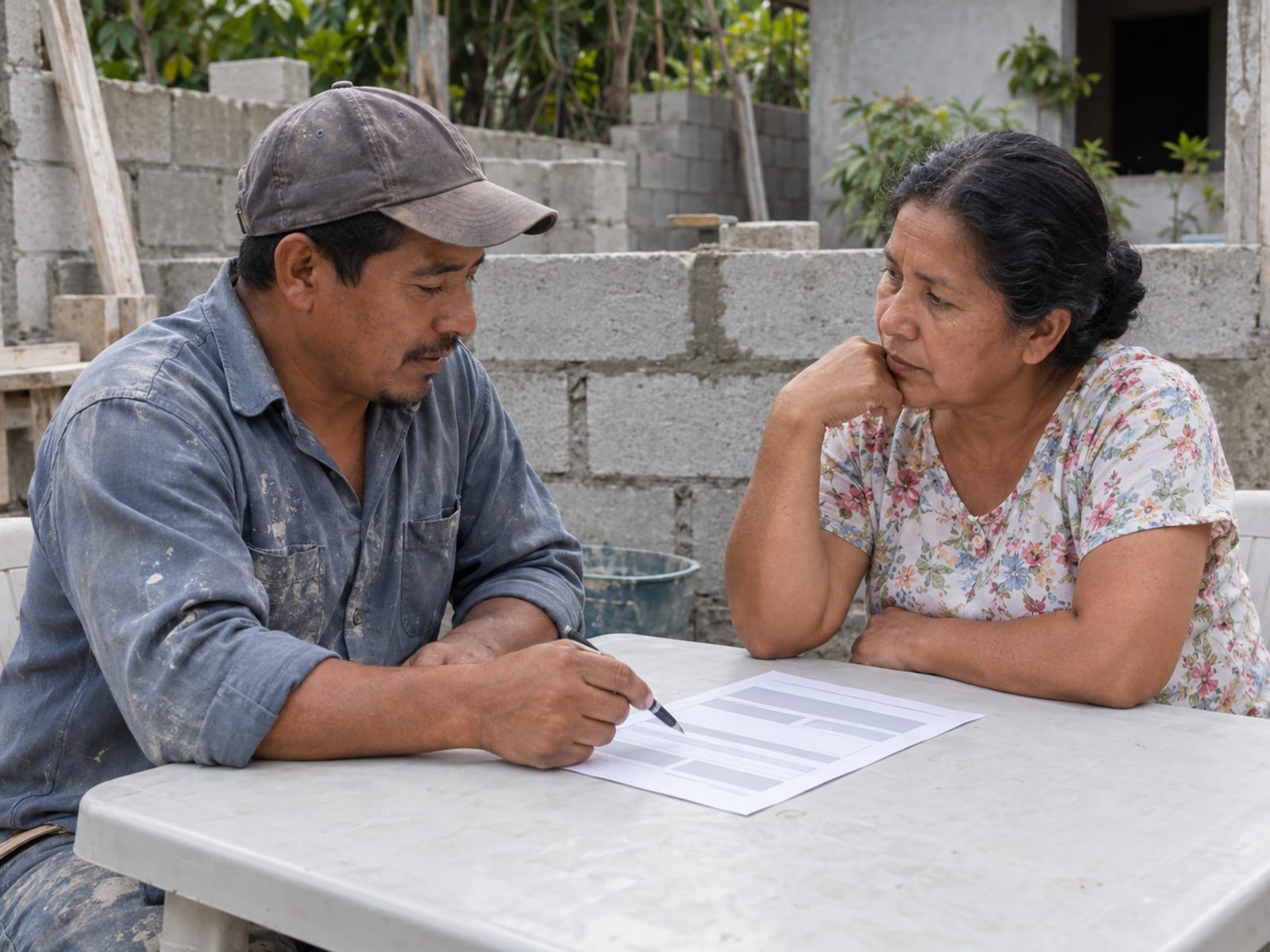
- The works to be carried out.
- Who will verify with the municipality whether a license is needed.
- Who will prepare and submit any procedure.
- Who will pay the fees or fines that apply to their own acts.
This does not resolve a specific dispute, and it does not make a mason a municipal authority. If a consumer complaint arises, the Consumer Assistance Directorate (Dirección de Atención y Asistencia al Consumidor) receives complaints through its official channels. A license, on the other hand, is always requested from the municipality. And if you want to see who offers these trades in your area, you can review the masons in the directory by service and by place.
Frequently asked questions about which works do not need a construction license in Guatemala
Which works can be considered minor modifications in Guatemala City?
The POT includes plaster (repellos), finish coats (cernidos), repairs to the false ceiling, moldings, certain doors, gates and windows, grilles, balconies, roof repairs, and sheet-for-sheet replacement of up to 30 m², provided that no functional, environmental, structural or safety parameters or characteristics are altered. Cultural heritage assets and heritage areas have a different rule.
Does a small extension need a license?
In Guatemala City, an extension of up to 30 m² requires a minor works license, and one larger than 30 m² requires a major works license. Those limits belong to that municipality; check with the one where your property is located.
What happens if I build without a license?
It depends on the municipality and its rules. In Guatemala City, the POT provides for suspension of work, partial or total demolition, closure in cases of land use, and fines depending on severity. In Mixco, the regulation cited allows the work to be suspended until the license is issued.
Is there a fixed national fine for building without a license?
The Municipal Code gives municipalities the power to sanction the offenses that their ordinances and regulations establish, and it does not set a single amount for the whole country. Confirm the amount and the procedure with the responsible municipality.
How do I regularize a construction that already exists?
In Guatemala City, the municipal instructions provide forms for the legalization of existing or old construction. In other municipalities, request the current procedure directly from the licensing office.
Does a repair done without a license stop being subject to structural standards?
No. The municipal license and structural safety are different matters. If structural elements or an existing building are affected, consult a competent professional.
Before you start or regularize
Identify the municipality, describe the work with its location, its area and whether it touches the structure, and do not begin a job that the office has not classified. In Guatemala City, paint, plaster and certain repairs are minor modifications with conditions; in Mixco, the regulation requires a prior license even for repairs. If the work already exists, the first step is to ask about legalization, with the file and the receipts kept.
Having that answer in writing will help you the day you want to sell, inherit or apply for financing, because your papers will reflect what is actually built.
Albañiles Guate helps people in Guatemala find and contact masons, builders and related construction trades by service and by place. If you already know what work you need, write to us from our contact page and tell us what you are looking for.
Related guides
Masons in Mixco: what they charge and what to ask for in writing
Masons in Mixco: the unit, quantity, materials, helpers, debris removal, dates, payment terms and exclusions that a written quote should list before you hire.
Remodeling a house in Antigua Guatemala: what permit you need
Remodeling a house in Antigua Guatemala: when the CNPAG requires a permit, which documents to gather, who signs the plans, and what to check before painting.
How to Request a Masonry Quote in Guatemala
A masonry quote in Guatemala should spell out materials, labor, rubble removal, dates, payment stages, and warranty. Review every line before you decide.