
Ceramic, Porcelain, or Vinyl Flooring: Which to Choose for Your Home
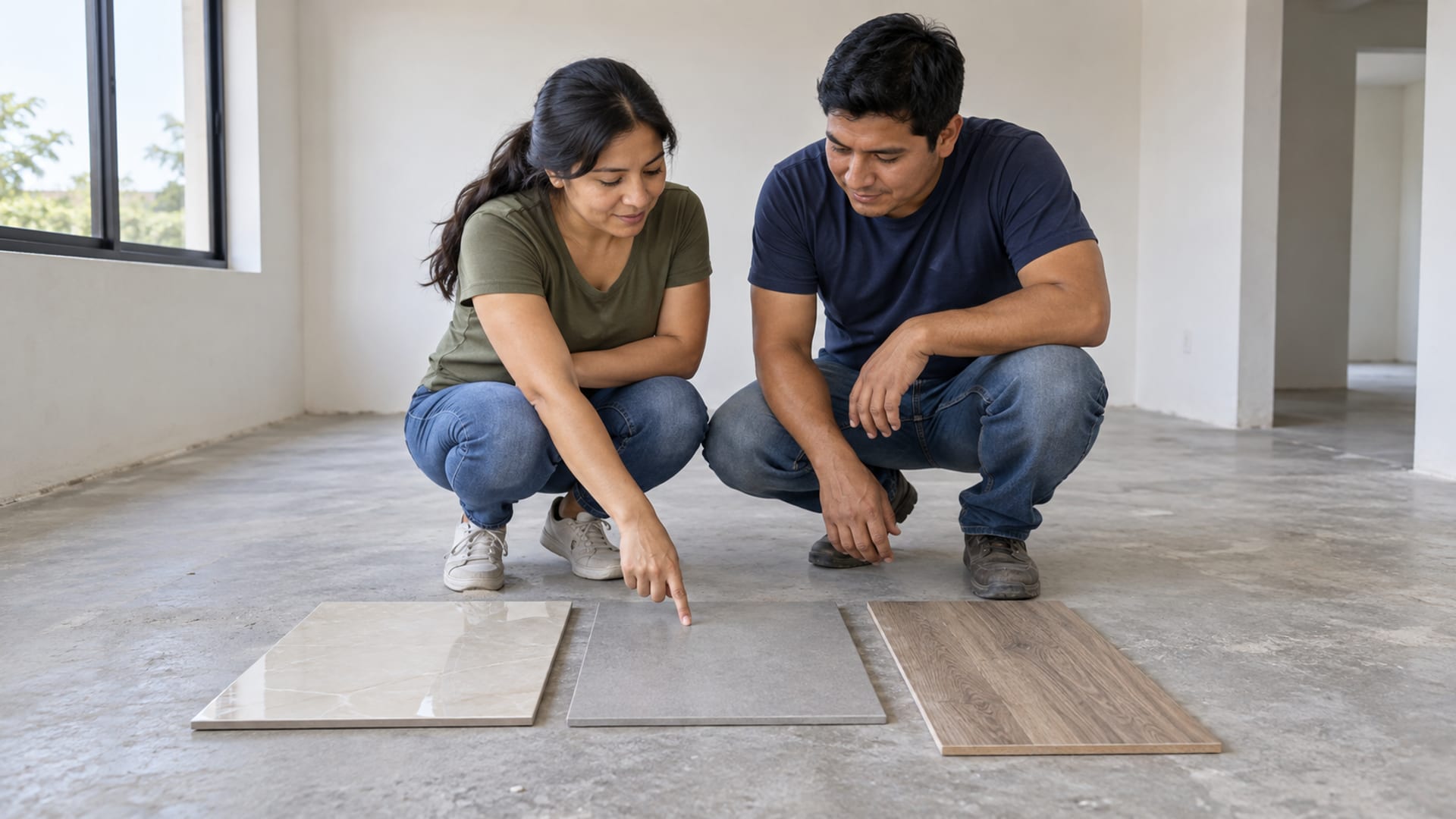
You have three floor quotes per square meter, and none of them looks like the others. One says ceramic, another porcelain, and another vinyl, and you cannot tell whether the price difference comes from the material, the installation, or the condition of the base the floor will sit on. The good news is that each one can be described with technical data sheet information, not only with the trade name. None suits every room. The choice depends on the room, the base that already exists, and the budget. Here you will see how they differ, what manufacturers and standards say about their use, what stores and installers publish as prices, what is charged separately, and what to request in writing so that you can compare two proposals.
Key takeaways
How do ceramic and porcelain differ?
Both are tiles made from clays or other mineral materials that are shaped and fired. The formal difference lies in water absorption. The ISO 13006 standard defines porcelain as a fully vitrified tile, with water absorption of 0.5% or less by mass, and classifies tiles by their manufacturing method and their absorption. For dry-pressed pieces, group BIa corresponds to absorption of 0.5% or less, and group BIb to more than 0.5% and up to 3%.
This means the word "porcelain" on a store shelf does not replace the technical data sheet. Ask for the data sheet of the exact model and check three things: the group or water absorption, the finish (matte, polished, or anti-slip), and the use class the manufacturer states. The PEI rating, for example, measures the abrasion resistance of certain glazed tiles, but it is not a universal rating for every floor.
Low absorption also does not make a whole installation waterproof. The product, the joints, the base, and the workmanship must all follow the applicable instructions.
What should I ask about vinyl flooring?
Vinyl flooring is a covering of PVC or another polymer system. It is sold as tile, roll, or plank, and sometimes under the abbreviations LVT, LVP, or SPC. SPC identifies a specific rigid core, and not all vinyl flooring has one. So, always ask which product it is, what its thickness is, and how it is installed: glued down, loose-laid, or with an interlocking click system.
Published data shows why the answer changes from one product to another. CYPE Ingenieros describes a 2.0 mm homogeneous PVC tile with ISO 10874 use classes of 23 for domestic use, 34 for commercial, and 43 for industrial, and its specification says it must not be laid in damp rooms. Tarkett, by contrast, states that its ICONIK 240 collection suits entryways and hallways, bedrooms, home offices, kitchens, living rooms, and bathrooms, and its ICONIK 260 collection has similar residential uses. Tarkett also warns that the installation and the joints affect how the floor behaves against water.
Both statements are true for their own product. Neither applies to "all vinyl." Ask for the data sheet of the exact product, and ask the supplier to confirm in writing that it suits the room where it will go.
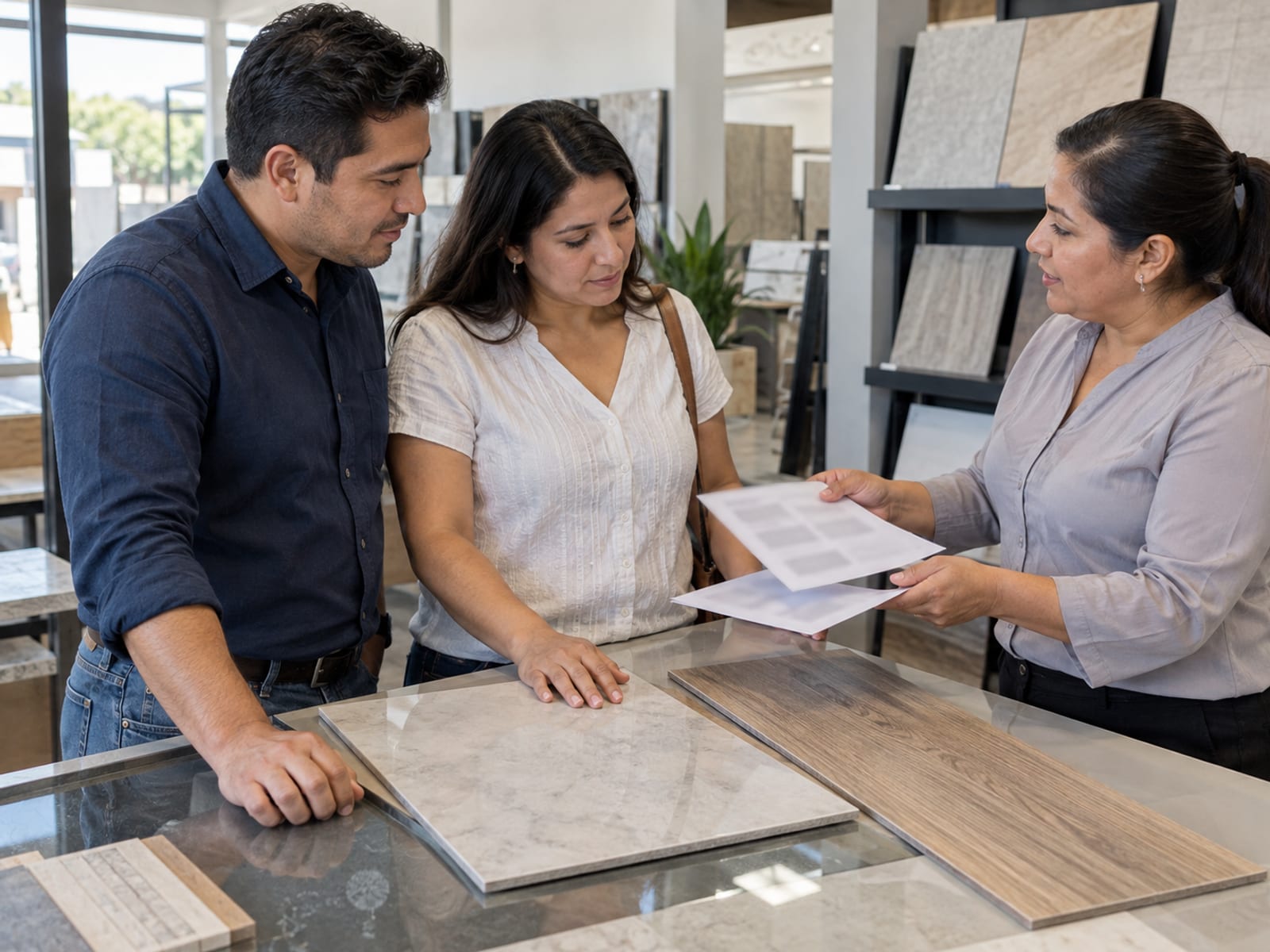
Which floor is used in kitchens, bathrooms, or damp areas?
Think about the room first, then the material. A kitchen and a bathroom have water, grease, and frequent cleaning. A living room or bedroom has much less of each. With the data sheets at hand, the question becomes concrete.
For tile, look at the absorption, the finish, and the slip resistance the manufacturer declares. The Lexolite data sheet for its porcelain, for example, declares PEI 4 and a slip resistance above 0.40 dry and below 0.40 wet. Those values belong to that product and that test method, not to all porcelain. The Coem data sheet identifies a BIa tile with maximum absorption of 0.5%, but on its own it does not set a use for each room.
For vinyl, look at the uses the collection declares, the joints, and the installation method. Tarkett says vinyl is cleaned by sweeping or vacuuming, then mopping with warm water and a neutral cleaner.
If the room is damp and so is the base, do not decide on price. Ask the installer to inspect the slab and tell you in writing which product and which system apply.
How much do stores publish per square meter of material?
These figures are published prices and estimates, not official averages. They vary by model, format, promotion, and store, and they do not always say whether they include transport, waste, or accessories.
From these publications, a working range for ceramic runs from Q49.90 to Q134.95 per m² if you add the catalogs of Ceramipiso, Mariscal, and EPA cited by Living in Guatemala. For porcelain it runs from Q89.95 to more than Q349.95, and for vinyl from Q149 to Q269. These are published ranges, not an average. Comparing a budget model of one material with an imported model of another does not tell you which material is right.
How much does installation cost, and what is charged separately?
The floor price does not include its laying. Installers and guides publish labor separately.
Look at what each figure measures. CYPE's Q252.65 is the supply and installation of one specific product, and it should not be mixed with the labor-only figures in the other rows. The guides also mention what pushes the price up. Distribuidora Mariscal notes that very large pieces or complex patterns push the installation toward the high end, and Espacio Chapín says that a base needing leveling and the removal of the existing floor add work and cost.
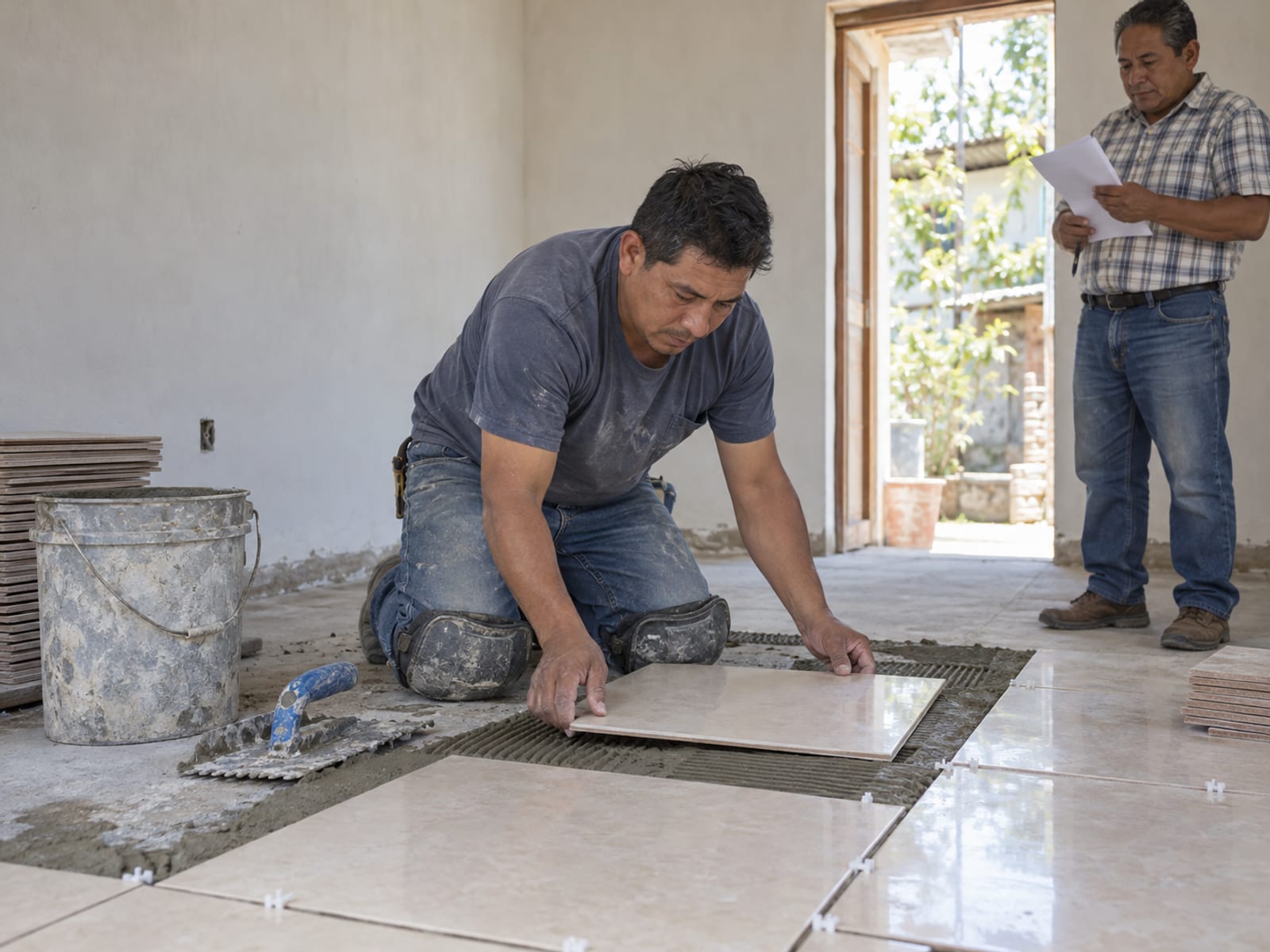
That is why, in every quote, you should ask whether the price includes or excludes:
- Removal of the existing floor and its debris.
- Base preparation: cleaning, repair, or leveling.
- Adhesive or interlocking system, according to the product data sheet.
- Grout or joint filler and profiles.
- Skirting, cuts, and extra pieces.
- Final cleaning and transport.
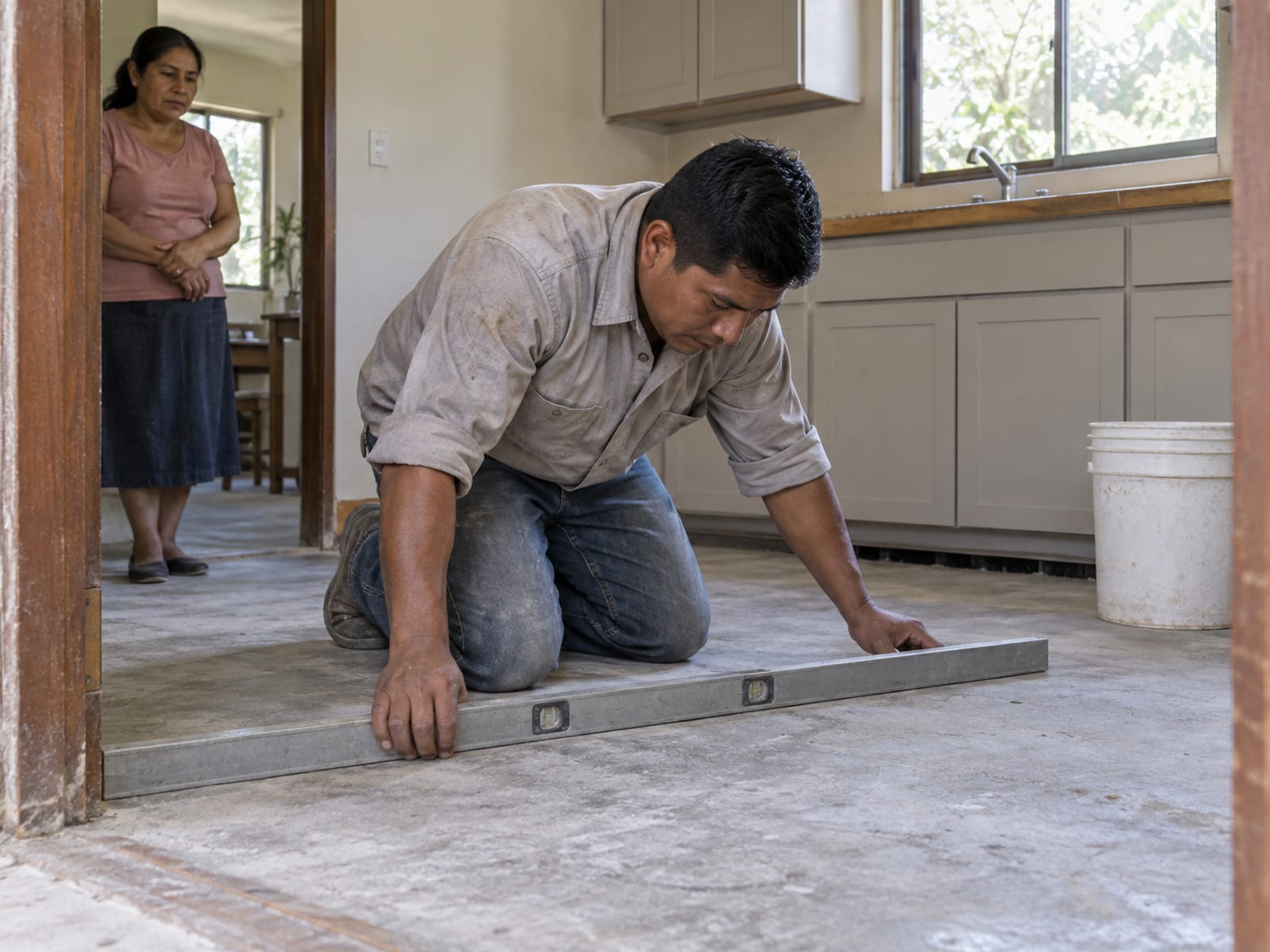
Is the base I already have suitable?
Before you fall in love with a floor, check the base. Manufacturers' instructions agree on the essentials: the base must be clean, flat, and dry. For the tile that CYPE describes, the substrate must have moisture below 3%, be free of cracks, and meet the temperature and ambient humidity conditions. Quick-Step calls for a clean, smooth, stable, and permanently dry base, repair or leveling of any irregularities, and acclimatizing the product for at least 48 hours in the room where it will be installed. Armstrong also calls for a dry, clean, and flat surface.
Can vinyl go over ceramic? For certain products it may be possible, if the surface is firm, clean, dry, and flat, and if the joints are corrected according to the manufacturer. Ask the installer to confirm in writing that the product you chose accepts that base, and what preparation it needs.
If the slab is damp, cracked, or uneven, ask for an assessment from the installer or a competent professional before you buy. And if the work touches structural elements, consult a professional and the municipality. In Guatemala City, for example, permits are processed through the Ventanilla Única (one-stop permit window), and light remodeling jobs follow a specific procedure. In another municipality, ask there.
Which specifications should I request to compare two quotes?
Ask each supplier for the same things, and compare without mixing them. The Consumer Protection and User Law (Ley de Protección al Consumidor y Usuario) supports stating the price, the characteristics, the payment terms, and the warranty clearly. The list below is a practical way to ask for them.
With both proposals in that form, the price difference explains itself. Each line item sits in one proposal or the other, and you can see who covers what.
Frequently asked questions about ceramic, porcelain, or vinyl flooring
What is the difference between ceramic and porcelain?
Both are fired ceramic coverings. ISO 13006 defines porcelain as fully vitrified tile with water absorption of 0.5% or less. Check the model's data sheet, because the trade name does not indicate the technical group, the finish, or the slip resistance.
Does vinyl flooring work for a house in Guatemala?
It depends on the product. Tarkett states that its ICONIK 240 and ICONIK 260 collections are suitable for bedrooms, kitchens, living rooms, and bathrooms, and CYPE indicates that its homogeneous PVC tile must not be laid in damp rooms. Check the data sheet of the exact product and the moisture of the base.
How much does ceramic cost per m²?
Published prices range from Q49.90 on a 2025 Ceramipiso page to Q134.95 in Mariscal catalogs cited by Living in Guatemala. Ask for the current price of the exact code, and confirm whether it includes transport.
How much does it cost to install porcelain?
Distribuidora Mariscal published Q50 to Q100 per m² for labor, and Espacio Chapín published Q55 to Q85. Those ranges do not include the porcelain, the adhesive, the grout, leveling, removal, or skirting.
Can vinyl flooring be laid over ceramic?
It may be possible for certain products if the surface is firm, clean, dry, and flat. Ask the installer to confirm compatibility and preparation in writing.
What should a floor quote include?
The area, the exact product, the quantity, the price per m², transport, labor, and any additional work, plus the schedule, payments, and warranty.
How to decide for your home
Ceramic, porcelain, and vinyl are three valid options, and none is the answer for every room. Start with the room and the moisture, check the base, ask for the data sheet of the exact product, and separate the material, labor, adhesive, grout, skirting, removal, and preparation in the quote. With that, the price per square meter stops being a loose figure and becomes a comparison of content.
The Construction Materials Price Index (Índice de Precios de Materiales de Construcción, IPMC) from INE, the national statistics institute, shows how input prices move each month. It is not a rate or a price per square meter. For your floor, always request a written, current quote.
At Albañiles Guate we help people in Guatemala find and contact masons, builders, and related construction trades by service and by location. You can browse the renovation directory to find who to ask for proposals, or write to us from the contact page if you have a floor in mind.
Related guides
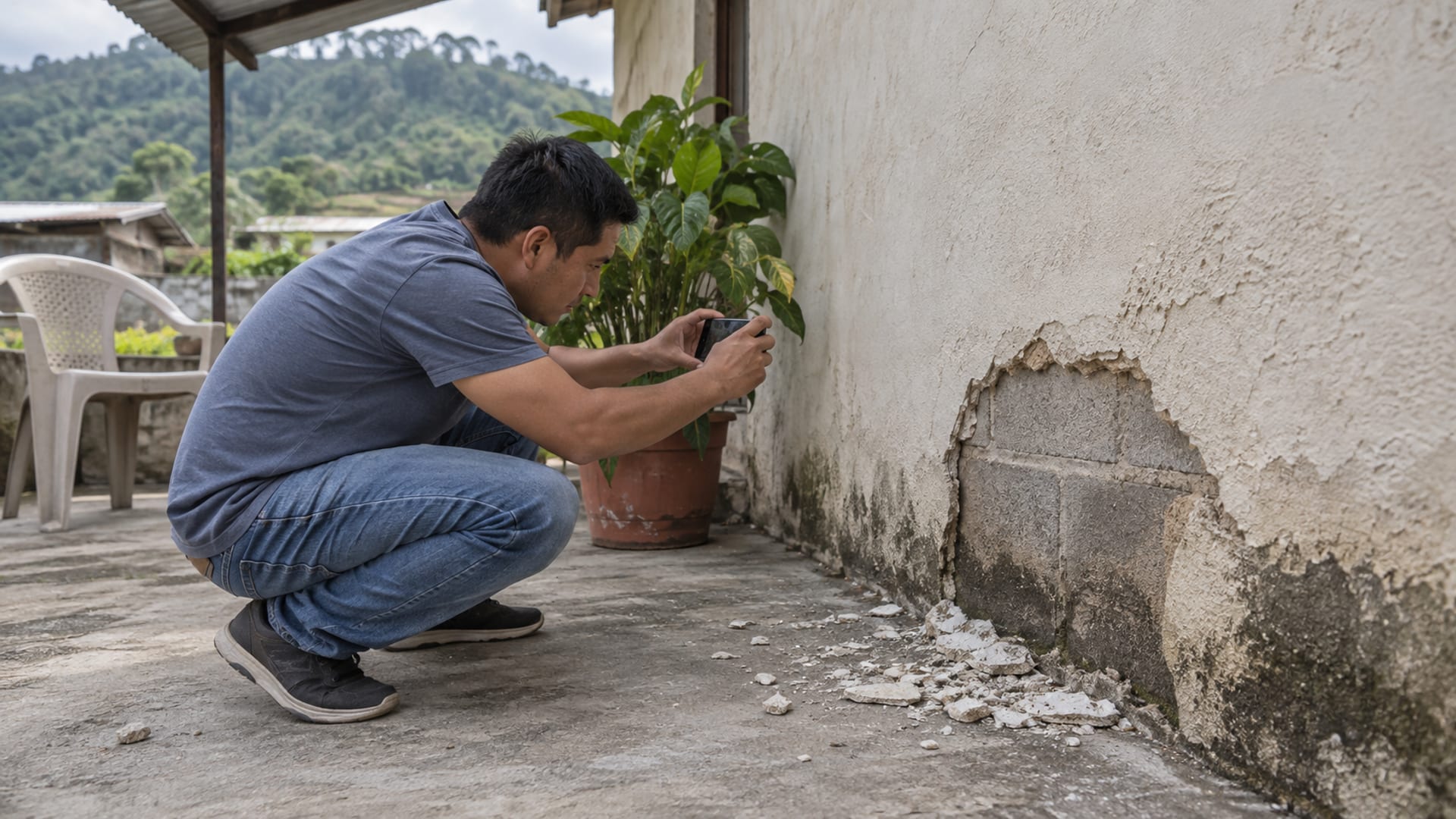
How to Request a Masonry Quote in Guatemala
A masonry quote in Guatemala should spell out materials, labor, rubble removal, dates, payment stages, and warranty. Review every line before you decide.
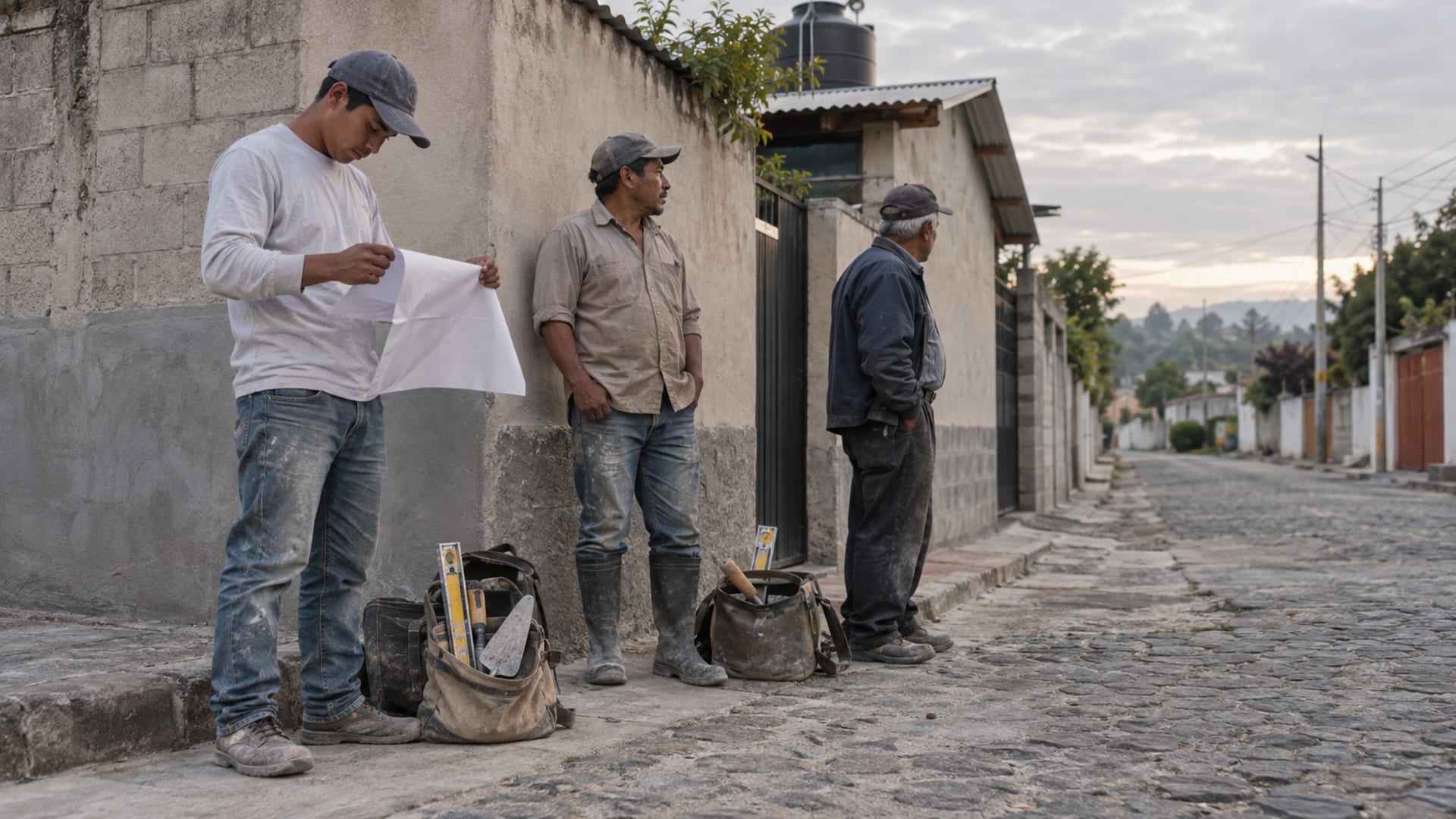
How much does a mason charge in Guatemala per day, per m² or per job
How much does a mason charge in Guatemala per day, per square meter or per job, and what a written quote should include: materials, helpers and payments.
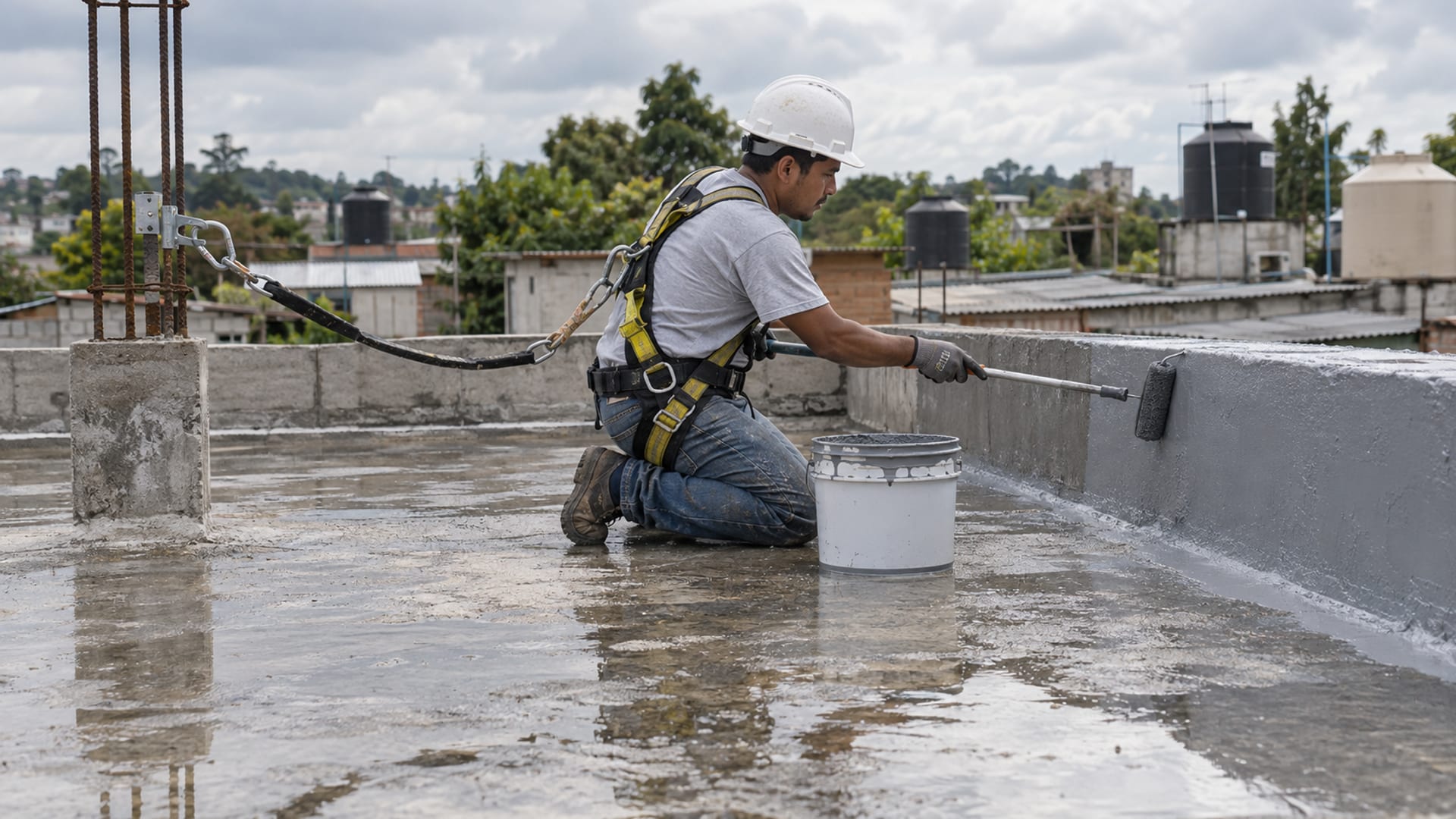
Leaks in a concrete slab roof: what to do now
Leaks in a concrete slab roof: why water gets in, which waterproofing suits concrete, when to call an engineer, and what to get in writing before paying.