
How to compare a materials list for a construction job
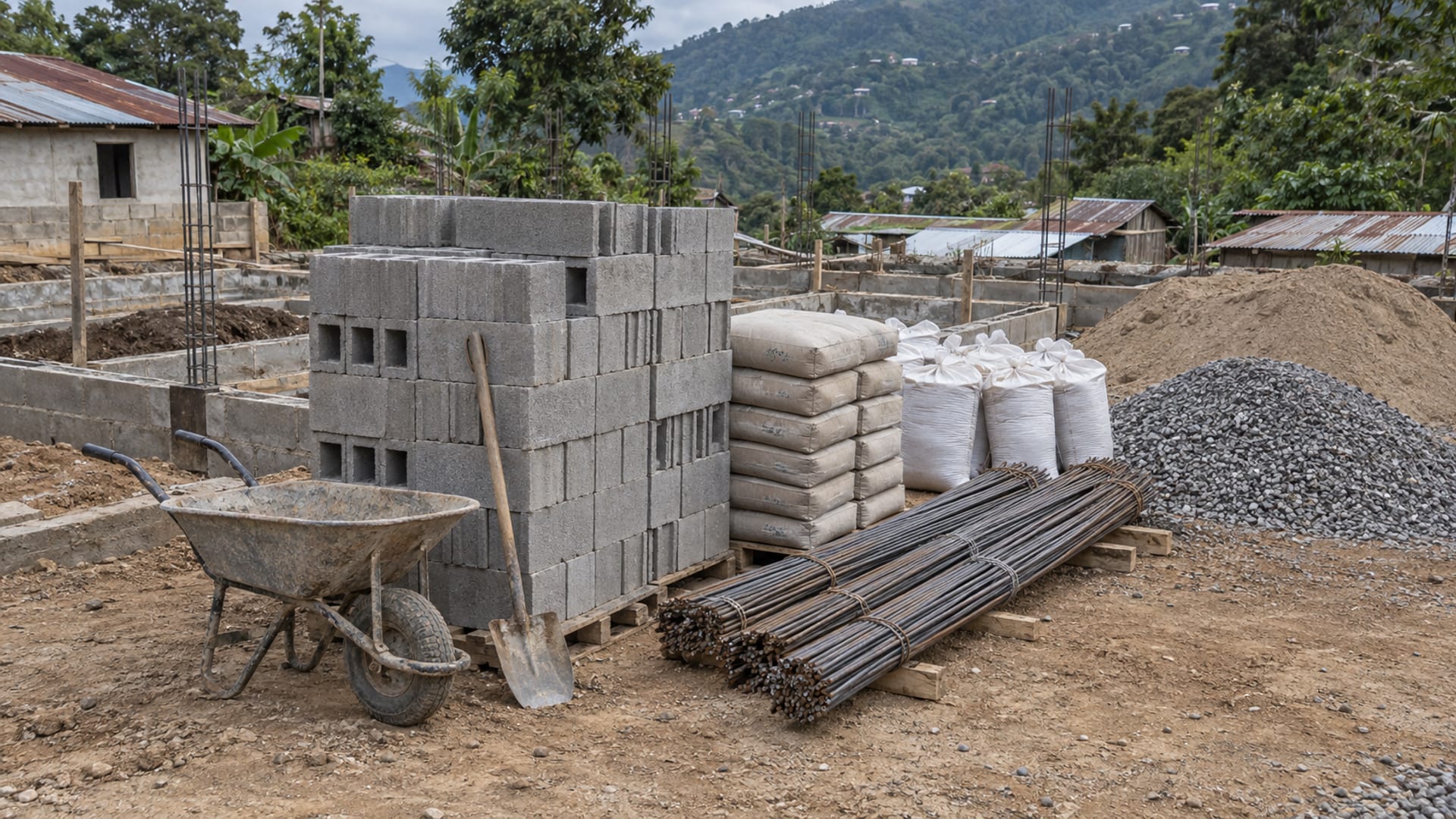
You have two quotes on the table and they do not look alike. One talks about sacks, the other about quintales (units of weight); one counts rebar rods, the other counts rolls; one lists brands, and the other only says "first-quality material." To compare a construction materials list, both must describe the same thing, and at first glance that is rarely obvious. A quote can look cheaper just because it leaves out materials, uses a different unit, or leaves transport out. That is why it helps to organize the comparison before you look at the totals. With a few matching columns for both quotes, you can see what each one includes, what it is missing, and what to ask in writing before you sign.
Key takeaways
What should each quote include so you can compare it?
Before you do any math, gather both complete lists. Each one should show its total, the date it was issued, and how long its prices are valid. If one arrived only by message, ask for it in a document where everything is written. That way you avoid arguing later about what was "said."
Next, confirm that both refer to the same scope of work. If one includes the floor and the other does not, or if one covers the whole wall and the other only a section, the totals are not comparable, no matter how cheap or expensive one looks. Note which line item covers each material, and ask for clarification on any line that does not have a clear purpose.
These are the fields to require in both lists:
- Description: what the material is and which part of the work it is for.
- Unit and content: the unit with its weight, volume, length, or number of pieces.
- Quantity: expressed in a unit you can check.
- Product or specification: brand or manufacturer if identified, type, dimensions, standard, or performance.
- Delivery and transport: whether freight, unloading, and the delivery location are included.
- Storage and protection: where the material is kept and who protects it.
- Purchase and receipt: who buys, who pays, who receives, and who checks.
- Substitutions: how a product is replaced and who approves the change.
- Estimating method: the plans, measurements, or takeoffs that each quantity comes from.
- Date and validity: when it was issued and how long each price stands.
If you set up a table with these columns, one row per material and a block of data for each quote, the differences show up on their own. An empty cell in one quote is exactly the question you need to ask.

How do I compare a sack with a quintal, a truckload, or a rod?
The name of a unit does not tell you how much material there is. Construction lists often include the sack or bag, the quintal, the pound, the cubic meter, the truckload, the thousand, the rod, and the roll. Each one needs an extra detail before you can compare it:
- Sack or bag: a commercial container. Ask for the weight or content of the package; two sacks with the same name can hold different amounts.
- Quintal and pound: units of weight. Compare them with the weight stated in the quote, not with the trade name. If one list says "sack" and the other says "quintal," confirm the real weight of each.
- Cubic meter: a measure of volume. For bulk materials such as sand or soil, ask how it is measured and what material it contains.
- Truckload: describes a transport load, but truck capacity varies. Ask for the committed volume or capacity.
- Thousand: usually one thousand units. The quote must say whether they are blocks, bricks, or another piece, and what their dimensions are.
- Rod: identify it by diameter, length, grade, or the applicable standard. "One rod" can mean a complete piece or a line of steel without enough specification.
- Roll: on its own, it does not state the length, weight, or diameter.
The most common mistakes are comparing weight with volume, assuming all sacks hold the same amount, treating a truckload as a fixed measure, counting rods without knowing their length, or comparing a thousand pieces of different sizes. These trade expressions have no general equivalence. The prudent option is to ask each supplier for the data they declare for the product they are quoting. The National Statistics Institute (Instituto Nacional de Estadística, INE) publishes a dictionary of items and variables for its construction materials price index, which helps you see how commonly used materials are described.
What does "first-quality material" mean, and how do you verify it?
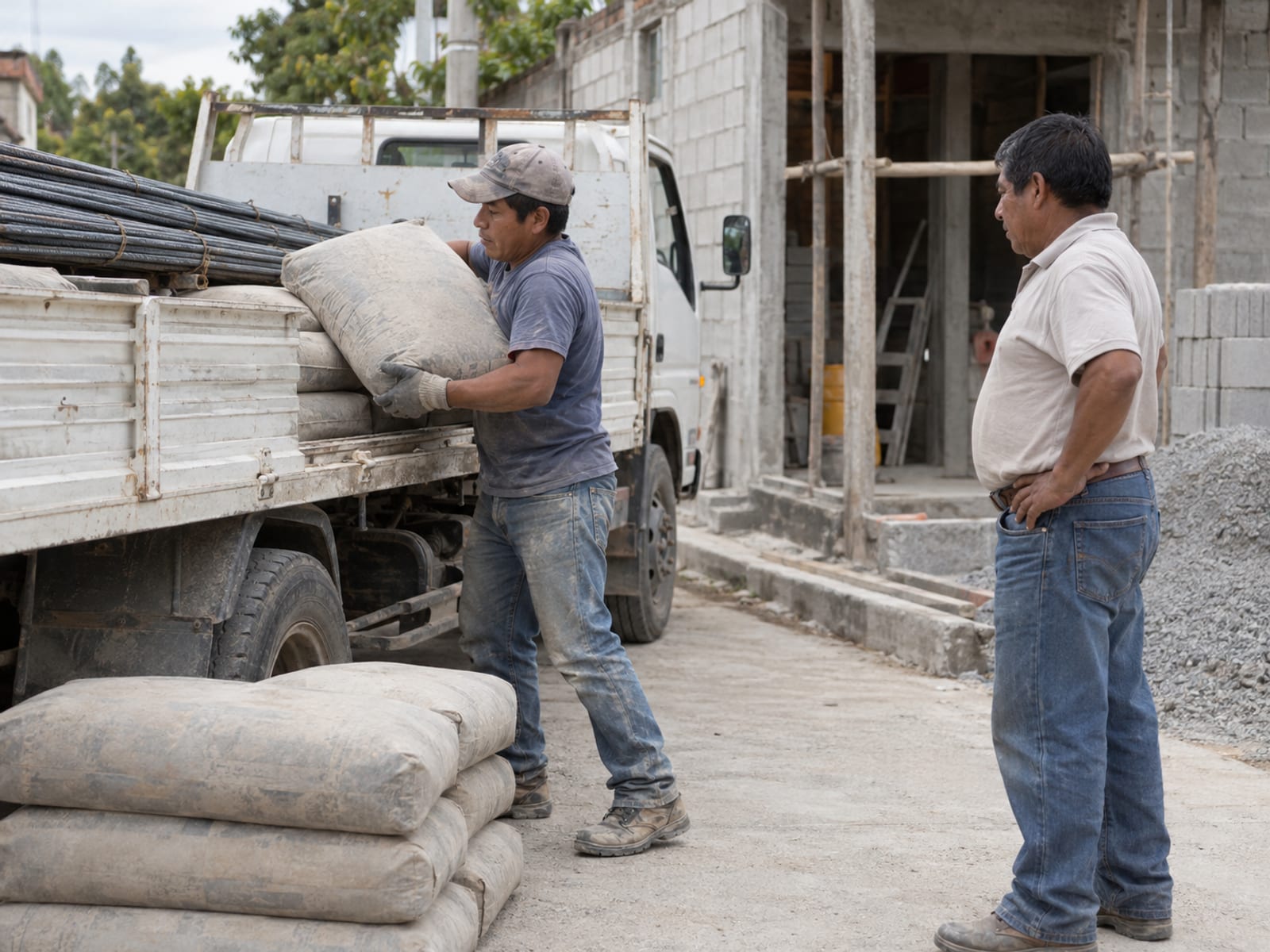
The phrase sounds like quality, but it does not name a standard, a dimension, a strength, a content, or a manufacturer. If a quote says "cement," "block," or "steel" with nothing more, it may be describing different products from the other quote. Ask for the product name, the technical data sheet, or the specification it must meet.
Some standards help you know what to ask for, although each has its own scope:
- Cement: the AGIES NSE 4-10 standard states that, for the case it describes, performance-specified hydraulic cement under COGUANOR NTG 41095 (the Guatemalan Commission for Standards, also identified as ASTM C1157) must be used. It also asks for the original packaging, fresh product, and that the product keeps its characteristics.
- Concrete blocks and bonding mortars: the AGIES NSE 7.4-2024 standard refers to COGUANOR NTG 41054 for the blocks and to COGUANOR NTG 41050 for bonding mortars.
- Concrete, cement, aggregates, and mortars in FHA projects: the FHA Planning and Construction Standards (Fondo Hipotecario para la Vivienda) have chapters on these materials. They apply to projects subject to FHA requirements.
- Reinforcing steel: ask for the standard declared on the product data sheet for each presentation, and compare it with the one the plans or specifications require.
These standards set quality, performance, or conformity requirements. On their own, they do not decide quantities, diameters, spacing, or mixes for a particular structure. For a specific product, ask the supplier which standard is declared on its technical data sheet, and write it in the table.
Manufacturers' data sheets also provide comparable data, but they belong to one specific product. For example, the Mixto Listo data sheet for performance concretes shows the compressive strength, the maximum aggregate size, the slump, the placement type, and the curing recommendation for those concretes. That data does not transfer to another concrete or another manufacturer. When you quote cement in sacks, ceramic adhesive, block, or steel, ask for the data sheet of the exact product offered.
What counts apart from the price of the material?
A quote can look lower because it leaves out costs that the other one includes. In your table, separate these items and mark, for each quote, whether it is included or not:
- Transport or freight: may be included, billed separately, or limited to certain delivery conditions.
- Unloading: ask who unloads and whether site access has any restriction.
- Storage: where the material is kept and who protects it from moisture and handling. For cement, AGIES NSE 4-10 sets storage conditions within the scope of that standard. For other products, check the manufacturer's data sheet.
- Labor: confirm whether the quote covers materials only or includes installation.
- Waste removal: ask whether anyone takes away rubble and leftover material.
With this in view, a quote that only offers materials and another that adds transport, unloading, and waste removal no longer look like direct rivals. Compare them item by item, and ask about whatever is missing from each.
How do I know whether a quantity is well estimated?
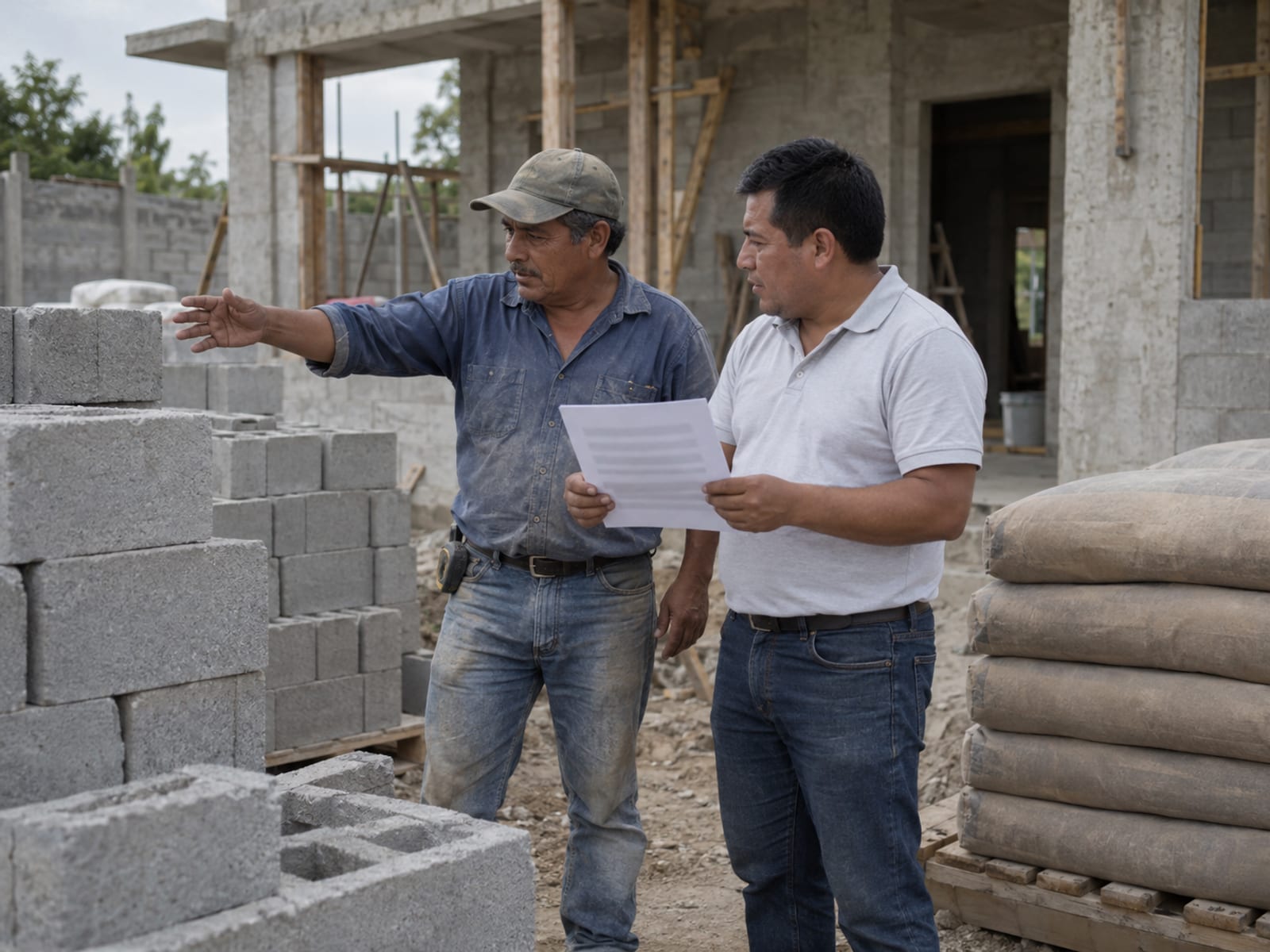
Ask each supplier where each quantity comes from: plans, measurements, specifications, takeoffs, or a method they can explain. Also ask them to show separately the quantity the design requires and any extra allowance they included. That way you can see whether two lists with different numbers start from the same measurement or from different criteria.
There is no waste percentage that works for every project or every material. Quantities depend on the design, the measurements, the commercial packaging, the delivery conditions, and how the work is carried out. That is why a percentage taken from another project or from a general table should not become the rule for yours. The supplier's explanation is the starting point.
What changes when the work is structural?
Foundations, columns, beams, slabs, and load-bearing walls are structural elements. For them, the materials list alone does not decide what is needed. According to AGIES NSE 4-10, materials must have the quality needed to provide strength, load capacity, and durability. And AGIES NSE 7.4-2024 states that structural masonry requires reinforcement.
In practice, before you compare quantities on a structural job, you need the approved plans and specifications. Give both lists to the professional responsible for the structural design and ask them to confirm which one matches the design. They decide the materials and the characteristics of those elements, not the supplier who is quoting.
Should I accept an "equivalent" product?
A substitution is a change from one material to another. Before you accept one, ask the quote to identify the new product and its comparable characteristics, and write down who approves the change and which document supports the equivalence. The word "equivalent" does not replace a technical review. If the material is part of a structural element or a project specification, consult the responsible professional before you approve the change.
Also note who buys, pays, receives, checks, and stores. When materials arrive, compare the delivery with the list: description, unit, quantity, product, and visible condition. This division of tasks is a planning decision, except for any obligations that come from the contract or the applicable law.
How do I compare quotes with different dates?
Note the date and validity of each quote. Material prices change, and two lists issued a few weeks apart may not be comparable only because of the time that passed. The Construction Materials Price Index of the INE measures the monthly change in the prices of 89 materials and services in a representative basket of construction inputs, with December 2018 equal to 100.0. Its methodology document explains how it is calculated.
That index helps you understand that a difference between dates can match general price changes. It does not tell you how much you should pay for a material, the total cost of a job, or the quantity you need. It also does not replace a valid quote with its transport, presentation, location, and specific conditions. If two quotes have different dates, ask both suppliers to confirm their prices for the same date.
Which municipal permit should you confirm?
The municipality where the property is located sets the permit requirements. If the work is in Guatemala City, the One-Stop Window of the Municipality explains how to get the construction permit, and it receives and reviews the file according to the type of application. In another municipality, check with the local municipal office. Make this check before you start the work and before you buy materials.
What should you do if the delivery does not match what was agreed?
Compare what you received with the quote, the order, the invoice, and the delivery receipt. Document the difference with photos and notify the supplier. The Consumer and User Protection Law (Ley de Protección al Consumidor y Usuario) recognizes the right to truthful, sufficient, clear, and timely information about prices, features, quality, and contents of goods. It also provides options such as repair, refund, or exchange of the item when what was agreed is not met.
For a complaint, the regulation of that law states that the consumer must present the invoice or the document that proves the purchase within the same calendar month it was issued. There is one exception for documents issued in the last five days of the month. DIACO (Dirección de Atención y Asistencia al Consumidor, the consumer assistance office) handles guidance and complaint channels, including the complaints book. That is why it helps to keep quotes, invoices, receipts, and delivery receipts from the first day. Ask DIACO about the procedure that applies to your case.
Frequently asked questions about how to compare a construction materials list
How do I compare a sack with a quintal?
Do not compare the names. Ask for the exact weight or content of each package, and write it down next to the quantity offered. A sack is a commercial container. A quintal expresses weight. If the quote does not identify the content, request a written clarification before you compare totals.
What does "first-quality material" mean?
On its own, the phrase does not identify a standard, a dimension, a strength, a content, a manufacturer, or a performance level. Ask for the product name, its technical data sheet, or the specification it must meet.
Who should receive the materials?
Write down who buys, pays, receives, checks, and stores them. When they arrive, compare the delivery with the list, and keep the invoice or receipt and the delivery receipt.
Can I use a calculator or a general waste percentage?
They can serve, at most, as an initial guide. They do not replace the design or the supplier's explanation of how each quantity was calculated. On structural work, the quantities must match the design and its specifications.
Can I accept another product if the supplier says it is equivalent?
Only if the substitution identifies the product and its comparable characteristics, and if it is written down who approved it. When it affects a structural element, consult the responsible professional first.
What should I do if the materials delivered differ from what was agreed?
Document the difference, compare it with the quote, the order, and the invoice, and tell the supplier. Keep the purchase document, and ask DIACO about the procedure.
The essentials for deciding
Comparing a construction materials list is, above all, a matter of putting things in order. First confirm that both quotes cover the same scope. Then bring each unit to a comparable form, review the description, specification, and equivalences, and separate materials, transport, unloading, storage, labor, and waste removal. Ask where each quantity comes from, and note who buys and who receives. With that in place, a difference in presentation no longer has to lead you to a wrong decision.
The effort is worth it, because a table with the same columns lets you see calmly what each quote is missing, and ask in writing for whatever was not clear, before you sign and before you buy. A job with clear rules from the start usually avoids arguments when the materials arrive.
If you are looking for masons, builders, or other construction trades in Guatemala, Albañiles Guate can help you find and contact them by service and by location. We do not endorse, rank, or certify the businesses that appear in the directory. Write to us from the Albañiles Guate contact page and we will guide you as you start requesting quotes with the table you built here.
Related guides

How to Request a Masonry Quote in Guatemala
A masonry quote in Guatemala should spell out materials, labor, rubble removal, dates, payment stages, and warranty. Review every line before you decide.

What a Written Scope of Work for a Masonry Job Should Include
Before you hire, write down what the job includes, who buys and removes materials, the start and end dates, payments, final cleanup, and the warranty period.
When to consult a structural engineer before building work
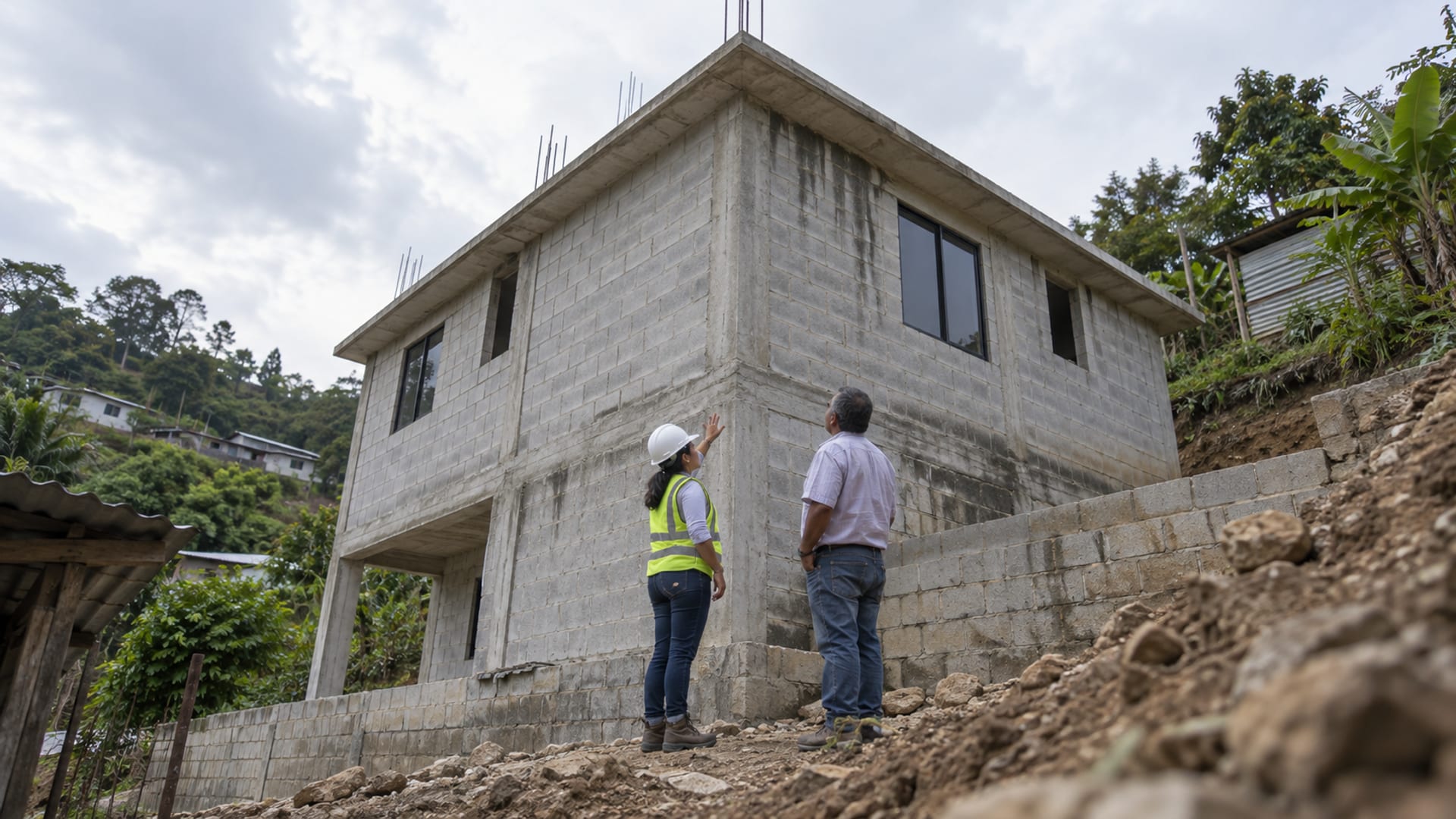
Before you remodel, check whether the change touches walls, slabs or foundations. Learn when to consult a structural engineer and what to bring to the visit.