
Block price in Guatemala and which size to order
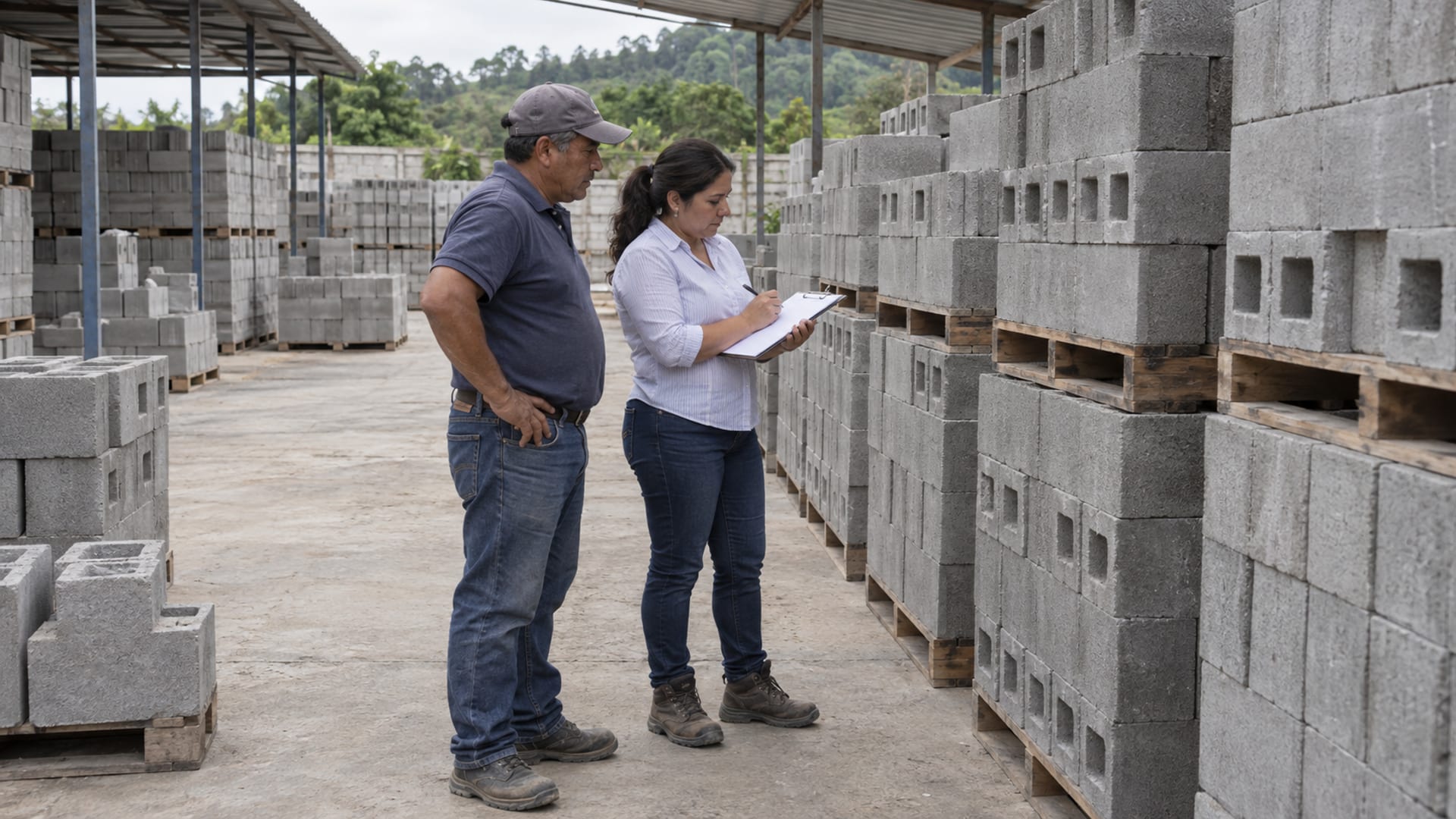
You are going to buy block, and you call two sellers. One gives you a price per unit, the other a price per thousand, and neither says whether delivery is included. They also ask "14, 15 or 19?" and you do not know what to answer. The price of block in Guatemala changes with the size, the class or strength, the quantity, the manufacturer, the date and the freight, and the word "block" covers several different pieces. If you are buying from abroad for a job in Guatemala, or you live here and need to understand the sizes before you talk to the seller, what you need is a way to read each price in parts. Below you will see the figures published by manufacturers, sellers and the National Statistics Institute (INE), what the sizes mean, and what to request in writing so that what arrives at the job matches what you paid for.
Key takeaways
How much does a thousand blocks cost, and how much does one unit cost?
The published figures are not in the same unit, so they are shown as they appear, with their source and date. They are prices published or quoted by each seller, not official averages or prices you will pay today.
Using these figures, for the 14 cm block the National Statistics Institute (INE) published between Q3,630.00 and Q3,840.00 per thousand in July 2023, while the commercial sites show Q4.18 and Q4.65 per unit, and Q706 for a presentation of 1,000 units. For the 19 cm block, the INE published between Q4,350.00 and Q4,483.33 per thousand, and Procreto shows Q5.91 per unit. For the 15 cm block there is only one published figure, Procreto's. These are ranges of published prices. Do not convert them from unit to thousand or calculate an average, because the product, the date and the delivery are different in each row.
Why does the same block cost differently at two stores?
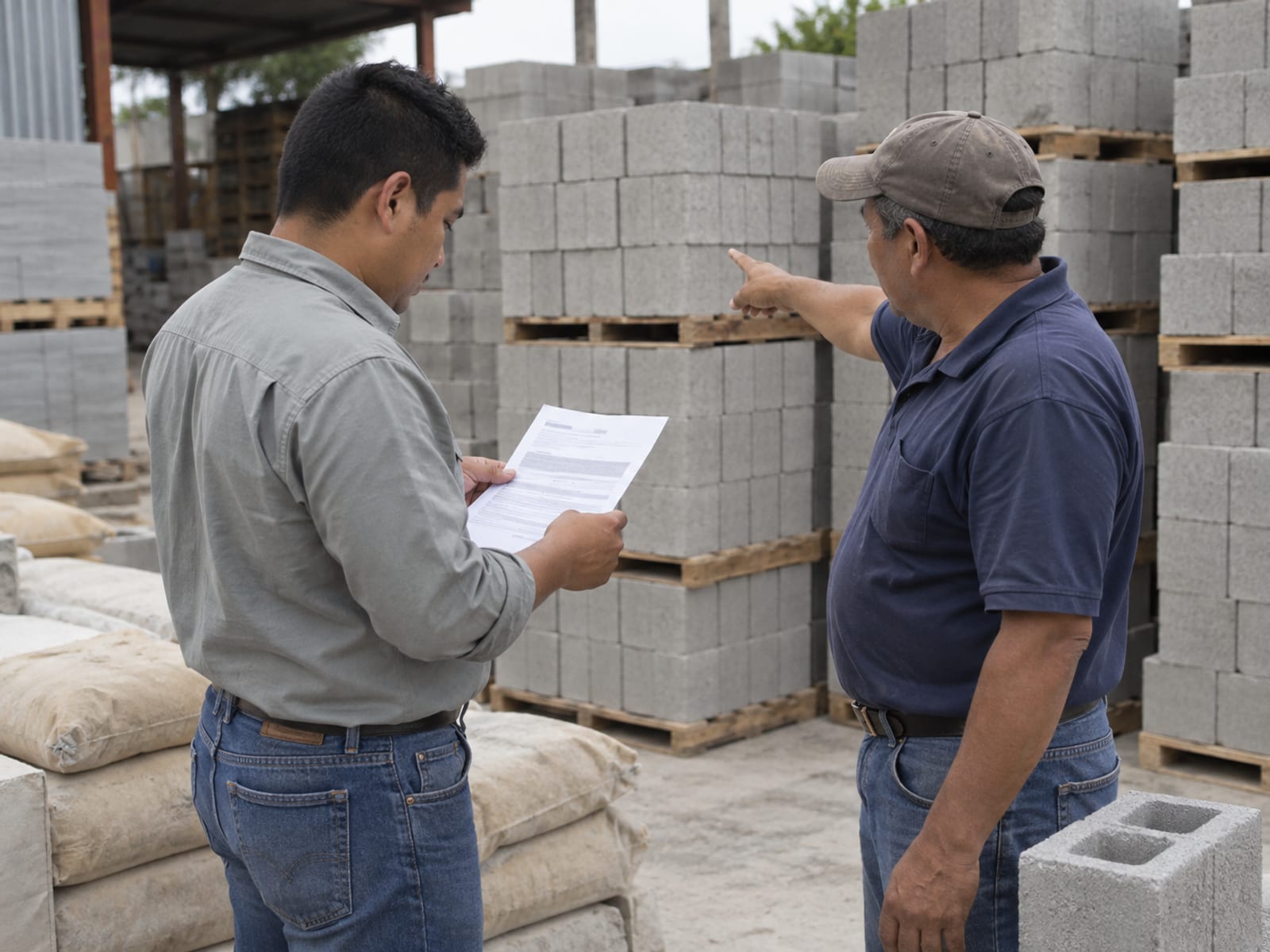
Because the price is built from several parts, and each seller can move a different one. They can change the actual size of the piece, the declared class or strength, the manufacturer, the quantity ordered, whether it is sold per unit or per thousand, the municipality and delivery distance, whether freight is included, the date of the quote and availability. A price per unit is not automatically the same as a price per thousand, and a price at the plant is not the same as a price delivered to the site.
The INE publishes the Construction Materials Price Index (IPMC), which measures the monthly change in a basket of materials and services, with December 2018 equal to 100.0. Its March 2026 publication explains that the index covers 89 materials and services and that quotes are collected in the Metropolitan Region and nearby municipalities. It helps show where prices are moving; it does not publish the cost of a block unit and does not replace a quote. For that reason, the figure that counts for your purchase is the one the seller writes down, with a date.
What is the difference between 14, 15 and 19 cm block?
The commercial number identifies mainly the nominal width of the piece, but the full size is three numbers: length, width and height. The published data sheets show, for example, 14 x 19 x 39 cm, 15 x 20 x 40 cm and 19 x 19 x 39 cm. Because the order of the dimensions changes between sellers, always ask which number corresponds to each dimension.
Two things to keep from that table. First: two pieces with the same trade name can have different actual size, weight and wall thickness, so the name alone is not enough to compare them. Second: the number of cores and the thickness of the webs are requested in the data sheet of the specific product; they are not deduced from the nominal width. The standard COGUANOR NTG 41054 sets the requirements for hollow concrete blocks for walls, including classification, dimensions, absorption, strength, sampling, testing and marking. A block described as "normed" declares that it meets a standard, but that alone does not tell you its class, its strength or its manufacturer.
What size should I order for my wall?
The size, class and strength for a specific job are decided by the structural design or a qualified professional responsible for the project. The seller or the mason can quote the product, but they do not replace that decision. Width alone does not define use: a 14 cm block can appear in interior, exterior or structural walls; the 15 cm block is part of wall systems, but its data sheet does not make it a general authorization for any application; and the 19 cm block does not by itself prove that it is load-bearing.
The AGIES NSE 4-2024 standard, for small-house design, addresses the capacity of masonry walls and uses the strength of the block unit over its net area. It does not turn a 14, 15 or 19 cm size into a universal choice, because the design must review the whole house system. The AGIES NSE 7.4 standard, for reinforced masonry, states that concrete blocks must meet COGUANOR NTG 41054 in configuration, materials and strength.
In practical terms:
- Interior partition: it can be non-load-bearing or form part of the structural system. It is not solved by choosing "the thinnest one."
- Perimeter wall: it may require a different solution depending on height, soil, loads, exposure and site conditions.
- Load-bearing wall: it requires structural design and a unit compatible with that design.
Ask that the size, class and strength be written in the plans or the specifications. If the seller offers to substitute the product with another, ask before you accept; changing the size or class can affect the design of the work.
How many blocks go into a square meter of wall?
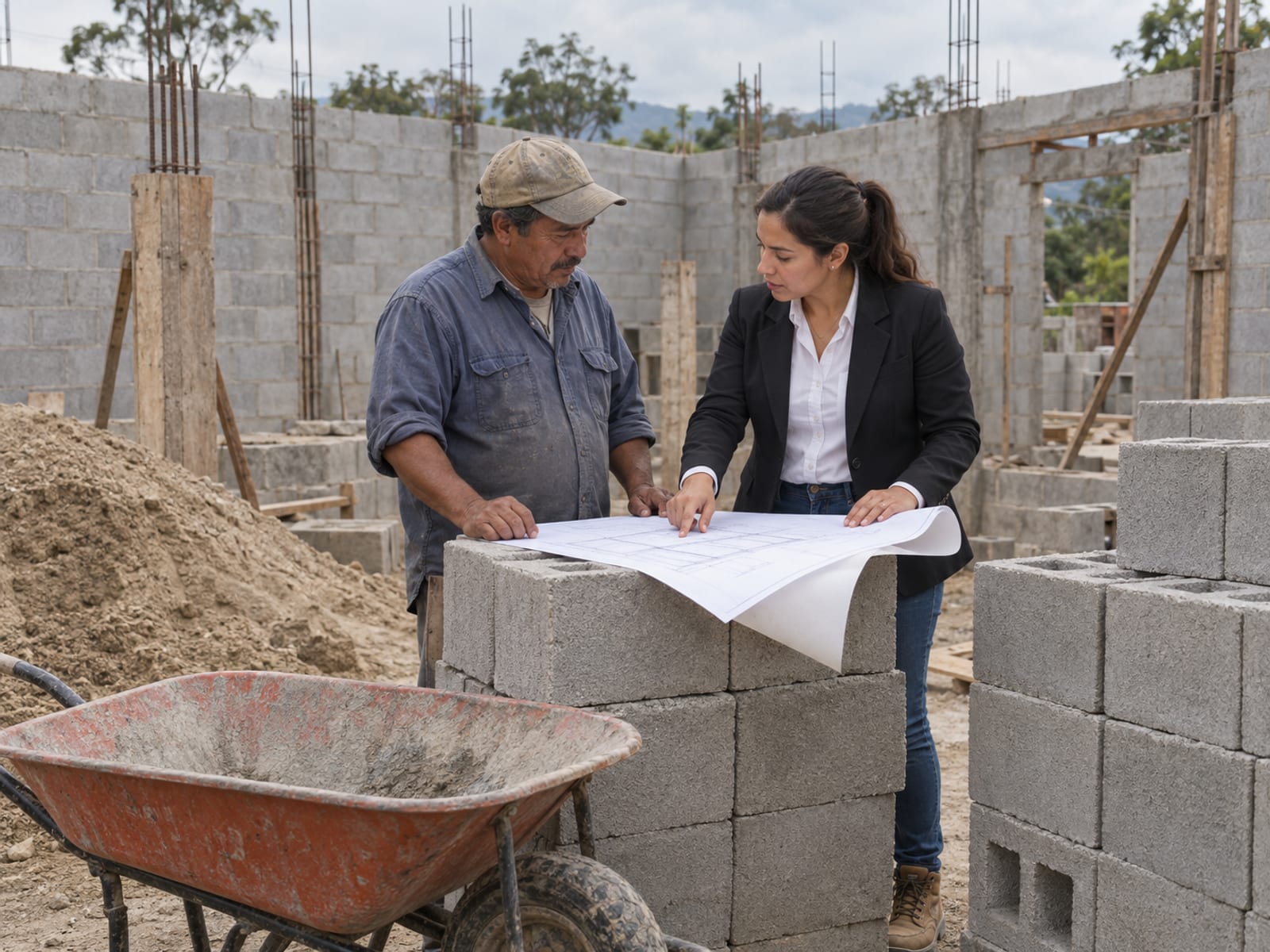
There is no single figure. The quantity depends on the actual size of the piece, the thickness of the joints, the cuts and the design, and it is calculated by the person responsible for the work. As an example from a manufacturer, the Distribuidora Mariscal data sheet for its 14 cm piece lists 12.5 units per square meter; it shows how a seller publishes the figure for its own product, but it is not a valid quantity for your wall.
What helps is to ask whoever directs the work to put in writing who calculates the quantity and which plan or method supports that estimate. Also define who buys the material, who receives and checks the delivery, where it will be stored on site, and how shortages or broken pieces will be recorded.
How do I order block in writing and check the delivery?
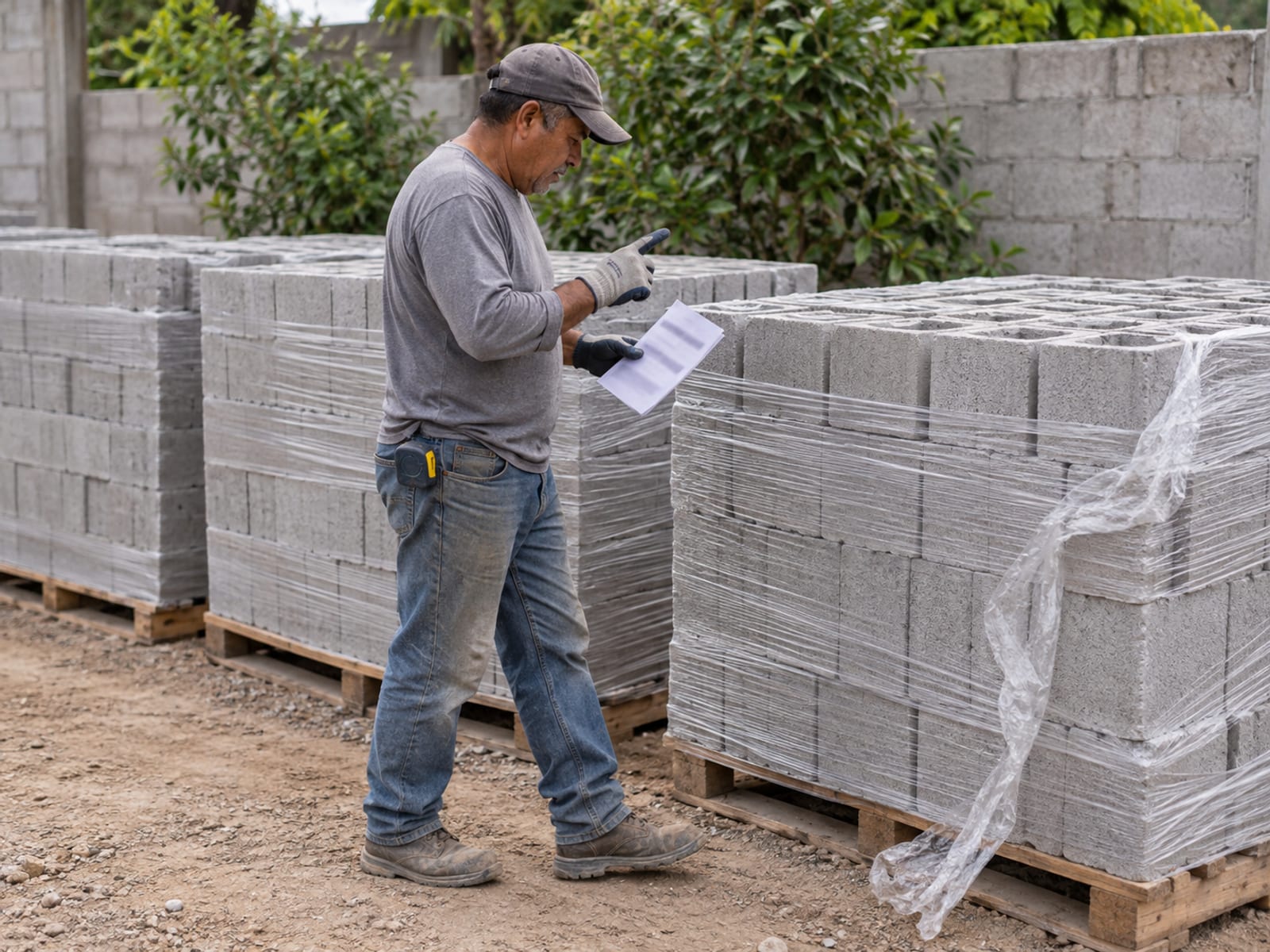
The written quote is the basis for comparing and for making a claim. The Consumer and User Protection Law (Ley de Protección al Consumidor y Usuario) requires the provider to give basic information about the goods, comply with the tax laws, issue the corresponding invoice, and deliver the goods complete at the agreed time and place. Ask that the quote and the invoice state:
- Full size: for example, 14 x 19 x 39 cm.
- Declared class or strength.
- Quantity and unit of sale: unit, thousand or pack.
- Price.
- Delivery included or excluded, with the municipality and the address.
- Date of the quote and agreed delivery date.
- Name or identification of the product.
- Conditions for shortages, substitutions or damaged pieces.
If the delivered block does not match what was agreed, request a solution in writing, and keep the quote, the order, the messages, the invoice, the proof of payment and the evidence of the difference. The Consumer Assistance Directorate (DIACO) (Dirección de Atención y Asistencia al Consumidor) asks for documents that prove the purchase in order to process a complaint, including an invoice, receipt, contract or warranty. To interpret a specific case, consult a legal professional.
If you need to compare concrete and materials suppliers in your area, you can review the concrete businesses in the directory by service and by place. And if the job requires a license, the authority depends on the municipality; in Guatemala City, the Ventanilla Única (the city's single-window permit counter) explains the procedure.
Frequently asked questions about block prices in Guatemala
How much does a thousand blocks cost?
It depends on the size, the class, the manufacturer, the date and the delivery. The INE published per-thousand prices for 14 and 19 cm concrete blocks in July 2023, while sellers publish per-unit prices or prices for a presentation of 1,000 units. Compare only quotes with the same size, class, quantity and delivery terms, and ask the seller for the current figure.
What is the difference between 14, 15 and 19 cm block?
The main published difference is the nominal width of the piece. The length, height, weight, web thickness, class and strength can also change. The size does not by itself decide whether a wall is interior, perimeter or structural; that is decided by the design of the work.
Which block is used for an interior wall?
An interior wall can be a non-load-bearing partition or form part of the structural system, so the use is not decided by choosing the thinnest block. Confirm with the person responsible for the design which size, class and strength should appear in the purchase.
Does a 19 cm block always work for a load-bearing wall?
No. A width of 19 cm does not by itself prove that a unit is structural. The standards and data sheets also consider strength, absorption, configuration, materials and the design of the system. Do not change the size just because the seller offers it.
Why does the same size cost differently at two stores?
The class or strength, the manufacturer, the quantity bought, the date, the region, the freight and the sale method can all differ. Ask that each quote state full size, class, quantity, unit of sale, delivery and date.
What do I do if I receive a different block from the one I ordered?
Compare the material with the quote, the order and the invoice. Request a solution in writing and keep the invoice, receipt, photos and communications. If the problem continues, you can file a complaint with DIACO with documents that prove the purchase.
Before you buy the block
Confirm the full size and the class with whoever designs or directs the work; then ask the seller for a written quote with quantity, unit of sale, date, delivery and invoice. That way you will compare equivalent products and can check that what you receive matches what was agreed.
Once the order is in writing, a delivery difference is resolved with documents, not memory. And if something goes wrong, you will already have what DIACO asks for when handling a complaint.
Albañiles Guate helps people in Guatemala find and contact masons, builders and related construction trades by service and by place. If you are about to start a wall and want to talk to a mason before buying, write to us from our contact page and tell us what you need.
Related guides

How to Request a Masonry Quote in Guatemala
A masonry quote in Guatemala should spell out materials, labor, rubble removal, dates, payment stages, and warranty. Review every line before you decide.
How much does a mason charge in Guatemala per day, per m² or per job
How much does a mason charge in Guatemala per day, per square meter or per job, and what a written quote should include: materials, helpers and payments.
Leaks in a concrete slab roof: what to do now
Leaks in a concrete slab roof: why water gets in, which waterproofing suits concrete, when to call an engineer, and what to get in writing before paying.