
How much does it cost to pour a slab in Guatemala: what should be included
You have two proposals for the same slab. One says "traditional slab" and the other says "vigueta y bovedilla" (joist and block), the prices do not match, and nobody explains why. That happens because each system is quoted differently, and because a price per square meter can mean materials only, labor only, or the full job. Before you approve materials, hire the crew, or set the day of the pour, you need to know what each figure includes, who designs the slab, and whether the work needs a permit. Below you will find prices published by named sources, with their date and scope, a list of what every quote should state, and a way to compare the two options on the same basis.
Key takeaways
The two slabs are priced differently
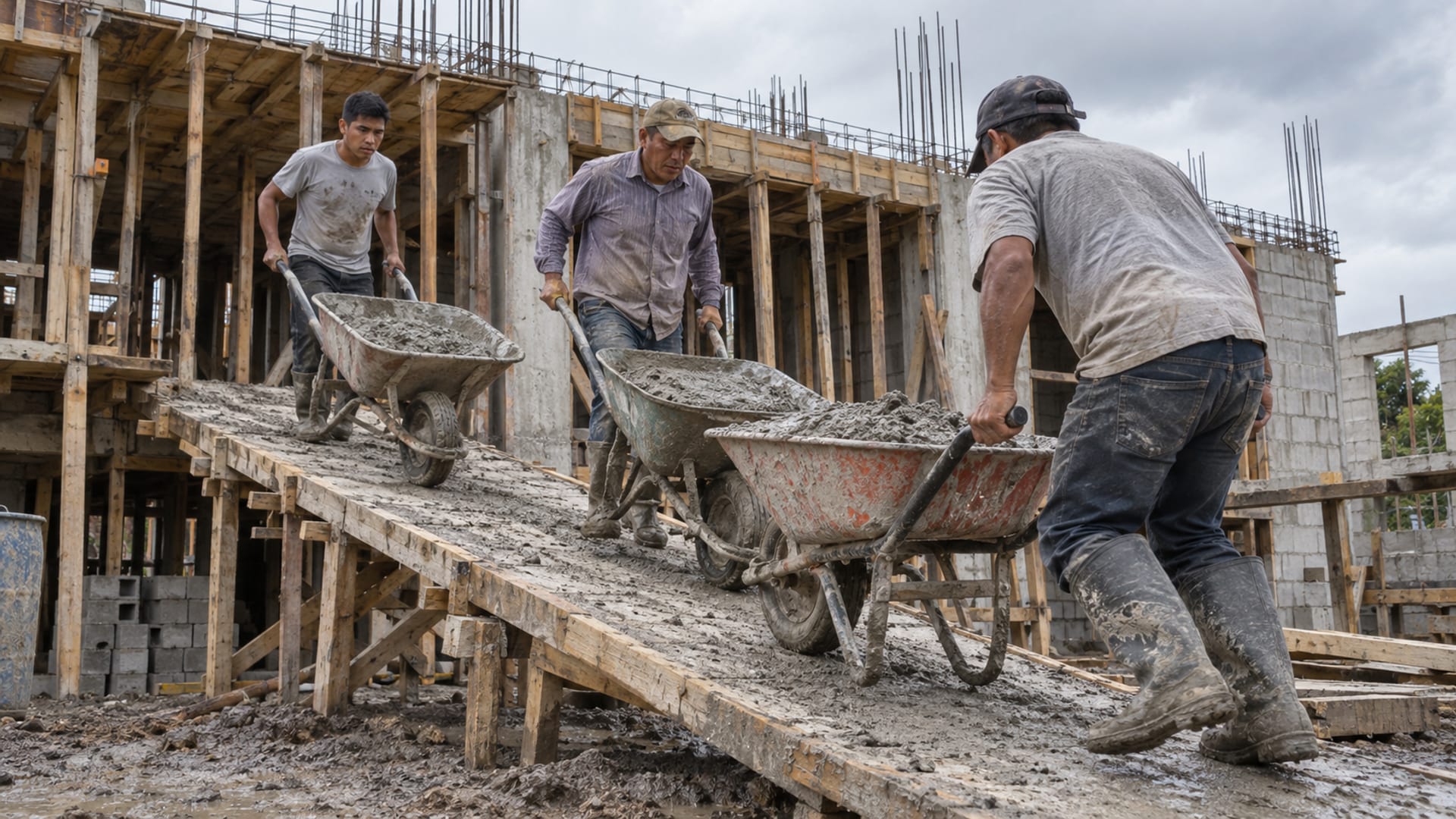
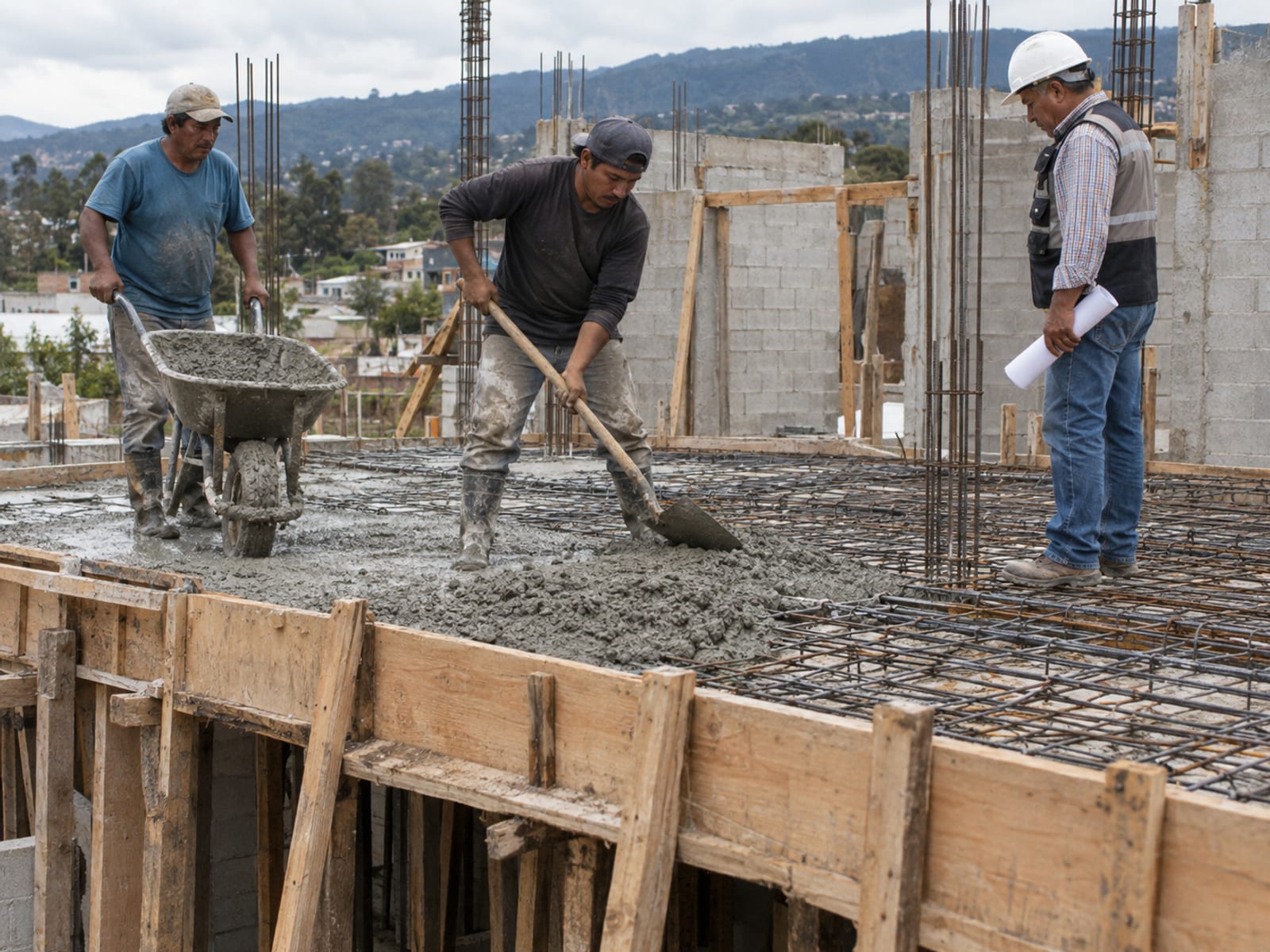
A traditional slab is built and poured on site, with concrete, steel reinforcement, and a temporary formwork, also called formaleta. Its price may be split into concrete, steel, formwork, props, labor, pumping, finishing, curing, and stripping.
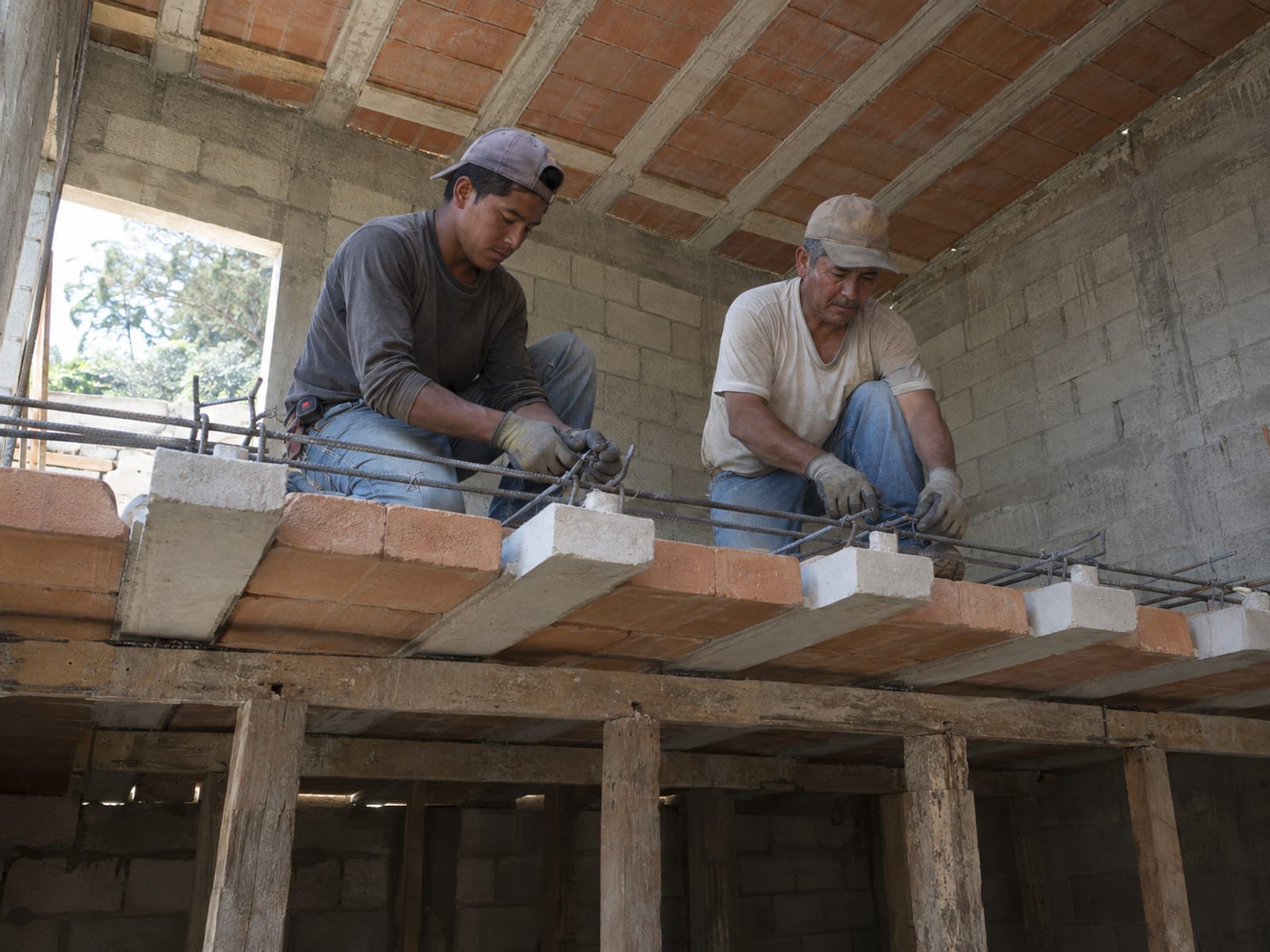
A joist-and-block slab uses precast joists (viguetas), infill blocks (bovedillas) placed between them, additional steel, and, when the system requires it, a concrete upper layer. El Arenal, a local supplier, describes the bovedilla as an infill or closing piece, while the vigueta takes part in the structural work of the system. Here the price can separate joists, blocks, welded wire mesh (electromalla), additional steel, shoring, placement, the concrete upper layer, labor, freight, and finishing.
That is why the words "materials," "labor," "precast slab," and "complete slab" are not equivalent. If two proposals use different words, they are probably quoting different line items.
A price per square meter only helps if you know what it includes
The figures published in Guatemala do not all cover the same scope, so they do not form a single rate. This table shows them by system, with who publishes each one and what it covers. They are prices or estimates published by those sources, not official prices or market averages.
These figures cannot be averaged or ranked as if they were a range. They are different projects, from different years, with different line items. They help you see how wide the variation is and why you should always ask what is inside the price.
None of these figures allows a responsible estimate of what a 60 m² slab would cost. A total is only valid when you know the system, the design, the location, and the line items included. What helps is asking for that total in writing, with exclusions, transport, equipment, taxes, and payment terms.

Each source publishes a different part of the work
If you buy the materials yourself, the price you need is the materials price. If you hire a complete structural line item, the price includes much more. The published quotes show exactly that: sometimes the buyer receives materials only, sometimes materials plus labor, and sometimes a complete line item.
For individual components, these are the published figures:
- 10 cm bovedilla: El Arenal publishes Q5 to Q12 per unit, depending on supplier and volume.
- Standard 4-meter pretensioned vigueta: the same guide publishes Q80 to Q160 per piece, depending on length and section.
- 3000 PSI ready-mix concrete: a SEGEPLAN cost document shows Q1,600.00 per m³ within a public project; it is not the general rate of a private supplier.
If you need ready-mix concrete, suppliers such as Concretare and Concretum sell by volume and by project. Request a quote based on strength grade, volume, and the location of your site, and include transport and pumping.
Labor can be charged per meter, per day, or as a complete job
This is one of the differences that confuses people most. A piece by Living in Guatemala on what a mason charges in 2026 describes all three methods. It clarifies that this is an editorial estimate based on unpublished quotes and not an official list.
Any of these methods can be reasonable. What matters is that the contract states which one is used, who provides helpers, tools, and protective equipment, and what safety measures apply. Job-site safety must meet the obligations that apply under the Ministry of Labor, especially if the work is done at height.
Does the joist-and-block price include the upper concrete layer?
This is the question that changes a comparison the most. The El Arenal range does include the concrete of the compression layer, while the Procreto price, as its page states, does not mention upper concrete or installation. Two figures that look like the same product can cover different work.
For each proposal, ask in writing whether the price includes:
- The upper layer of concrete and who buys it.
- The additional steel and how it is identified.
- The shoring, and whether the props belong to the contractor or to you.
- Freight of the pieces to your lot.
- Placement of the joists and blocks.
- Finishing and curing.
With those answers you are comparing the same thing. Without them, a low price may mean less work, not a better offer.
Several factors move the final price
The sources mention several, and you should keep them in mind when reading any figure:
- Site access, order volume, freight, and local labor: El Arenal notes that the final price of joist and block varies with these points.
- Depth and span of the project: Procreto notes that its price per m² can vary with these measures.
- Type of roof: a concrete slab and a sheet metal roof are different systems and are not compared as the same line item.
- Location of the job: the labor page cited separates Guatemala City, Antigua, Quetzaltenango, Cobán, medium-sized towns, and rural areas.
- Height, access, and equipment: pumping, props, formwork removal, and means of lifting materials must be defined, because they are not included uniformly.
To track how material prices change over time, the INE (the national statistics institute) publishes the Construction Materials Price Index, known as IPMC. It is an index of changes, not the cost of a slab, and its price quotes are collected in Metropolitan Region 1 and some municipalities, so it does not automatically represent every municipality.
The permit is set by the municipality where the job is
Each municipality sets its own procedures. As an example, the Municipality of Guatemala City explains in its permit FAQ that an expansion of up to 30 m² is handled as a minor works permit, and a larger expansion, over 30 m², requires a major works permit. In that municipality, you can also check the Ventanilla Única (the single-window office).
If your house is in another municipality, do not assume the same rules apply: check with the municipality where you are before you start. That check should happen before the pour.
A professional defines the slab design
The prices in this article are references for understanding quotes; they do not replace the design. CONRED (the national disaster reduction agency) describes NRD-1 as the standard that sets minimum technical criteria for the structural design of new works and for the remodeling or repair of existing works. The AGIES structural safety standards, such as NSE 1-2024, form part of that technical framework.
In practice, the system chosen, the loads, the reinforcement, the dimensions, and the supervision are the responsibility of the architect or engineer competent for the project. Ask for plans and the professional's review before you hire the pour, and confirm that the proposal follows those criteria. When a price conversation turns into design questions, that is the moment to stop and take them to the professional.
What a comparable quote should state
Give each provider the same information: the exact area, the location, photos of the access, and the available plans. Then ask each proposal to state in writing:
The municipality defines the permit process, and the responsible professional defines the system and the design. The contract should turn those decisions into line items that can be verified. If you are looking for someone to do the work, you can check the masons in the directory and ask each one for this same information.
Frequently asked questions about how much it costs to pour a slab in Guatemala
How much does it cost to pour a slab per square meter?
Published figures vary because they do not always include the same line items. There is an academic USAC comparison of about Q338 per m² for a solid slab, a Q120 per m² price published by Procreto for an approximate precast slab, and public works documents with higher values for specific line items. Compare materials, steel, concrete, formwork, labor, finishing, and location before using a price per m².
How much does a 60 m² slab cost?
There is no single total that works for every job. First you need to know which system is being quoted and what the price per m² includes. Ask for the total for 60 m² with its exclusions, transport, equipment, taxes, and payment terms.
What does a joist-and-block slab include?
It can include joists, blocks, welded wire mesh (electromalla), additional steel, and the concrete of the upper layer. Procreto publishes some of those components, and El Arenal publishes a materials range that includes joists, blocks, and the compression concrete, but not labor. Confirm in writing the installation, freight, props, finishing, and curing.
Is the bovedilla the structural part of the slab?
El Arenal describes the bovedilla as an infill or closing piece placed between joists, and the vigueta as the part of the system that carries the loads. The role of each component and the final design are confirmed in the project plans by the responsible professional.
How much does labor cost to pour a slab?
A 2026 estimate published by Living in Guatemala shows Q120 to Q250 per m² for slab pouring, and also describes day rates and crew rates. Ask whether the figure includes helpers, formwork, tools, pumping, safety, finishing, curing, and cleanup.
What should a slab quote state?
It should state the area, the system, who is responsible for the design, materials, steel, concrete, formwork, props, labor, equipment, access, height, curing, finishing, removal of leftovers, dates, payments, taxes, and exclusions.
What to do with these figures before approving the pour
A price per square meter is a starting point, never the final price. The figures in this article are prices or estimates published by their sources, on their dates, and each one covers a different scope. You compare well when you ask every provider for the same information and get back clear line items: system, materials, labor, temporary works, curing, finishing, and cleanup.
With that order you avoid surprises at the pour, the one day you cannot change your mind, and arrive with the permit and design settled. A well-planned slab starts with everything written down.
At Albañiles Guate we help people in Guatemala find and contact masons, builders, and construction trades by service and by location, and you can start with the directory of builders. Our directory does not recommend, rate, approve, or insure the businesses that appear, so every agreement is confirmed directly with whoever you hire. If you have a question about your job, write to us from the contact page and we will tell you the next steps.
Related guides
How much does it cost to remodel a house in Guatemala
What does it cost to remodel a house in Guatemala? Demolition, rubble, utilities, finishes, furniture and labor, plus what to request in writing before paying.
How to Request a Masonry Quote in Guatemala
A masonry quote in Guatemala should spell out materials, labor, rubble removal, dates, payment stages, and warranty. Review every line before you decide.
What a Written Scope of Work for a Masonry Job Should Include
Before you hire, write down what the job includes, who buys and removes materials, the start and end dates, payments, final cleanup, and the warranty period.