
Damp walls: where it comes from and how to repair it
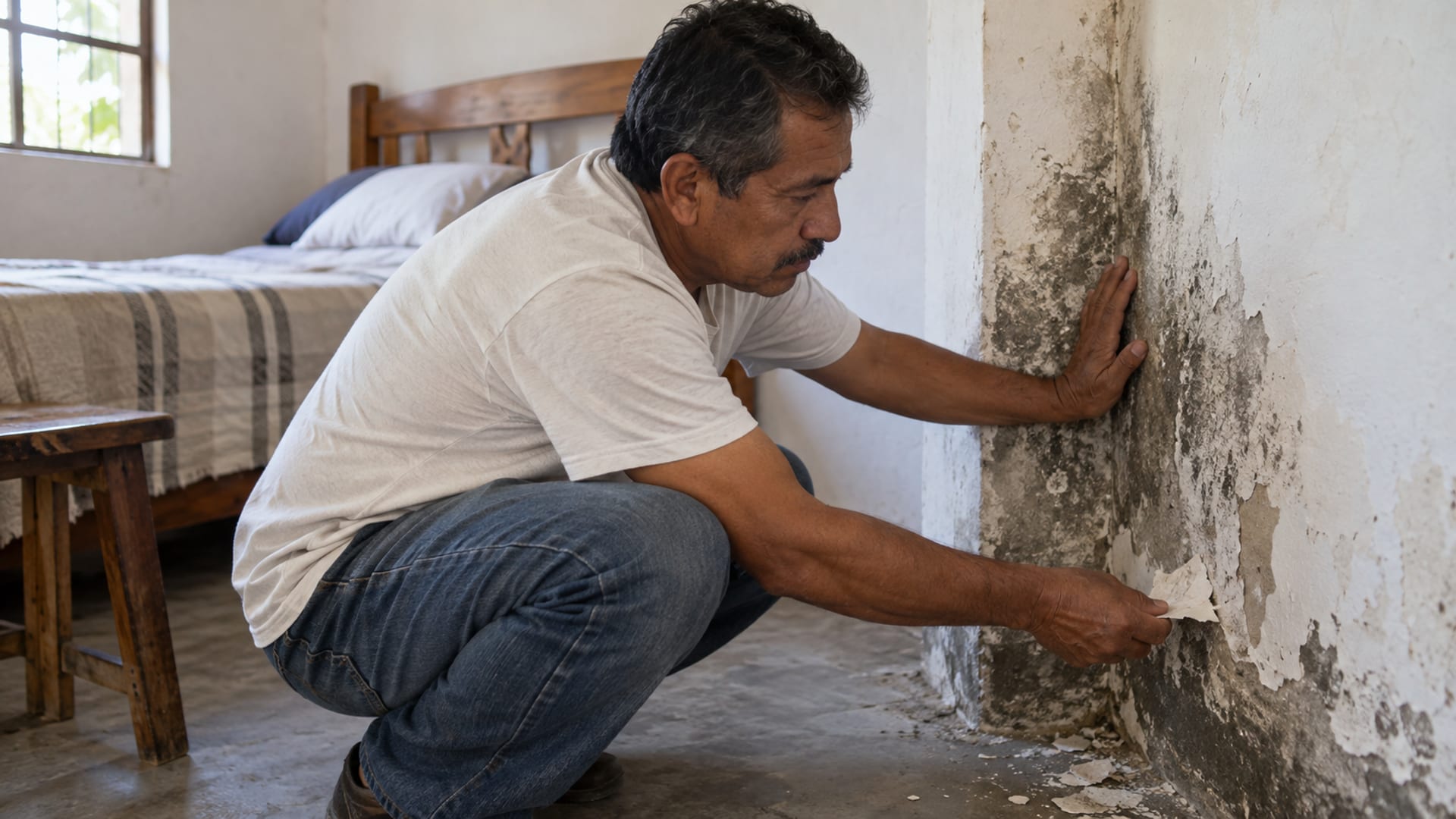
A dark stain in the corner, paint that lifts in flakes, a white powder that comes off the block, or that closed-room smell that never goes away. When damp walls appear, the first idea is usually to paint over them, and the second is to wonder whether that is enough. It almost never is, because the stain is the symptom and the water is still getting in somewhere. The useful thing is to look at the wall like someone searching for clues: where the stain is, when it grows, what lies on the other side, and which pipe or gutter is nearby. All of that can be checked without opening anything. With those notes and some dated photographs, you can talk with a mason, a plumber or an engineer and ask for a quote that repairs the cause before the finish.
Key takeaways
How do I find where the dampness comes from without opening the wall?
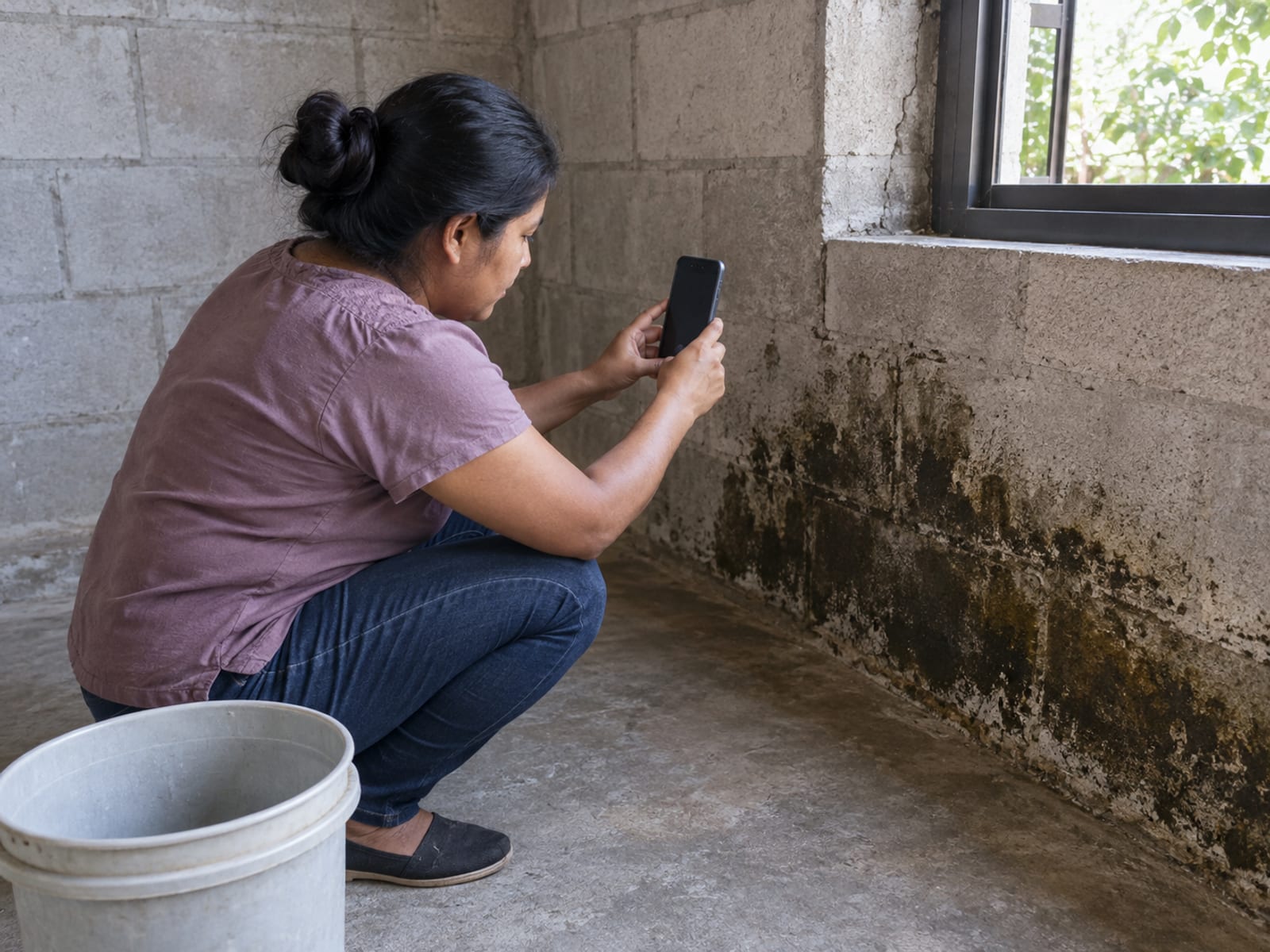
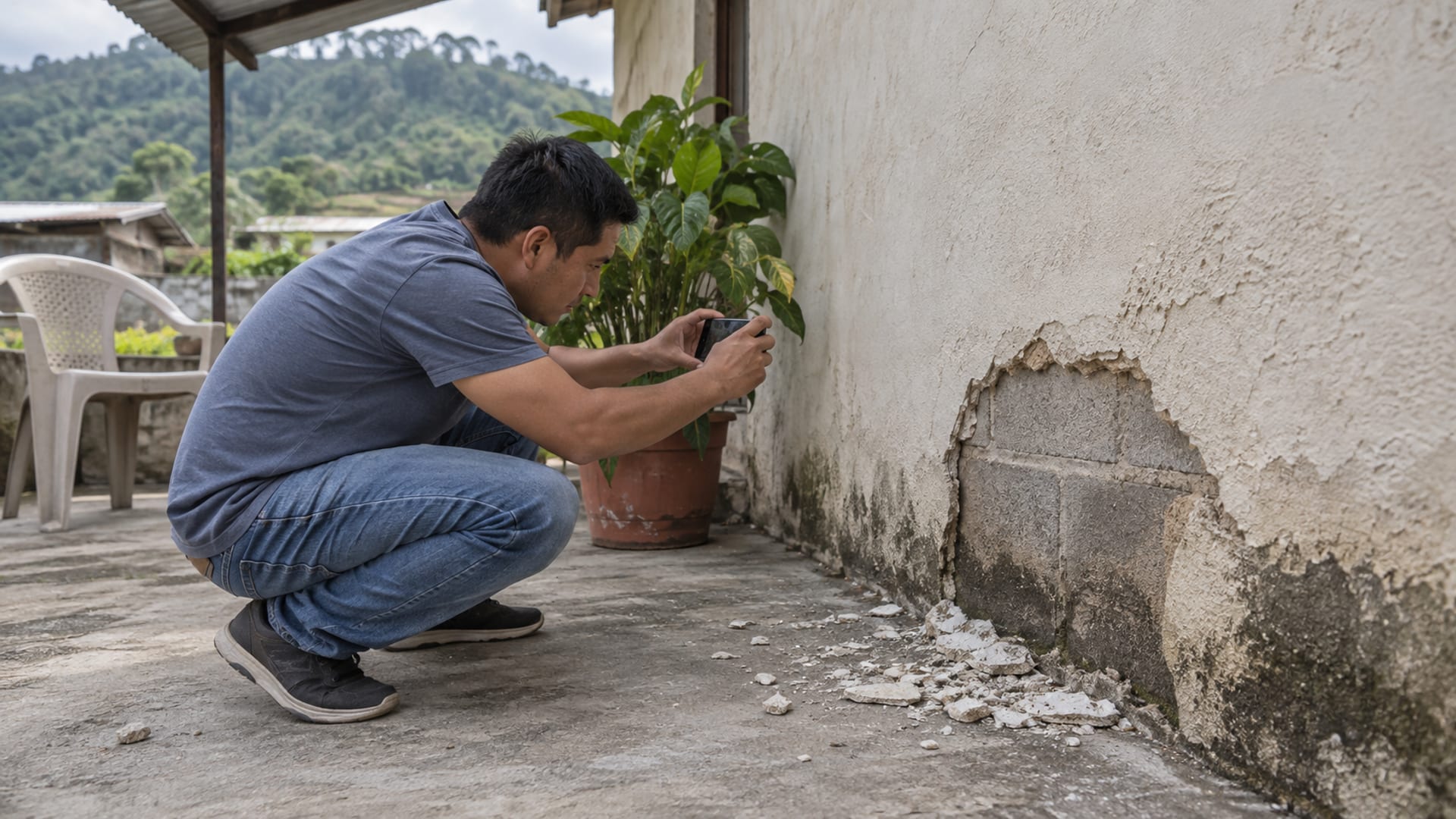
The check starts with your eyes and a notebook. Write down the date, the approximate size and the location of each stain: at the base of the wall, in the upper part, in a corner, around a window, next to the ceiling or near a pipe. Take photographs of the whole wall and of the details, and compare it with the opposite side or with a nearby wall. If the stain grows, a dated photograph shows that better than memory.
Then answer these questions:
- Does it appear or grow after rain?
- Is it on an exterior or an interior wall?
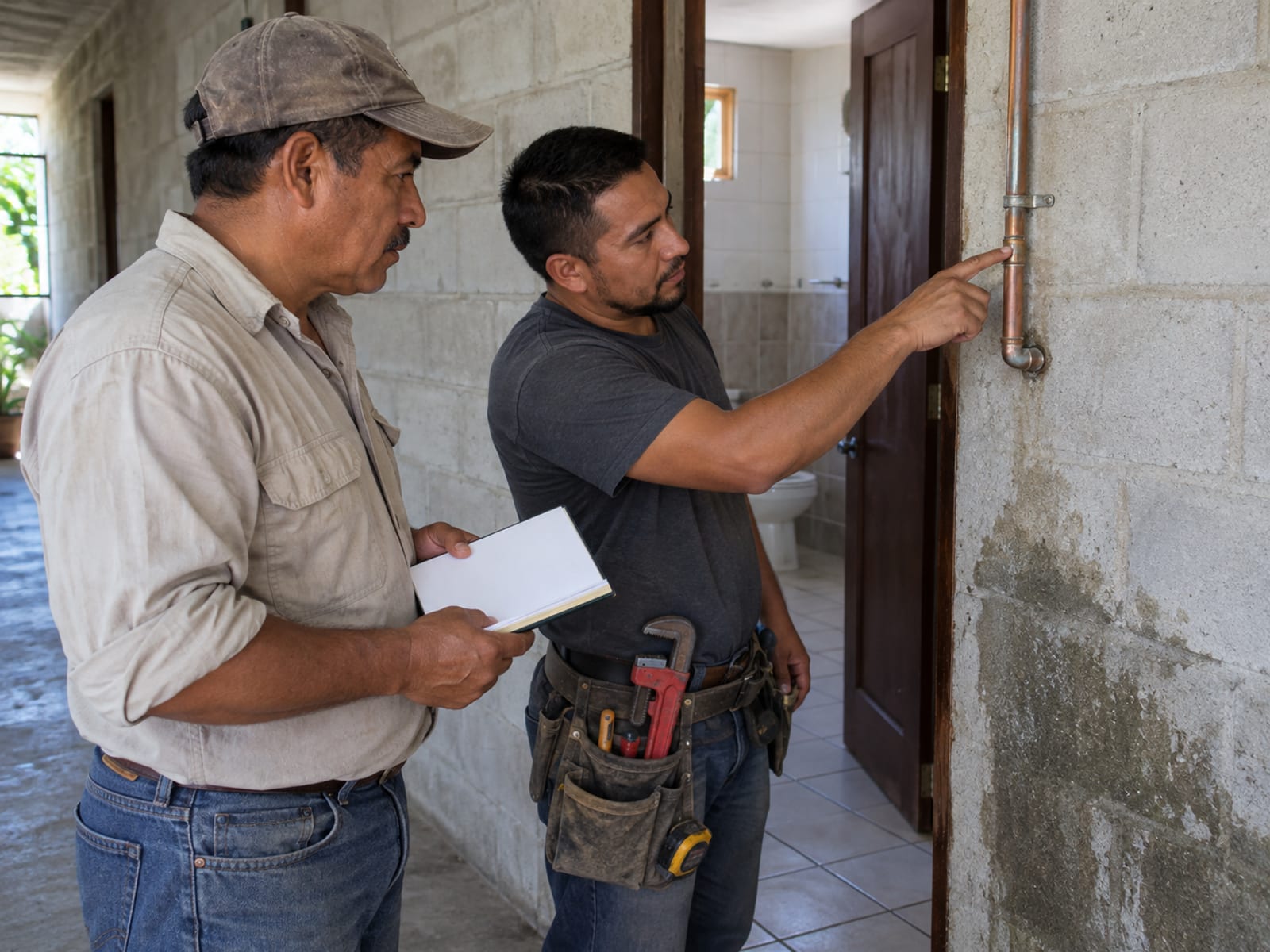
- Does it line up with a bathroom, the kitchen, the washing machine, a tank or a downpipe?
- Is there a band of dampness along the lower part of the wall?
- Does the wall border ground, a patio, an embankment or a gutter where water collects?
- Are there also cracks, tilting, sinking ground or water entering actively?
Do not open the wall or remove electrical elements to investigate on your own. Your notes help describe the problem to the professional who inspects it, but they do not let you declare whether a wall is safe or not.
What are the most common sources of dampness in a block wall?
The University of Minnesota Extension and the Museum Conservation Institute of the Smithsonian describe several sources of moisture in masonry walls. One visible cause does not rule out another, and the origin of your specific wall is confirmed by an on-site inspection.
What does salitre on a block wall mean?
Salitre, which in technical terms is called efflorescence, is a white, powdery deposit of salts. It appears when water passes through a porous material, dissolves salts and leaves them on the surface as it evaporates. The University of Virginia explains that rising damp can carry salts from the ground and from the masonry, and that the salts crystallize on the surface as the water dries.
The same source describes a less visible case, subflorescence: salt crystallization inside or behind the finish. It can push from within and make the block or mortar crumbly, which is why the plaster sometimes peels off in layers.
For your decision, the practical point is this: salitre shows that water has been in that wall. Brushing it off cleans the surface, but it does not stop water from entering. The cleaning method depends on the material and the finish, and you should not assume that a household product is appropriate.
Why does painting over it not solve dampness?
Painting over a stain can hide the symptom without correcting the source. Over time the paint lifts again because the water is still there. The same goes for waterproofing paint: each product is designed for certain surfaces and conditions, and none of them replaces repairing a leak, a drain or damage in the wall.
As an example of what a technical data sheet says, the Sika Guatemala page on SikaTop Seal-107 describes it as a semi-flexible, two-component waterproofing mortar for concrete or mortar, used on buildings, facades, balconies and terraces, indoors and outdoors. It says the surface must be clean, free of loose parts, paint, grease and oil. That does not mean this product repairs a pipe, corrects a drain or stabilizes a wall. The choice and the application belong to the professional who evaluates the wall and to the current data sheet of the exact product; request it before you approve the work.
Who repairs each type of dampness?
The trade that gets involved depends on the source. This list helps you know whom to call first:
- Water leak or faulty connection: usually a plumber or a contractor with experience in water installations.
- Gutters, downpipes, drains, slopes or water buildup: a mason, a waterproofing contractor, a drainage specialist or a site professional.
- Joints, pipe penetrations and non-structural cracks: a mason, a waterproofing applicator or a maintenance contractor.
- Waterproofing concrete, mortar, block or brick: a waterproofing applicator or contractor, using a system suited to that surface.
- Removing loose plaster or paint and replacing the finish: a mason, plasterer or finishing contractor, after the water source has been controlled.
- Interior or exterior drainage for ground water: the University of Minnesota describes drainage channels connected to a sump, and warns that one solution may not remove all the moisture from the voids in the block.
- Structural elements, foundations, retaining walls or damage linked to the ground: a qualified civil engineer or architect.
You can look for masons and other trades in the masons directory; the directory does not vouch for or rank the businesses listed in it.
How much does it cost to repair a damp wall?
There is no single rate. The figures that have been published correspond to different jobs, and they should be read as references for asking questions, not as the price of your wall.
According to CYPE Ingenieros, the per-square-meter figure is for a block wall in contact with the ground, and the page does not identify a municipality. The audit report published by the Comptroller General's Office reviewed a project in Santa Catarina Pinula, and Tekthon published its ranges for slabs, not for each residential wall. Taken together, the open references run from roughly Q88.07 to Q374 per square meter, but they are not comparable with one another: they differ in system, type of wall, preparation, location and scope.
What weighs most in a quote is what it includes: surface preparation, whether there is work at height or excavation for drainage, whether the contractor or you buy the materials, and whether testing and a warranty are in writing. A repair that includes drainage or retaining work cannot be compared with applying a surface coating.
What should a repair quote say in writing?
A good quote separates the diagnosis, the repair of the cause, the surface preparation, the finish and the warranty. The Consumer and User Protection Law (Ley de Protección al Consumidor y Usuario) supports several of these points: the total price and its unit, the payment terms, the characteristics of the materials, and the scope, term and way a warranty is enforced, with the name of who answers for it.
Also request these planning details:
- Diagnosed cause or working hypothesis, and how the result will be checked.
- Exact area to be worked on.
- Included work: leak repair, drainage, sealing, removal of loose material, waterproofing, plaster, finish coat, paint and cleaning.
- Named product, manufacturer and technical data sheet.
- Exclusions and who buys the materials.
- Warranty term and who comes back if the dampness reappears, and under what conditions.
- Invoice or receipt that proves the service, and the way to file a claim.
A repair should not be presented as structurally safe unless a professional evaluation supports it.
When should I call a civil engineer or an architect?
CONRED indicates that during the rains it is advisable to inspect walls, roofs and sheeting for leaks that could weaken the house, and that if cracks, water entry, landslides or other danger signs appear, the local authorities must be informed; it details this in its note on assessing rain damage. If there is danger, the emergency number is 119.
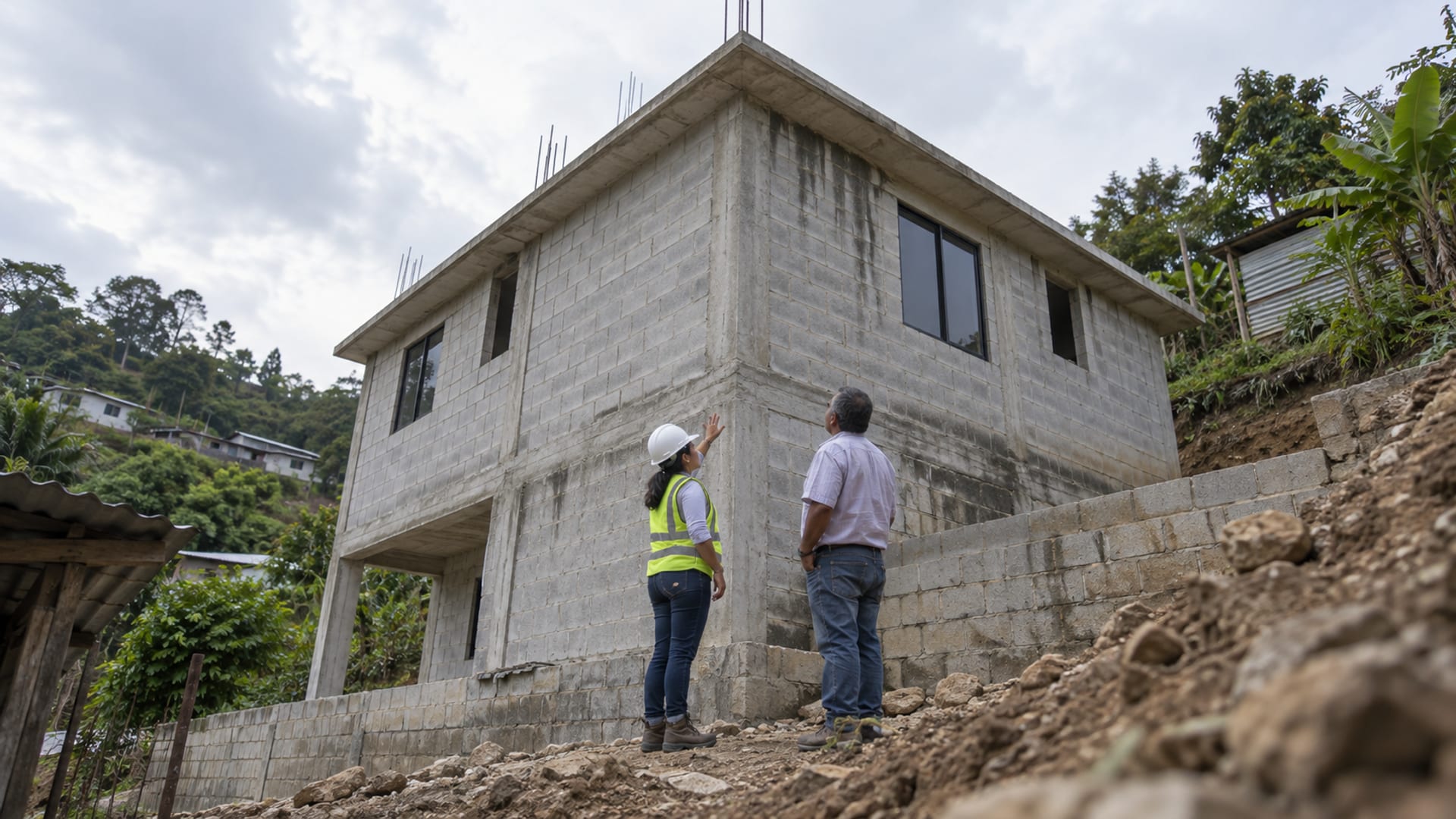
Ask for an assessment by a civil engineer or architect when there are significant cracks, tilting, sinking ground, damage to columns, beams, slabs, foundations or retaining walls, persistent dampness linked to the ground, or leaks that coincide with deformation. A mason can carry out non-structural repairs, but should not replace that assessment when structural damage is possible. The NSE 4-2024 standard of AGIES, which covers the design of small housing, sets design criteria and materials; it is not a diagnosis of your wall. To confirm that an architect is a registered member (colegiado), you can check the member directory of the Colegio de Arquitectos de Guatemala.
If the water seems to come from the roof, look from ground level and do not climb onto the wet slab. When dampness in a wall is accompanied by cracks after an earthquake, treat the matter as a structural assessment, not as a painting issue.

Do I need a permit to repair a wall?
It depends on the municipality where the property is located. As an example, in the municipality of Guatemala, light modifications such as repairs, plaster and painting do not require a works permit when they do not enlarge the usable area, except for properties considered cultural heritage, according to the Application Guide to the POT. If the work changes the structure, enlarges the property or includes demolition, confirm the requirements with the municipality before you start.
Frequently asked questions about damp walls
Where does dampness in walls come from?
It can come from rain, the roof, windows, drains, plumbing leaks, ground water or condensation. The location, the timing and the relationship to rain or pipes guide the inspection, but on their own they do not identify the cause.
How do I remove dampness from a wall?
First identify and correct the source: a leak, rain entry, drainage, ground water or condensation. Then it may be necessary to remove loose material, seal, waterproof or replace the finish, depending on the diagnosis.
Why do damp stains appear on walls?
Because there is water or vapor in the wall or in its finish. The stain is a symptom, not a single cause.
What is salitre on a block wall?
It is efflorescence: salts left on the surface when the water that crossed the block or plaster evaporates. Cleaning it does not replace correcting the water entry.
Can dampness affect the structure?
It can be related to deterioration of finishes, masonry, concrete, steel or ground, but a stain does not allow you to determine the level of damage. If there are cracks, tilting, sinking or water entry, move away from the risk zone and request a professional assessment.
What should I ask the contractor to put in writing?
The diagnosed cause, the work area, the included activities, the product with its data sheet, the preparation, the exclusions, the price, the payment terms, and the warranty with its scope, the party responsible and the term.
What to be clear about before paying for a repair
A damp wall is understood through clues: where the stain is, when it grows, what is nearby, and what the dated photographs show. With those details, the professional can direct the inspection, and you can insist that the cause be corrected before the finish. Ask for the quote in writing, with the diagnosis, the repair of the cause, the surface preparation, the finish and the warranty listed separately, and leave the structural assessment to a civil engineer or architect when there are cracks, tilting or sinking.
Taking a few days to observe often saves a second coat of paint and a second payment for the same wall.
If you are looking for masons, plumbers or waterproofing and finishing contractors in Guatemala, Albañiles Guate can help you find them and contact them by service and by location; we do not vouch for, rank or certify the businesses in the directory. Write to us from the Albañiles Guate contact page and we will guide you in requesting visits and quotes with the notes and photographs you gathered here.
Related guides
How to Request a Masonry Quote in Guatemala
A masonry quote in Guatemala should spell out materials, labor, rubble removal, dates, payment stages, and warranty. Review every line before you decide.

What a Written Scope of Work for a Masonry Job Should Include
Before you hire, write down what the job includes, who buys and removes materials, the start and end dates, payments, final cleanup, and the warranty period.
When to consult a structural engineer before building work
Before you remodel, check whether the change touches walls, slabs or foundations. Learn when to consult a structural engineer and what to bring to the visit.