
Paver, concrete or asphalt for a patio or garage: how to choose
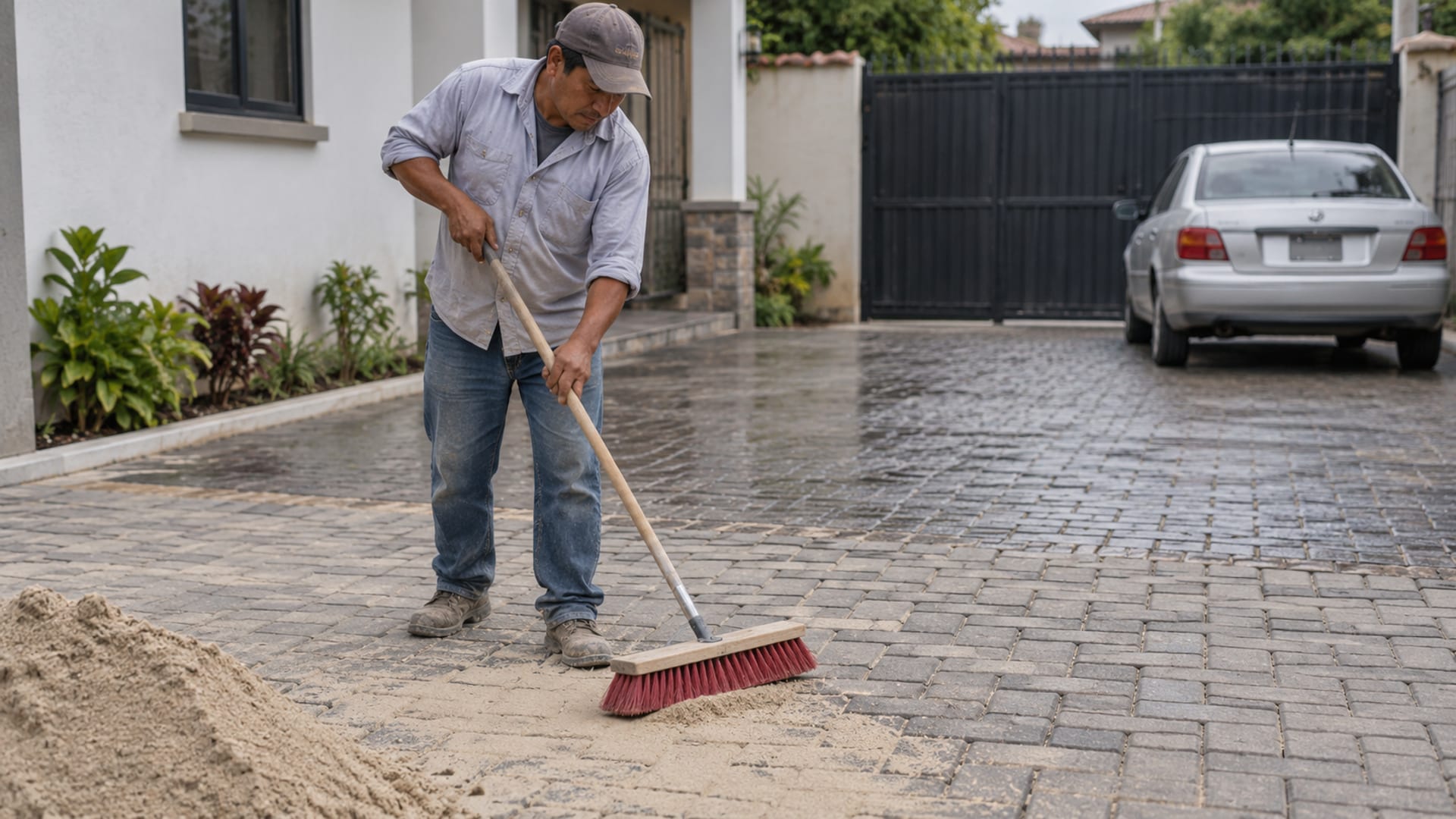
You have three quotes to pave the patio or the garage entrance, and none of them look like the others. One talks about pavers, another about poured concrete, the third about asphalt, and the totals do not line up because each covers different things: one includes the base and drainage, another only the material, and a third does not mention cleanup. To choose a paver, concrete or asphalt patio or garage with good judgment, first decide what the surface will be used for, how rainwater runs across your land, and what the quote must say in writing. Below you will see what each material is, which figures are published in Guatemala, how to compare proposals line by line, and when to check with the municipality before starting.
Key takeaways
What is the difference between paver, poured concrete and asphalt?
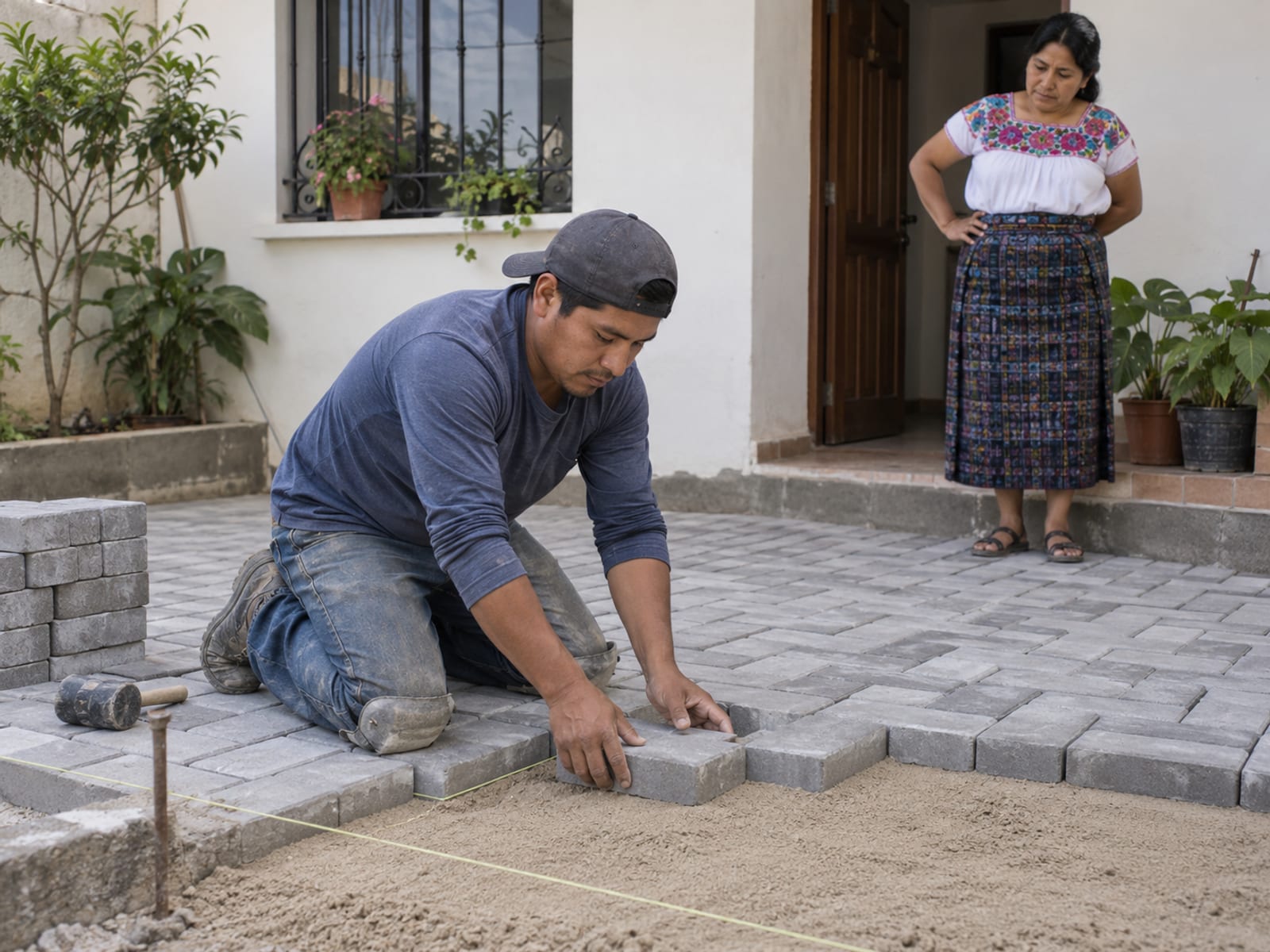
A concrete paver is a prefabricated block shaped like a prism that is laid next to others to form an interlocking pavement: the pieces lock together and pass the load to their neighbors. The COGUANOR NTG 41086 standard sets the specifications for concrete pavers used in vehicle and pedestrian traffic. Because the units are independent, a damaged section can be repaired in stretches. Whether that is possible with the product you are quoted, the manufacturer or installer should say, so ask and request it in writing.
Poured concrete is a mix placed on site that forms a continuous surface. It can receive finishes such as broom finish, which leaves a non-slip texture, or stamped finishes, if specified. "Poured" here means placed, not melted.
Asphalt is a bituminous mix with mineral aggregates that is spread and compacted to form a flexible surface. A CYPE Ingenieros fact sheet for Guatemala describes an 8 cm hot-mix asphalt pavement, with spreading, compaction, joints and final cleanup, and notes that the surface must be protected from traffic until the mix is rolled and at ambient temperature.
NTG 41086 refers specifically to concrete pavers. Its scope does not automatically carry over to poured concrete or asphalt, and each one is quoted with its own description.
Which surface suits the use?
Before comparing prices, decide who will use the surface. A patio that people walk across is not the same as an entrance where a car parks or a heavier vehicle drives.
- Pedestrians only (patio, walkway, sitting area): all three systems can work; the choice often depends on appearance, the non-slip finish and how water is handled.
- Cars (garage entrance, residential parking): the quote must state the exact product and its declared class or strength. For pavers, NTG 41086 is the reference for vehicle and pedestrian traffic; for concrete and asphalt, ask for the thickness and the base preparation.
- Heavier vehicles (trucks, loads beyond residential use): this calls for professional review. A contractor should not define the thickness and base alone when the load exceeds that of a car.
The land and its surroundings also matter. Roots from a nearby tree can lift any type of pavement, and this should be reviewed before you request quotes: ask the installer what they propose for a tree next to the area, and whether the warranty covers it. If the land has steep slopes or soil that worries you, ask a qualified professional to review it.
How much does paver cost per square meter?
Published figures vary widely because they describe different things: a loose unit, an installed surface course, or a line in a municipal budget. These are the figures in public documents and web pages, presented as each one describes them:
The paver unit prices come from the supplier Procreto, located in Villa Nueva; the page does not state that they include base, placement, joints, transport or cleaning. The surface course prices come from a municipal contract published on SEGEPLAN and from a paving budget for another project. They are public works in specific places, not rates for a house. Because their scopes differ, do not average these figures or compare them with each other as if they were the same thing.
And how much do poured concrete or asphalt cost?
For asphalt, the CYPE fact sheet mentioned above publishes Q85.14 per m² of 8 cm hot-mix bituminous pavement. That price includes the mix, equipment, tools, labor, transport, spreading, compaction, joints, level checking and final cleanup, and excludes the preparation of the existing base layer. It is a technical reference from a price generator, not a current rate for your home.
For poured concrete, the cost per square meter depends on thickness, preparation, finish and city. Ask each contractor for a quote that separates these items, and compare line by line, not just the total. If a contractor gives a single price per m² without these fields, ask what it includes.
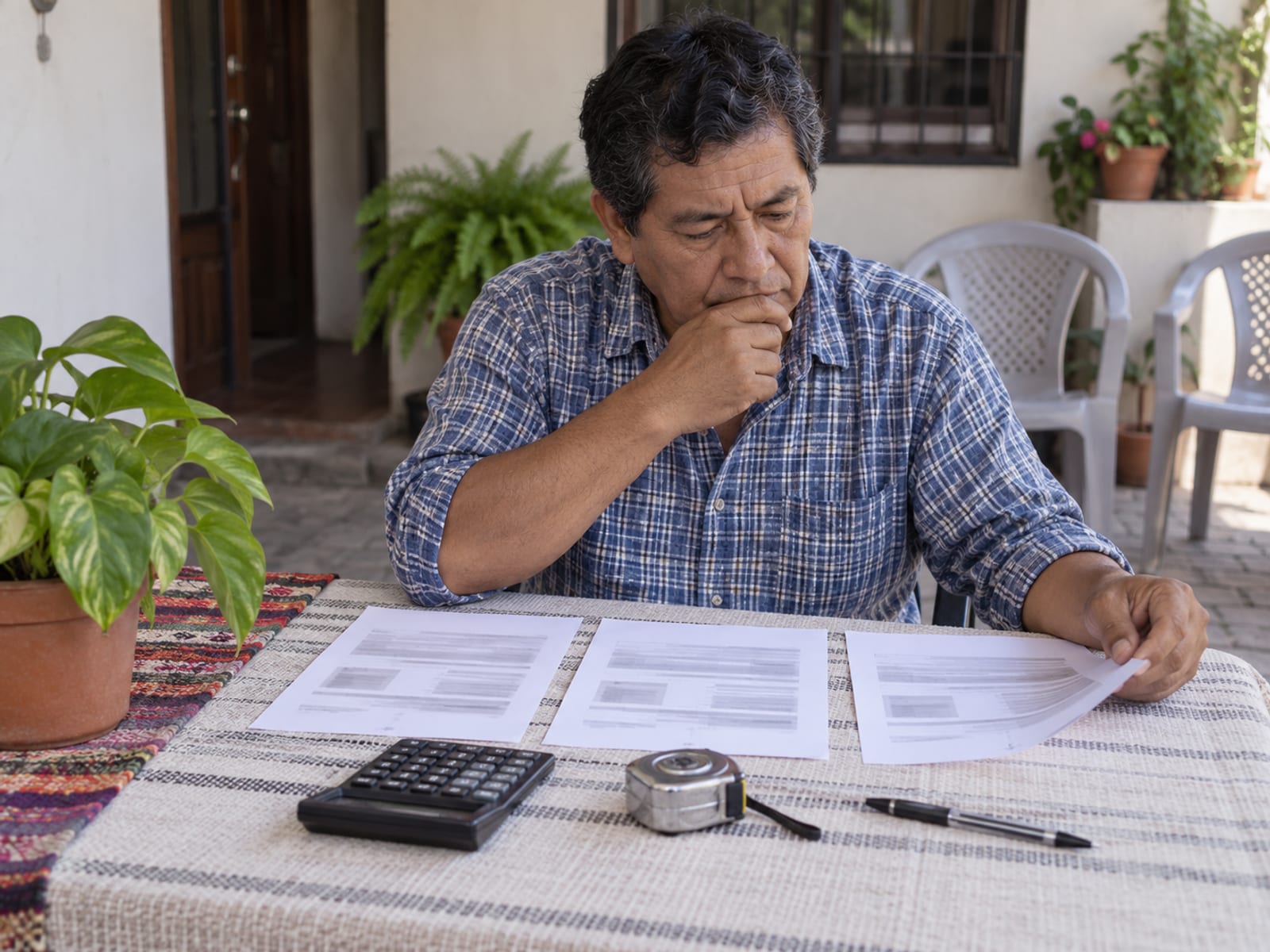
What makes two quotes cost different amounts?
Public documents show several factors that move the price:
- Product and dimensions: a square, a rectangular and an eco paver are published at different prices.
- Declared strength: the San Pedro Yepocapa contract separates 210 kg/cm² and 180 kg/cm² surface courses with different unit prices.
- Ground preparation: the SEGEPLAN budget separates cutting, leveling, subgrade, a 0.15 m granular base and a 0.03 m sand bed.
- Condition of the existing base: CYPE clarifies that its asphalt price does not include that preparation.
- Equipment, labor and transport: some fact sheets list these separately and others bundle them in.
- Location of the work: the prices correspond to specific municipalities and projects.
With that in mind, give every supplier the same description and ask them to write down their exclusions. A lower proposal may simply be lower because it leaves out the base, drainage or cleanup.
How do rain and drainage affect a paved patio?
Rain is what most often surprises people after the work is finished. CONRED defines runoff as the part of precipitation that later appears as surface flow, and explains that when water does not infiltrate, it can flow over the ground and carry soil away. A covered patio concentrates that water, so the quote must state where it goes: slopes, gutters, grates, drain inlets or an authorized connection.
No single slope or drainage solution fits every home. Municipalities show that paving and drainage can go together in the same project; Guatemala City, for example, has carried out works that combine concrete, paver, gutters and grates. If your land has a marked drop or water already pools there, ask for a professional review before you decide on the material.
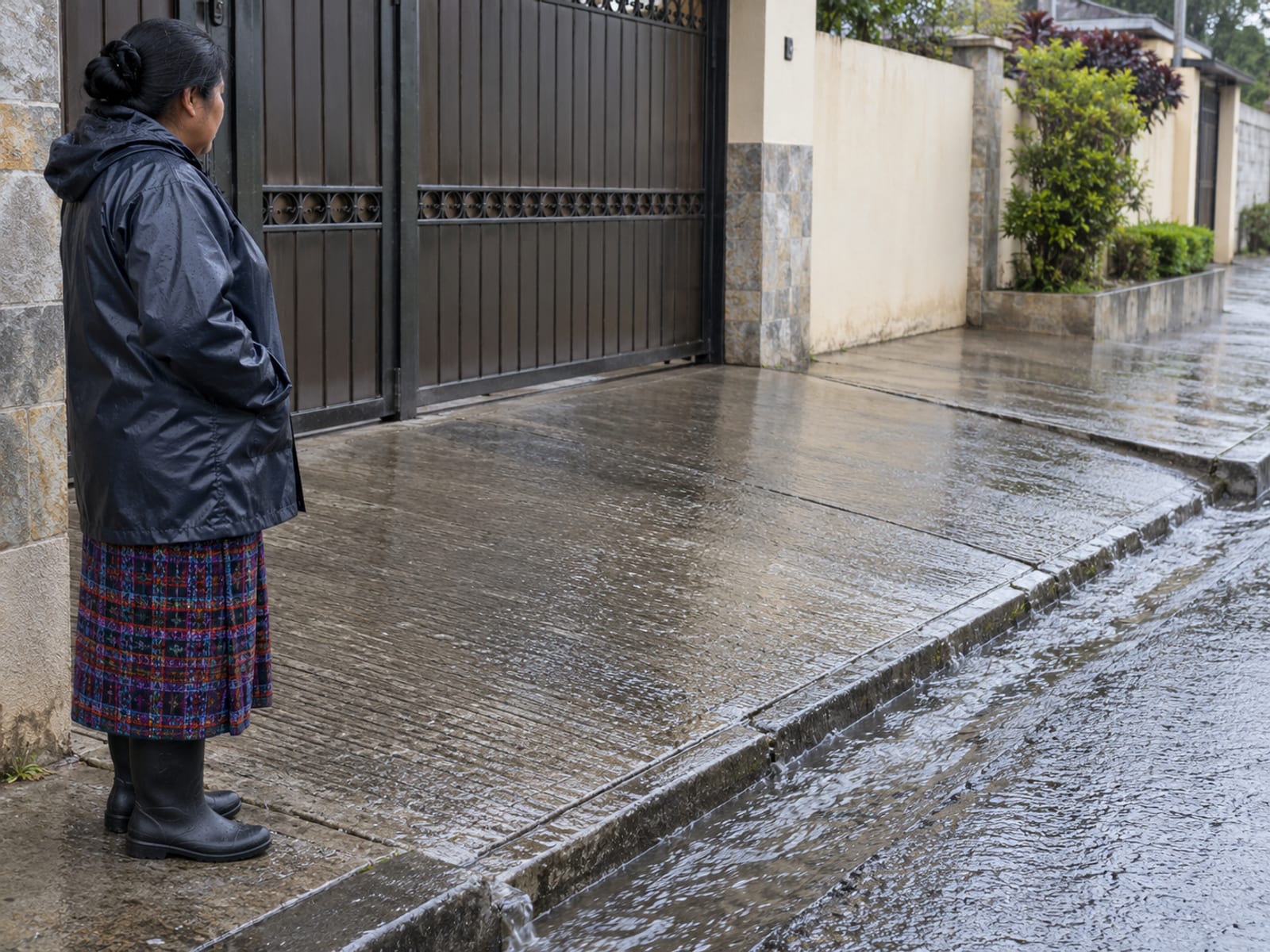
After the work is done, CONRED recommends keeping drains, streets and the areas around homes clear, because garbage can block them and raise the risk of flooding.
Do I need a license to pave my patio or entrance?
It depends on the municipality responsible for the property and on what the work touches. As an example, the Application Guide to the Territorial Planning Plan of Guatemala City includes in its building permits the paving of areas under 30 m² and over 30 m², and states that minor modifications do not require a permit except for properties considered cultural assets. The procedure is handled at the Ventanilla Única (one-stop permit office).
In Mixco, the Construction and Urban Planning Regulation establishes that, for construction, excavation, leveling, modification or repair work that alters the property or public roads, the municipal permit must be obtained beforehand, and that the Municipal Affairs Court can suspend work carried out without it.
These are examples from two municipalities; others have their own requirements, forms and fees. If the work affects the sidewalk, the street, a gutter, a grate, a drain or the alignment of the front of the property, check with the municipality before you begin.
What should I request in writing before paying?
The Consumer and User Protection Law considers basic information about a good or service to be its characteristics, measurements, composition, quality, price, payment terms and warranty. It also establishes that a warranty must state what it covers, who is obligated, and the conditions for claiming it. Based on that, request:
- Scope: area, municipality, address and the exact material with its thickness or class.
- What is included and what is not: base, drainage, transport, equipment, removal of debris, IVA and cleaning.
- Final price in quetzales: total and per square meter.
- Payments: amount of the deposit, stages and balance.
- Warranty: scope, period and the responsible person.
- Repairs: how a sunken, damaged or lifted area is corrected.
- Dates: start, expected duration and conditions that could change the price.
If there is a dispute over a price, a warranty or a failure to perform, keep the quote, contract, receipts and communications, and consult DIACO.
Frequently asked questions about paver, concrete or asphalt for a patio or garage
What is the difference between paver, poured concrete and asphalt?
Pavers are prefabricated units laid together, poured concrete is a continuous slab placed on site, and asphalt is a bituminous mix that is spread and compacted. Ask that the quote identify the product, thickness, preparation and finish.
How much does it cost to pave a garage?
It depends on the material, the area, the ground preparation and the location. Public paver figures run from Q1.06 to Q22.66 per m² as a unit and from Q192.00 to Q370.00 per m² as an installed surface course or budget line; for asphalt, a technical sheet publishes Q85.14 per m² without the base. These are references with different scopes, not an average price.
What should a paving quote include?
Area, exact material, thickness or class, base, drainage, joints or finish, transport, equipment, labor, cleanup, payments and warranty, along with what is left out.
Does rain change how the patio should be planned?
Yes. The quote should show how water is handled through slopes, gutters, grates or drain inlets, and the specific solution depends on the land and the municipality.
What happens if tree roots lift the pavement?
It is a risk worth reviewing before you choose the material if a tree is nearby. Ask the installer what they propose and how a lifted area is repaired, and record the answer in the quote.
Do I need a license?
It depends on the municipality. In Guatemala City and in Mixco there are license rules that can reach paving work, especially if the work touches the sidewalk or the street. Confirm with the municipality of your property before you begin.
What to be clear about before signing
A patio or entrance is chosen by the use it will have, the water it must handle, and what each quote actually includes. Measure the area, decide whether people, cars or other vehicles will pass over it, request the line items separately, and put the price, payments, warranty and scope in writing. If the land has drops, soil problems or loads beyond residential use, ask for a professional review, and check with the municipality if the work touches the sidewalk or the street.
With that information on one sheet, the published figures are no longer loose numbers and become a reference for judging what you are offered. You will also have a document to return to if anything changes during the work.
In Albañiles Guate we help people in Guatemala find and contact masons, builders and related construction trades, by service and by location. You can browse the paving directory to find who to ask for proposals, or write to us from the contact page if you want to start gathering quotes for your patio or garage.
Related guides
How to Request a Masonry Quote in Guatemala
A masonry quote in Guatemala should spell out materials, labor, rubble removal, dates, payment stages, and warranty. Review every line before you decide.
What a Written Scope of Work for a Masonry Job Should Include
Before you hire, write down what the job includes, who buys and removes materials, the start and end dates, payments, final cleanup, and the warranty period.
When to consult a structural engineer before building work
Before you remodel, check whether the change touches walls, slabs or foundations. Learn when to consult a structural engineer and what to bring to the visit.